Managing Editor


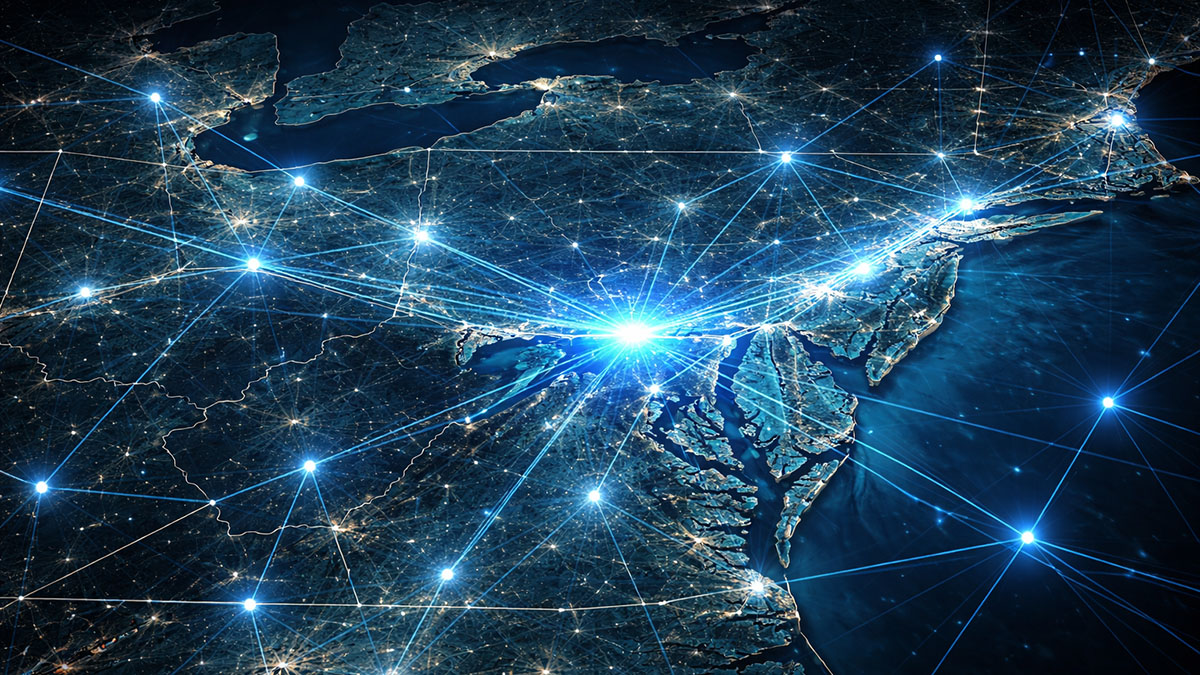
Last week, a bill appeared in both chambers of the Maryland legislature seeking to provide its Attorney General with powers similar to those wielded by the federal Department of Justice through the federal Unlawful Internet Gambling Enforcement Act of 2016 (UIGEA). That piece of legislation proved to be the downfall of US online poker sites five years later, in what came to be known within the poker world as Black Friday.
Maryland’s version uses similar language to describe itself: the Illegal Internet Gambling Enforcement Act (IIGEA). However, while online poker was the federal government’s bogeyman in 2006, this new state-level effort appears to be putting the crosshairs on sweepstakes casinos, which the federal government seems uninterested in prosecuting. It explicitly lists “sweepstakes games” as an item in its examples of online gambling. However, it notably doesn’t make any mention of sports betting or prediction markets.
The IIGEA would, on paper, give the Maryland Attorney General sweeping powers to go after online gambling companies as well as any sites that promote them or facilitate in any way. It would allow payment providers, content platforms, and web hosts to be held responsible for their part in facilitating online gambling.
There are, however, some practical issues when it comes to enforcement, as well as high potential for legal challenges.
In the years after it passed, UIGEA managed to make it harder for players to move money onto and off of illegal offshore sites. However, the takedown of PokerStars, Full Tilt, and Ultimate Bet on Black Friday hinged on the federal government having jurisdiction over Verisign, a Virginia-based corporation that controls the master database of .com domains. It’s why modern-day offshore gambling sites use alternative domain suffixes, but it’s a power that Maryland doesn’t hold.
Keep Reading
Maryland’s IIGEA Seeks Sweeping Powers
The IIGEA seeks to allow the Maryland Attorney General to issue cease-and-desists readily, and to force even out-of-state entities to comply with them.
One challenge with the current cease-and-desist process is that it requires the Attorney General to make a good-faith effort to locate the subject of the order and issue the notice to them directly. Only if that fails does it become permissible to notify the subject by publicly posting the order at the Sheriff’s office and in state newspapers. IIGEA removes the requirement to try to locate an illegal gambling operator first, allowing the Attorney General to proceed directly to serving the order by publication.
More drastically, the law allows such notices to be issued to any “platform” transmitting data that facilitates or promotes illegal online gambling. It asserts the ability to prosecute such companies for noncompliance even if they don’t have a presence in the state:
A platform provider whose principal place of business is outside the State whose service facilitates the exchange of information over the Internet to or from persons physically located in the State submits to the jurisdiction of State courts for enforcement under this subtitle.
It also defines the term “platform” very broadly:
Any person that: (1) stores or hosts content, files, data, and other information on a web server; and (2) makes the content, files, data, or other information accessible on an Internet website via a computer, mobile device, tablet, or other interactive device.
Maryland wouldn’t be the first state to try to wield power over out-of-state web hosts, but it’s a fuzzy area of law that inevitably ends up being disputed in court.
The IIGEA was sponsored in the House by Juanita Bartlett as HB1226 and in the Senate by Jeff Waldstreicher and Chris West as SB652. Both bills have had their first reading and have upcoming hearings on March 5 (House) and March 11 (Senate).