Poker Writer


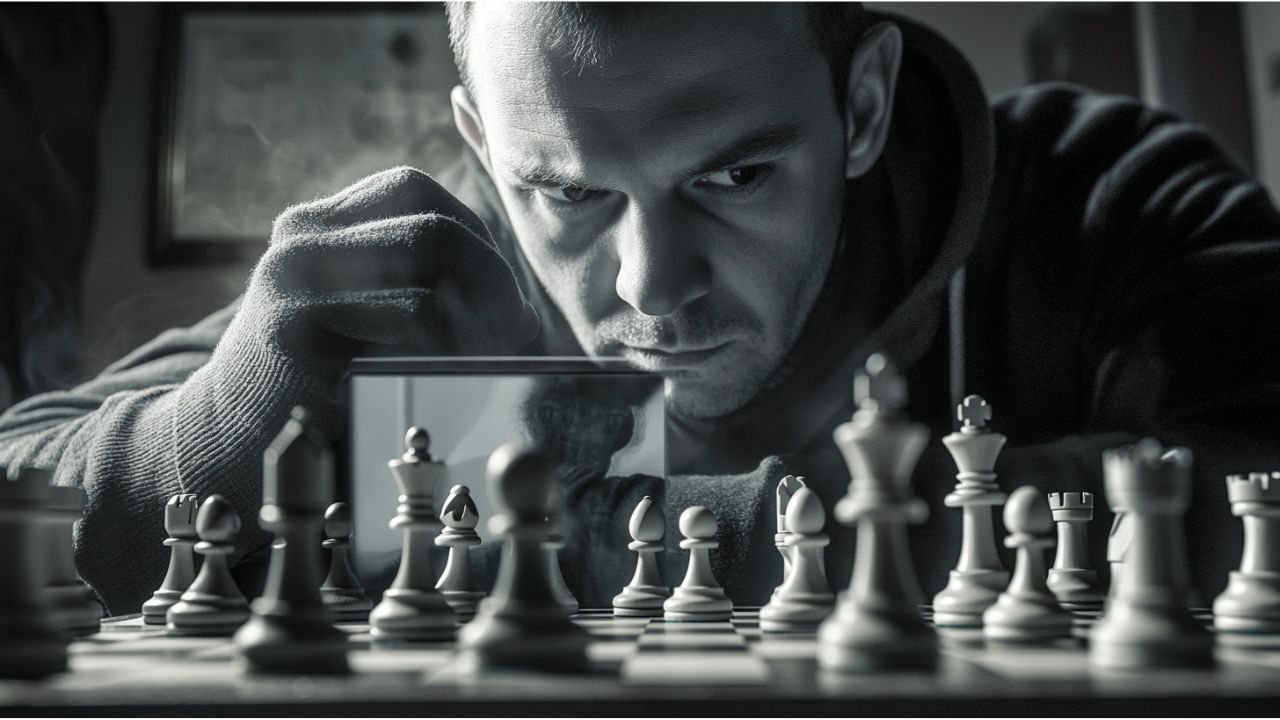
A new study on cheating in chess showed that specific and targeted disciplined cheating can drastically turn the tables and could also be connected to cheating in poker. In On the Effect of Cheating in Chess, computer scientist Daniel Keren showed that the selective use of a chess solver for just three moves during a game is considerably more difficult to detect than persistent cheating throughout the game, while still massively increasing the player’s chances of victory.
That finding is intuitive enough, but has important parallels to poker, where the cheaters who get caught are often winning so much that it’s impossible for their opponents to overlook. In chess and in poker, less greedy cheaters may stand a much better chance of going undetected.
Selective Cheating is Effective Cheating
Keren found that choosing a computer-optimized move up to three times per game was virtually undetectable by automated anti-cheating systems. Conversely, more extensive use of computer assistance was easy to spot due to the patterns that would emerge. Crucially, a human player using computer assistance for three important moves performed won at a much higher rate than a non-cheating player, as long as the right moves were chosen.
If the computer offered help at random points, the impact was modest — about a one to two percentage point increase in win-rate per suggestion. However, if the cheating algorithm also attempted to predict the player’s most likely move and intervene when it estimated the biggest difference between that and its suggestion, the effect was much larger. Targeted interventions boosted the player’s win-rate against an evenly-matched opponent to 84% (from an expected 50%) with three interventions per game. Even one targeted intervention proved to be better than computer help in five randomly-chosen spots.
In many recent cheating scandals, opponents have said they quickly became suspicious because the cheaters seemed to win every pot they entered. Yet, reliably making the correct move in the biggest decisions of the night would turn many losing players into winners, while being very hard to differentiate from someone just making good reads.
Chess Champion Admits Cheating Can Be Hard to Prevent
German chess champion Rustem Dautov commented to PokerScout on how effective targeted cheating could be in chess:
It is true that cheating in even one single move can change the outcome of a game. Cheating today is the most important problem in chess, especially online. It is hard to prevent it, but there are algorithms that detect bad cheaters, as outlined in the paper. But for ‘clever’ cheaters that use a ‘help’ once or twice in a game, the algorithm often does not work
But Dautov believes that cheating is not common at the upper levels of the game because of the damage being caught would do:
However, when you look at the games at the top – this is a place where cheating is rarely a thing. Players in the top circles have too much to lose – they would be banned for years and ruin their image.
Is Cheating in Poker More Rampant Than We Think?
Poker is clearly a different game from chess, with the luck factor adding tremendous variance. However, both games suffer from similar problems with cheating, especially when it comes to the use of real-time assistance in online play. The finding that selective, low-frequency cheating is both effective and hard-to-detect is one that poker players and security teams should take note of.
Cheating in poker is an ever-present concern, with casinos and poker rooms imposing strict penalties for it. The issue is that cheating is often hard to prove, and this study only backs that up. If a cheating poker player has the power to know their opponents’ cards or gain information in some way, they could select a few careful spots to use that information.
Like chess, using information from just a few important hands can make the difference in a cash game or a tournament. This leads to the worrisome theory that cheating could be more rampant in poker than people even realize.
That’s especially true when it comes to the forms of cheating that allow access to opponents’ holdings. Getting game-theoretically optimal advice from a solver here and there may or may not make a huge difference, because even perfect play frequently loses in poker, due to hidden information. However, the selective approach would likely be very effective if employed in some of the recent instances we’ve seen involving hacked deck shufflers or other technology allowing players to predict hand outcomes. Used indiscriminately, these forms of cheating produce impossibly good win rates. Yet a more sophisticated scheme could only tip off the cheater when they’re about to run into a cooler, or alert them to particularly good bluffing spots, making for a more superficially plausible flow of play.
Those Caught Fly Too Close to the Sun
The most prominent cheating scandal in poker in recent years came from a player who abused his power of knowing cards. The Mike Postle cheating scandal at Stones Gambling Hall came to light because of an extended pattern of bizarre plays and impossibly good results that led fellow player Veronica Brill to blow the whistle.
Another large cheating scandal was uncovered in October. Authorities found prominent NBA players at the center of a rigged poker operation. Again, the cheating was so overt that players had begun warning each other about the game through whisper networks long before authorities stepped in.
These cases are just the highest-profile examples of cheaters who’ve been caught because they got too greedy and cocky. There is always the temptation to “fly too close to the sun,” so to speak.
Should players be worried that games are rife with cheaters that remain disciplined and don’t get caught? It’s possible, but basic human psychology may be the saving grace here. It is almost irresistible for those who’ve gotten away with bad behavior to attempt to push further.
Take, again, our hypothetical player with the ability to know their opponents’ cards at will. At first, they may use that knowledge in just the three most crucial spots of the hundreds played in a session. If their opponents never showed the slightest suspicion, they’d be tempted to try a few more the next time around. Would anyone notice if it were five hands, or ten? Studies have confirmed that a tendency among criminals of various types to escalate if their early, lesser offenses go unpunished. That is likely to be the case with poker and chess cheaters as well.