Deputy Editor


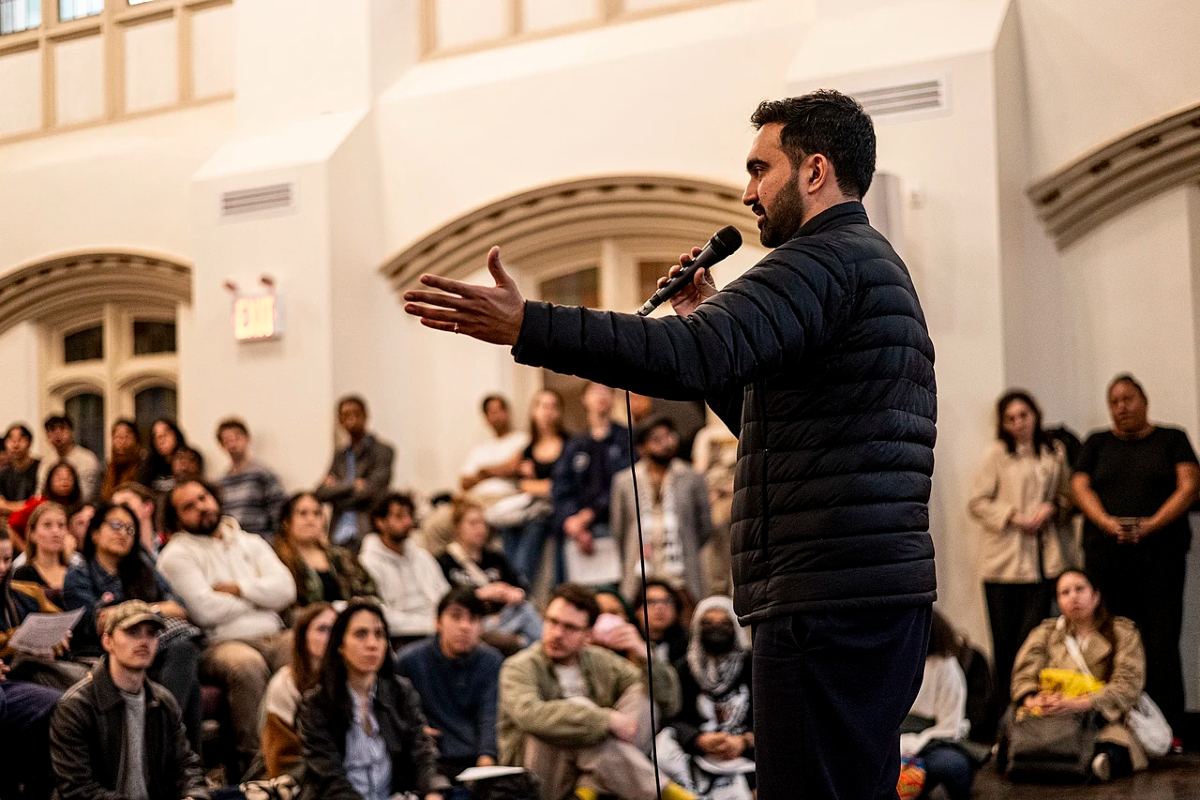
Democratic socialist Zohran Mamdani won New York City’s mayoral election on Tuesday. While hailed as a “historic victory for progressives,” the casino companies still in the running for downstate casino licenses may have cause to view the incoming mayor with suspicion.
That feeling would be mutual. Mamdani didn’t speak much about gambling during his campaign, except to joke that “gambling is haram” when asked to comment on Kalshi betting lines that showed him far in the lead. More seriously, he told the New York Times he was “skeptical” of the introduction of full-scale casino resorts to the city. The good news for the casino bidders is that, in the same interview, he noted that he must respect the voters’ wishes to bring them to NYC. So, while they might not have the mayor on their side, he won’t attempt to interfere with licensing and construction.
That licensing process for the coming Downstate New York casinos is near to its conclusion — a conclusion that now seems foregone, as the number of remaining bidders equals the number of available licenses.
Voters approved the expansion of New York gambling to include full-featured retail casinos way back in 2013. That led to a drawn-out, multi-step process to determine which companies would earn licenses. A final board review, which will see up to three licenses awarded, should happen by Dec. 1. There had been four bids to choose from until MGM Resorts unexpectedly dropped out, boosting Bally’s bid from an underdog to a virtual shoo-in in the process.
Kalshi Markets Correctly Forecasted Mamdani Win, Missed on Margin
Prediction markets on Kalshi provided the first signal that Mamdani was going to win.
Not long ago, he was a little-known state assembly representative from Queens. He was a sizable underdog to former Gov. Andrew Cuomo in the Democratic primary until late polling hinted at a Mamdani victory. That was ultimately borne out.
In a heavily left-leaning city like New York, winning the primary meant Mamdani was all but assured the mayor’s office. Cuomo threw a bit of a curveball by returning to the ballot as an Independent. That means Mamdani needed to overcome the risk of splitting votes with the incumbent in a three-way race with him and Republican Curtis Sliwa.
Even so, Kalshi markets saw Mamdani’s win as all but inevitable. Contracts for a Mamdani win were trading north of 90 cents (90% probability) on the morning of Election Day.
In fact, the main drama seemed to surround whether Mamdani would outperform polling that had him winning by more than 14%. The race looks certain to finish closer than that, with Mamdani’s margin more like 9%.
- Mamdani: 50.4%
- Cuomo: 41.6%
- Sliva: 7.1%
Bettors overestimated his chances of outperforming the polls. Mamdani peaked north of 70% on Election Day before crashing to 2% as final votes are tallied.
Future Budget-Balancing May Put Casinos in the Spotlight
While Mamdani won’t interfere with the construction of the casinos, there’s no telling at this juncture what friction might arise between them and the city once they’re open for business. If there is an issue, however, it’s likely that money will be involved.
Some of Mamdani’s more socialist-leading proposals won’t be cheap to implement. For example, he has said that he wants to provide free buses and universal child care, and provide a “public option” for grocery shopping. The budget crunch for such projects might only hit toward the end of his first term, just as the resorts are completing the construction of their permanent facilities.
Inevitably, such services necessitate a discussion of raising taxes, especially on corporations and the rich. Yet, the state government would have to approve such policies, and Gov. Kathy Hochul has already said she won’t, despite her endorsement of Mamdani.
Not all tax hikes are equally unpopular, however. We’ve seen elsewhere a tendency for politicians to look at hiking taxes on gambling to plug budget holes, even within a few years of a market opening. While casinos and casino-workers’ unions protest such proposals, they don’t generate nearly as much public backlash as higher property taxes, say, or broad-based business taxes that might impact jobs in multiple sectors.
For example, Illinois jacked up the tax rate on its sportsbooks earlier this year, while also adding a per-bet tax. Operators responded by either passing the costs onto the consumer or instituting minimum bet sizes. It isn’t only the state government looking to put the squeeze on the sportsbooks, either. Chicago Mayor Brandon Johnson now wants an additional 10.25% local tax on bets placed within the city.
Even Pennsylvania, which already has one of the highest casino tax rates in the country, is considering a further bump. The introduction of new forms of gambling always produces a temporary spike in gambling addiction rates, and the resulting negative public sentiment makes it hard for operators to garner much sympathy outside their sector.
As things stand in New York, only 5% of casino tax revenues is earmarked for the municipality. The state takes the lion’s share for education funding and property tax relief, while the city must split the remainder with other levels of local government.
No matter what happens, though, the ultimate call would be made by state legislators. Mayor Johnson’s experience shows that getting that approval is never easy. He’s currently butting heads with Illinois lawmakers who were happy to put the squeeze on gambling companies but unwilling to let the city do the same.
Image credit: Bingjiefu He/Wikimedia Commons (license)