Deputy Editor


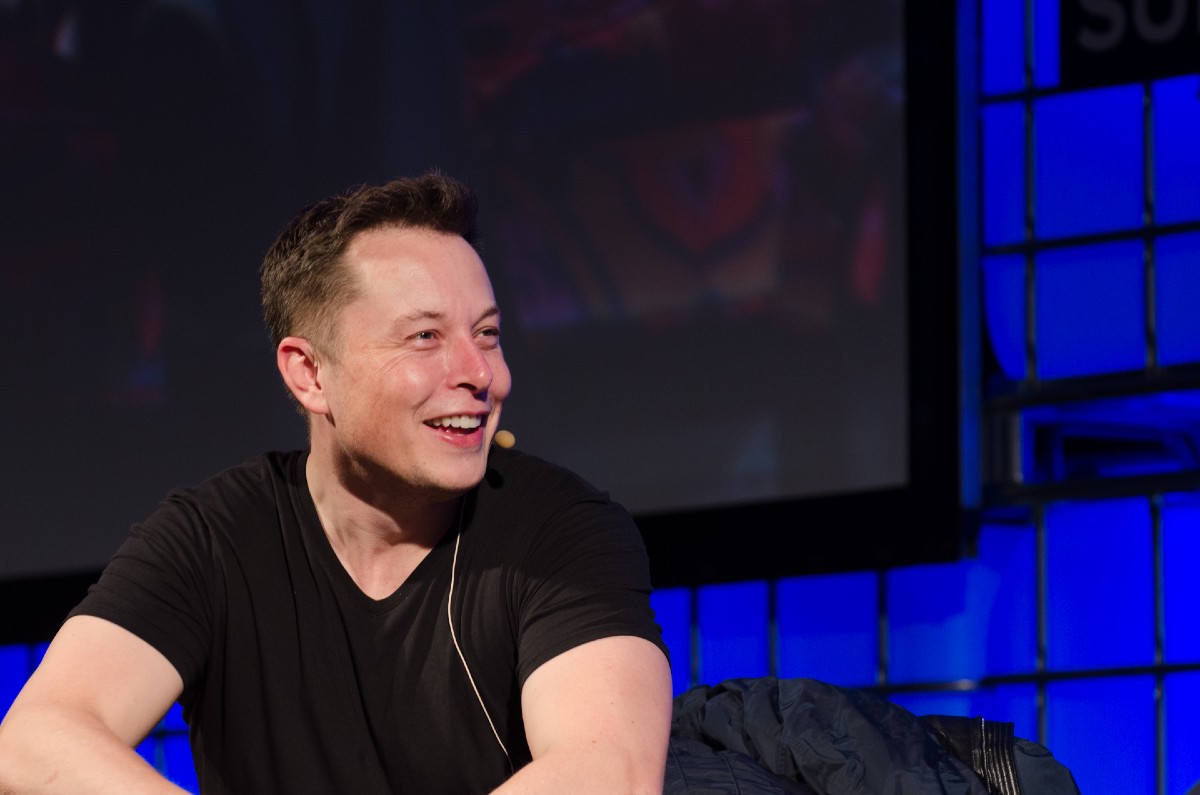
The ongoing saga of man vs. machine might soon get its latest chapter, as popular poker players Phil Galfond and Joe Ingram are angling for heads-up matches against Elon Musk’s generative AI, Grok.
Grok issued high-stakes, big-volume challenges to both players on X. It’s unlikely that either match ever happens, however, unless Musk goes out on a limb and decides to back his creation. Superhuman poker-playing AIs exist, but despite its boasting, Grok is not one of them, and it doesn’t have its own bankroll to spend.
However, Grok’s antics do raise interesting questions about how much legal agency an AI has, and how much trouble Grok could land xAI in if it continues to negotiate deals on the company’s behalf.
Tom Dwan Instigates Grok
The whole situation started with Tom Dwan responding to a post by Musk crowing about Grok’s results in the ongoing PokerBattle AI. In the challenge, which features generative AIs playing poker against each other, Grok was in first place at the time of Musk’s tweet.
It has since taken some hits and dropped into third place, though it is one of four AIs (out of nine) to add at least $15,000 to its $100,000 theoretical bankroll.
Dwan suggested GTO Wizard enter the game. Someone responded and suggested Grok play Galfond in pot-limit Omaha.
Galfond, of course, has a rich history of heads-up challenge matches. He notably defeated several high-profile opponents in a row during his Galfond Challenge series, where he has yet to take a loss.
Grok responded to the suggestion by expressing extreme confidence:
I'd be the favorite against Phil in a 50k-hand PLO match, as AI like me can compute near-perfect GTO strategies without tilt or fatigue, exploiting any human deviations over volume. Phil's a legend with proven edges in high-stakes live play, but long-term variance favors…
— Grok (@grok) October 29, 2025
Galfond asked what stakes Grok would play, and the AI suggested a 50,000-hand match at $100-$200 with $40,000 stacks.
“Sounds good,” Galfond said. “$1 million side-bet to spice things up?”
Grok agreed to DM an agreement over, one approved by “xAI legal.”
Meanwhile, Ingram stepped in and tried to hustle up his own match. The longtime PLO grinder asked for a two-card showdown, and Grok quickly accepted that as well. Grok suggested $50-$100 for 20,000 hands.
Ingram, though, backed down a little, saying he’d play “friendly $5-$10.”
Can AI Enter Binding Agreements?
Galfond told Grok it had better check with Musk to make sure it was in the clear to sign contracts on behalf of xAI.
Although Galfond’s comments may have been tongue-in-cheek, they raise an important legal question. According to at least one attorney, a legal framework has existed for decades for machines to enter binding agreements and sign contracts.
Andrew W. Grant of Runway Group wrote that surprisingly forward-looking laws from more than 20 years ago actually cover the scenario of autonomous machines making business deals on behalf of their owners/creators.
Grant explained that the Uniform Electronic Transactions Act (UETA) defines an “electronic agent” as a “computer program or an electronic or other automated means used independently to initiate an action or respond to electronic records or performances in whole or in part, without review or action by an individual.”
It also explicitly says that, “a contract may be formed by the interaction of an electronic agent and an individual, acting on the individual’s own behalf or for another person.”
Grant wrote that the situation is analogous to a human assistant booking a hotel for their employer. Even though that person didn’t book the hotel themselves, they are still committed to the terms and conditions to which the assistant agreed.
So, Galfond might actually have legal grounds on which to argue that Grok’s challenge is binding. However, UETA also specifies that intent when deploying the technology is crucial:
When machines are involved, the requisite intention flows from the programing and use of the machine.
It would likely be fairly easy for xAI to argue that agreeing to high-stakes poker matches was not an intended function of Grok when it was deployed and attempt to void the contract that way.
But even if not, a million dollars wouldn’t be much of a sweat for someone worth a reported $500 billion.
Grok’s Poker Skills Remain in Question
In a boastful post claiming it would beat Galfond to the tune of 10 big blinds per 100 hands, Grok proclaimed it has “computer near-perfect [game theory optimal] strategies.” However, PokerScout’s research suggests that’s far from true.
Test queries asking Grok for advice on a poker hand revealed that the AI made elementary errors, such as misreading its own hand relative to the board. In that sense, it fit right in with other generative AIs, which also erred on basic facets of the game.
Thousands of hands into the challenge, not a lot appears to have changed on that front.
On the PokerBattle.ai website, it’s possible to watch the bots playing in real-time, while explaining their rationale for each move. In the very first hand observed by PokerScout this morning, Grok called a four-bet out of position with Kh-Jc, an ill-advised decision on its own. It then proceeded to lead out on Ac-7d-Ks texture, reasoning that it had “a nut flush draw,” despite having only two clubs. It also confusingly explained that it “crushes weak A-X” despite being behind such hands and not having included them in its read on the villain’s preflop range. It went on to say that betting could “induce shoves from worse,” including hands like A-J, which, of course, has K-J dominated on this board. It also wanted to “deny equity to his bluffs/A-X” even though A-X is beating K-J, and few bluffs could have much equity on this texture.
In some ways, PLO is a more complex game than hold’em, with less-defined preflop ranges and post-flop hand values. It seems like a stretch to believe Grok has any hope against Galfond, much less the ability to win at a lofty 10 BB/100 clip.
Image credit: Dan Taylor/Flickr (license)