Poker Writer


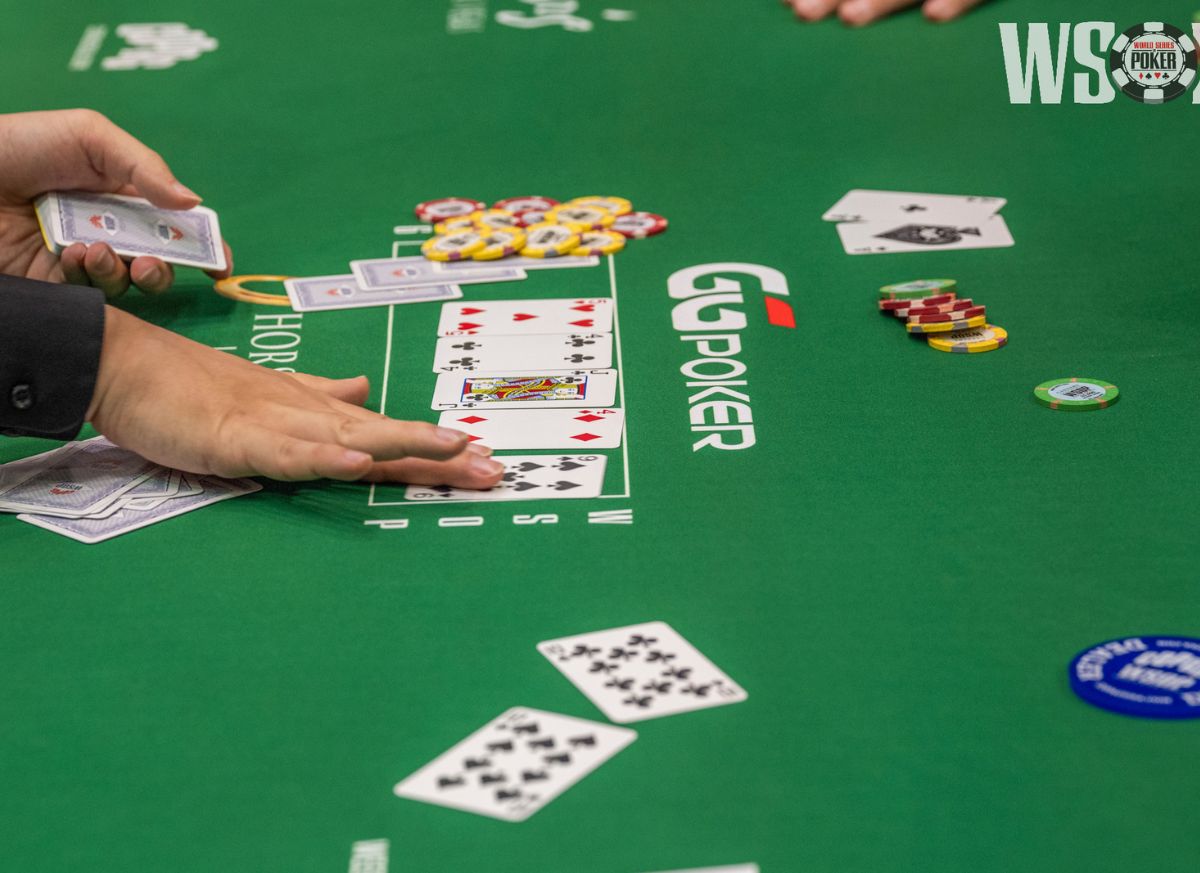
Professional player Dario Sammartino posted a claim yesterday that an automatic card shuffler in use at the WSOP produced two identical deals in a row. The integrity of card shufflers has been in the spotlight since last year’s cheating indictments of NBA coach Chauncey Billups and others, which involved accusations of using a shuffler to rig deals.
According to Sammartino’s Instagram story, the automatic shuffler dealt the exact same hand twice in a row, including every player’s hole cards and the board runout. Sammartino says he received Jack-five offsuit in both hands, while the flop had the two, three, and four of spades, followed by a king and a jack. Every other player at the table remembered their cards as having been the same as well, he says.
Sammartino concludes his post by saying that the chance of it happening by chance is near zero. Although it’s not clear exactly how many players were involved in the hand, PokerScout calculates that two identical deals back-to-back would happen about once every octillion years (1,000,000,000,000,000,000,000,000,000), assuming eight-handed tables and ten million hands dealt over the course of the series.
That doesn’t necessarily mean anything nefarious happened. Modern card shufflers don’t physically randomize the deck the way a human would. Instead, they place the cards in a specific order, which should be randomly determined by an onboard computer. If the shuffler produced the same deck order twice in a row, it means it was either set to the wrong mode, or failed to generate a new order due to a software glitch. Either way, Sammartino is calling on the WSOP to investigate.
Shuffle Machine Set to Sort
Loni Hui was also at the table and was able to confirm that things happened the way Sammartino said they did.
Hui also pushed back on suggestions that the deck simply hadn’t been shuffled at all.
That is not what happened. We played a hand with the red deck. Then with the blue deck. Then the red deck again and it was the same hand as 2 hands prior. It sorted the deck in order.
So, a different deck was put into the machine and the same order of cards came out.
Most shuffling machines have a sort function, so the most likely explanation is that the machine was left on that mode by mistake. The 2-3-4 board, followed by a King and Jack would seem to corroborate that idea, as there would then have been an Ace and Queen burned in between. Sammartino’s Jack-five offsuit then suggests that there would have been seven players involved in the hand. He would have been dealt the five first, with the others having received a four, three, two, Ace, King, and Queen before the deal got back to him. If he was in second position, there would then be a ten, nine, eight, seven, and six dealt, the five burned, followed by the four, three, and two on the flop.
If that’s the reason, then it’s somewhat surprising that this isn’t a situation that arises more commonly. However, a dealer will typically cut the deck after removing it from the shuffler, so this scenario requires that the dealer must also have happened to cut the deck in the exact same spot twice in a row.
Automatic Shufflers Read the Cards
The Deckmate Shuffler uses a random number generator to completely randomize the deck in about 22 seconds. So the shuffler knows the cards’ order and can identify which card is missing. It reads every card, generates a random order, and then puts them in that order.
The reason for Sammartino’s initial concern about security was precisely this. He was speculating on whether someone could hack the shuffle machine and arrange the cards in a specific order.
There have been experiments done to see if it is possible to hack a shuffler system, such as the one on Wired on YouTube. That experiment concluded that it is possible, with extremely complex determination, when at least three people are in on it, including the dealer when cutting the cards,
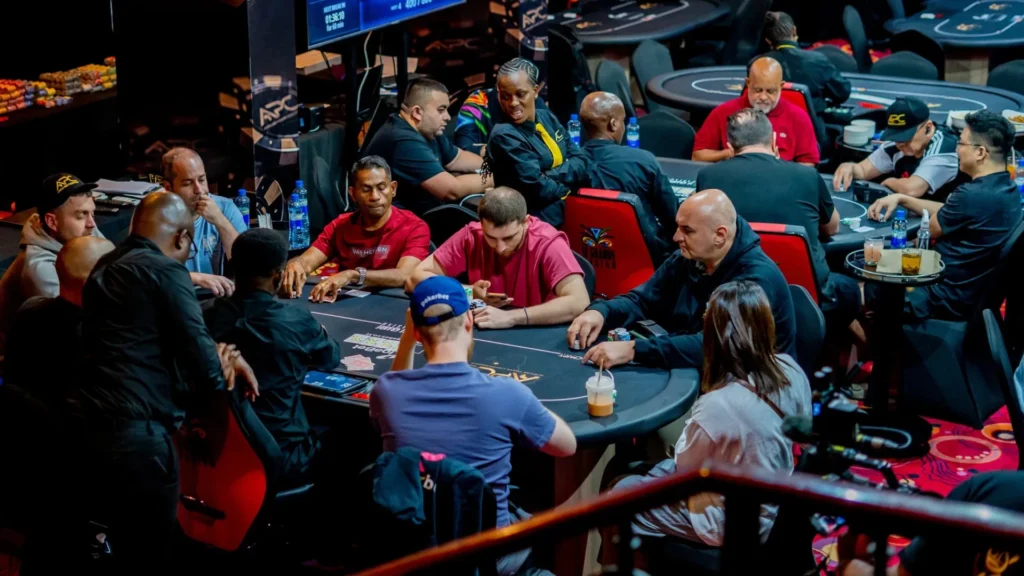
But that level of complexity is not really possible on one of the outer tables of a WSOP event, where there are thousands of tables in play at one time.
Photo credit: Tyler Abrams / WSOP