Deputy Editor


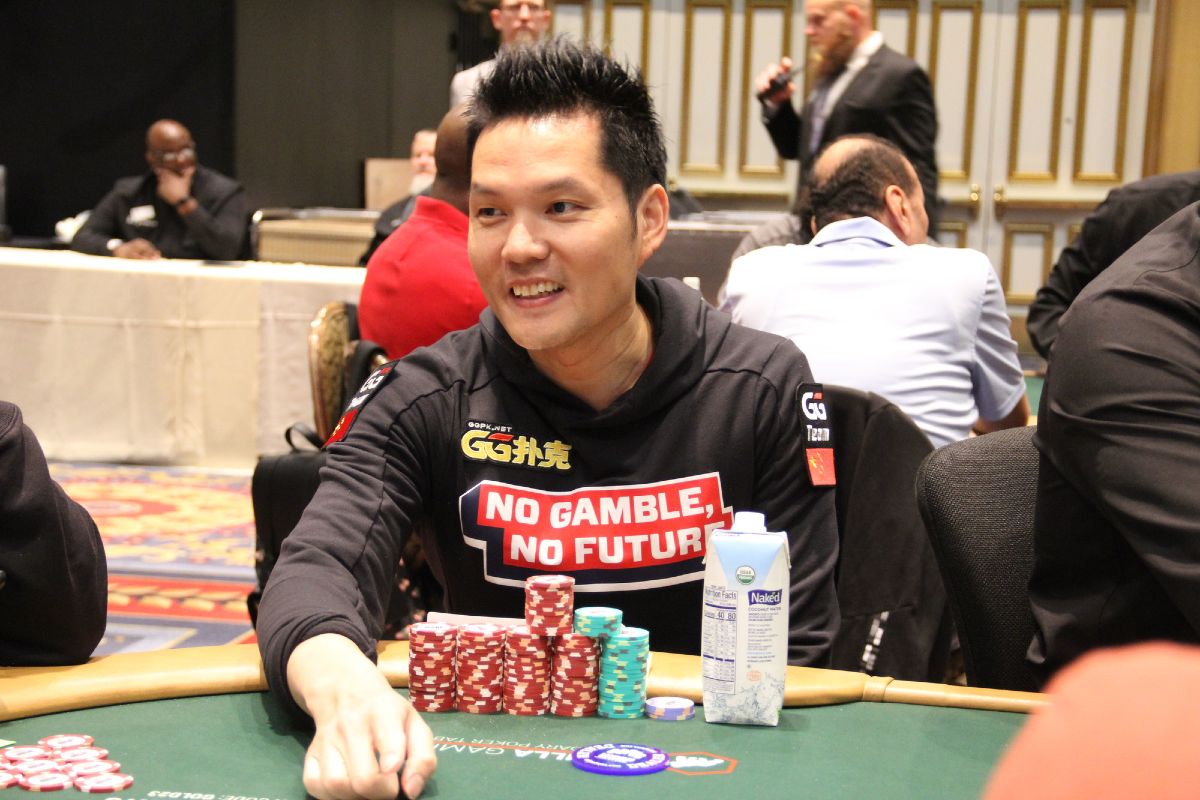
Ren Lin is back in action at World Series of Poker Paradise, fewer than two months after GGPoker issued an “indefinite suspension” to the site-sponsored player.
To recap, Lin admitted to providing real-time coaching to a friend at a major online final table (the $10,300 GGMillion$). The incident occurred on Oct. 14, and GGPoker publicly rebuked and suspended Lin while also permanently banning the player he helped, who went on to win the tournament.
Because GGPoker owns the WSOP, that meant Lin was also banned from participating in live bracelet events.
Although any unspecified length of time could be said to be “indefinite,” the community took that word to mean — as it often does — a lengthy and possibly permanent ban. Instead, it has proven to be very temporary.
Players on social media have largely responded by skewering the WSOP. Lin did not have to sit out a single bracelet event, logging two cashes in the Bahamas, including one in the very first event. His ambassadorship appears to still be in question, however, as his name remains absent from the official listing of “GGTeam.”
Keep Reading
Devil’s Advocate: Did Lin Really Deserve a Lengthy Ban?
While most responses seem aghast at the comically short length of the suspension, some well-known players have said they have no problem with the situation.
Matt Berkey said he has “no issue” with Lin’s reinstatement.
Lin’s fellow site ambassador, Daniel Negreanu, defended Lin’s character at the time, as did several others, such as Patrick Leonard.
It’s important to note a few things regarding Lin’s case.
For one, while Lin’s suspension ended quite abruptly, GGPoker technically did just as it said it would. Although some “indefinite” suspensions prove to be permanent, all that really means is that it hadn’t yet been decided at that time how long the ban would last.
There were also some mitigating factors in Lin’s poker cheating case. If he’s to be believed — and, as noted, many have spoken out in support of his character — he gained nothing financially from the incident. He said he was merely trying to help a friend while on break from a live event, without pausing to consider the ethics of the situation.
That said, it was troubling that his first instinct was to normalize his actions, telling the afflicted party (one of the players at the final table) that it was “quite common and normal.”
Buying Absolution
What makes the difference for Berkey, at least, is that Lin wound up net negative by quite a bit. He paid $96,380 out of his own pocket to help GGPoker make the affected players whole. One can certainly make the case that he paid his dues, literally. GGPoker may have felt that, along with the removal of his stack from Day 2 of a WSOP Circuit event, Lin had suffered appropriate consequences already.
It’s a defensible position, especially when it fits in with the general company policy of treating rule-breaking players on a case-by-case basis. While many sites treat all bans as permanent, GGPoker has publicly offered to reinstate banned players through its “Olive Branch” program if they can make a case that they deserve it.
Sports Parallel: ‘Always Cheat’
The problem with Lin’s quick reinstatement and the Olive Branch program at large is the message it conveys. It reminds me of a saying popular among mixed martial arts fans on Twitter: “Always Cheat.”
The saying stems from the consistent lack of enforcement when it comes to breaking in-fight rules. Athletes who deliver groin strikes and eye pokes or commit fouls like grabbing the fence or the opposing fighter’s gloves consistently receive mere warnings from the referee. Regardless of how egregious the foul is, they typically aren’t docked points until the second or third offense.
That essentially makes the first couple of fouls something of a freeroll. They have the potential to hurt the opponent or leverage a strategic advantage without much downside. Observers have pointed out that this results in the fouls typically ending up as a net positive for the offending fighter.
GGPoker is likewise sending a mixed message. “We don’t condone cheating. If you’re caught, we will punish you. But, that punishment might be limited in scope and/or length.”
Severe, meaningful consequences are the only way to deter cheating in poker. GGPoker seems anything but committed to delivering such consequences.
WSOP and GGPoker Create Avoidable Public Relations Mess
What makes the entire mess so strange is how avoidable it all was.
If the WSOP and GGPoker had simply reinstated Lin prior to the 2026 summer WSOP, fewer players would have likely raised a stink. That would have meant a suspension of about seven months. Part of the issue is that, aside from the event Lin was actually kicked out of, the ban didn’t actually keep him from playing anything.
Waiting for the summer series to grant leniency would have meant Lin would miss some bracelet events he clearly wants to play, both at WSOP Paradise and next spring’s WSOP Europe in Prague.
Along with the $100,000 or so he has forfeited through the disqualifiaction and make-whole payments, a short but meaningful suspension might have seemed more fitting, especially with his high-roller peers clearly ready to forgive and forget.
That said, Lin would not have been stuck twiddling his thumbs regardless. There are great poker tournaments happening in both the U.S. and Europe right now that would have welcomed Lin’s business. Multiple European Poker Tour events are on tap for early 2026.
Lin clearly wants to play high stakes and for bracelets. But was he really going to be seriously put out if he missed a few short WSOP and GG-branded series?
Messaging Matters
Better communication from GGPoker would have helped, too. Part of the issue may be that players were taken by surprise to see Lin back at the tables so soon, without an explanation.
GGPoker offered an explanation for banning Lin in the first place. Upon deciding to bring him back, the company could have issued a statement like this:
We’ve decided to reinstate GGPoker ambassador Ren Lin. In light of the almost $100,000 he paid in restitution to affected players and the sincere remorse he’s shown through his public apology, we believe he’s done enough to merit a return to live poker for the upcoming WSOP Paradise. GGPoker maintains its commitment to fair and honest play and expects Ren to uphold those values with utmost integrity going forward.
Instead, it was silent.
Would industry observers still have dunked on them? Sure, but the reaction wouldn’t have been nearly as severe, nor the criticism quite as biting.
Ultimately, I don’t think anyone was scared away from playing on GGPoker or at WSOP Paradise because Ren Lin coached a guy for a few minutes at an online final table. So, the company probably doesn’t care about any of this and was happy to let a high-value customer back into the fold. But it still seems like a foreseeable and avoidable PR disaster.