Managing Editor


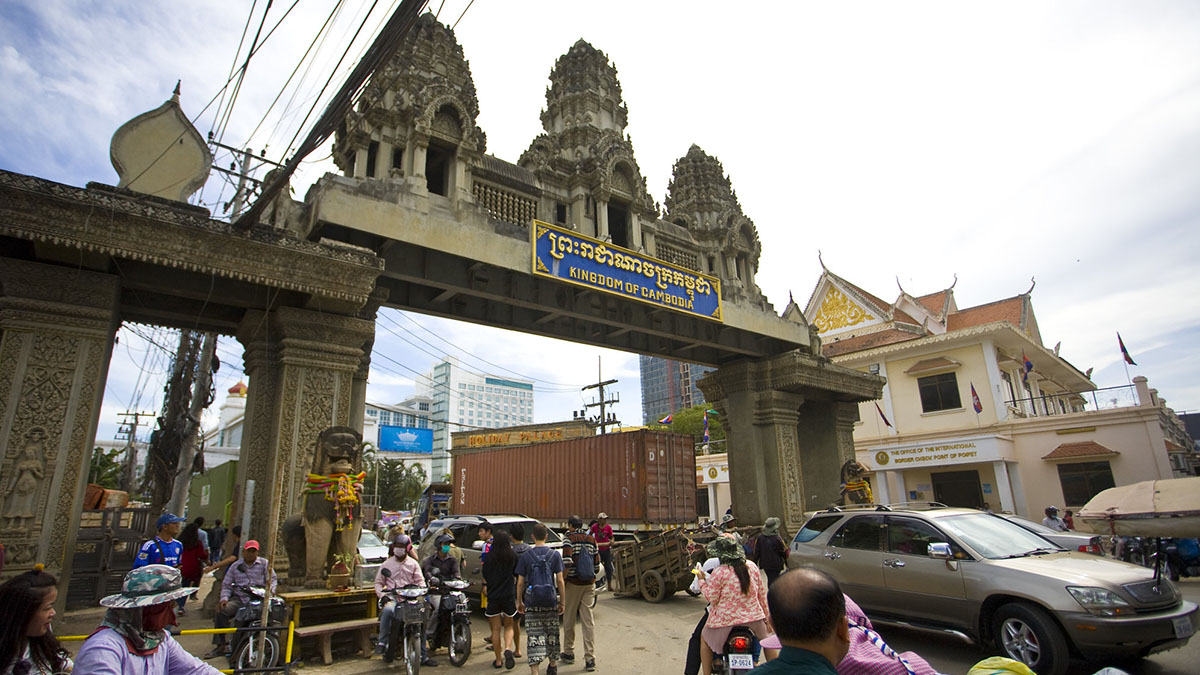
Thai gamblers who crossed the Cambodian border to Poipet are now trapped in the casino town as their own country’s air force drops bombs.
Cambodia closed its land border with Thailand on Saturday, after neither country adhered to a U.S.-brokered ceasefire. Poipet is located directly on the border between the countries and features a number of casinos catering specifically to Thai clientele.
Gambling is illegal in Thailand, recent attempts to legalize poker notwithstanding. Meanwhile, Cambodia permits it only for non-residents. Poipet’s casinos are positioned such that visitors coming by land from Thailand need not go through Cambodian customs. Nonetheless, the Thai government says it estimates that between 5,000 and 6,000 Thai citizens remain on the Cambodian side of the border.
The Cambodian government says that Thai citizens are free to leave by air. That would mean traveling 150 km to Siem Reap, as Poipet has no airport of its own.
A long-running territorial dispute between the two countries erupted into armed conflict over the summer. There have been two attempts at a ceasefire, the second of which fell apart in November after two Thai soldiers were injured by a Cambodian landmine.
The underlying disagreement dates back to the 1950s and relates to the border as drawn by France in the early 20th century as the colonial power in Cambodia. Ownership of the Temple of Preah Vihear, a culturally important archaeological site, has often been at the center of the dispute.
Casinos Caught in the Crossfire
This morning, the Royal Thai Air Force dropped three bombs on Poipet, according to the Cambodian Interior Ministry.
Air Force spokesman Jackkrit Thammavichai told the Bangkok Post that the strikes were militarily necessary and aimed at destroying a logistics center used to store rockets.
Cambodian officials said the bombs had damaged a warehouse and “other property.” It’s not clear whether that included any of the town’s casinos. However, the government has said at least four casinos have been damaged by Thai forces during the conflict.
Borderland gambling is a common phenomenon, but a hot-button topic in its own right in southeast Asia. Countries want the revenue that gambling can bring, but not its impact on their own populace. The same phenomenon is seen in the U.S., where states that have legalized retail casinos have tended to position them along borders they share with states that lack such an option.
China has had its own problems with Cambodia in this regard, as well as with Myanmar. Both countries had, until recently, turned a blind eye to Triad-linked scam centers operating in their territory, largely close to the Chinese border. The alleged activities in these compounds included illegal online gambling as well as other forms of cybercrime. A series of crackdowns this year have led to the demolition of the notorious KK Park compound, death sentences imposed by China on some ringleaders, and tens of thousands of deportations and arrests.
According to research by The Guardian, organized cybercrime may have accounted for as much as 30% of Cambodia’s GDP in 2023, and 23% of Myanmar’s.
Image Credit: Mike Norton via Flickr (license)