Poker Writer


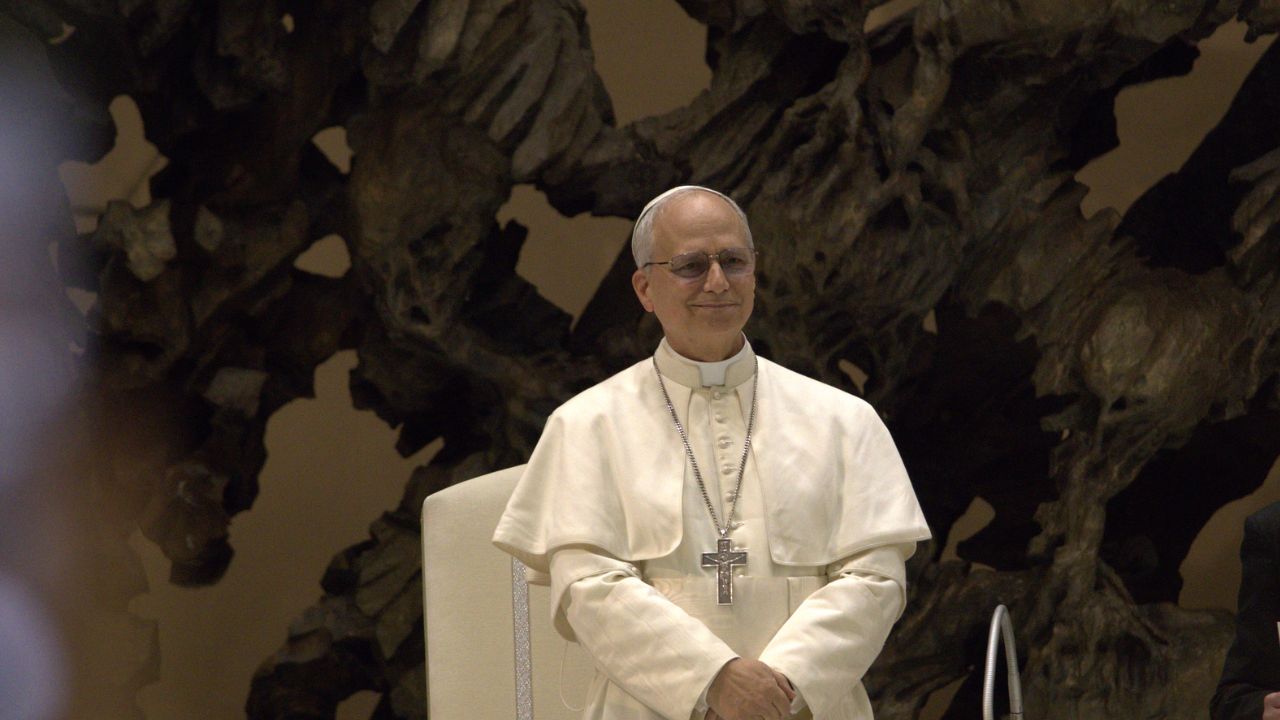
Pope Leo XIV criticized the spread of gambling in an address to local Italian authorities on Monday.
During the Associazione Nazionale dei Comuni Italiani (National Association of Italian Local Authorities) meeting, the pope discussed his concerns about the modern world. His message included a brief critique of gambling, which garnered attention in the industry.
Pope Leo described gambling as a form of loneliness and called on the mayors of Italy to promote “authentic human relationships between citizens.” He also said that gambling leads to the destruction of families, and is particularly a worry for young people who have become more targeted by gambling companies in recent years.
The first American pope’s comments specifically related to gambling in Italy. He was meeting with local Italian authorities and noted the rise in gambling in the country. Reuters has reported that Italy is the biggest gambling market in Europe. The market there reached €157 billion in 2024, a six-fold increase from €25 billion in 2004, without factoring inflation.
However, Pope Leo XIV’s comments can be extrapolated to the entire world, coming from the head of a global religion that encompasses approximately 1.4 billion people.
Catholic Church Not as Strict on Gambling as Others
What is the Catholic Church’s view on gambling? Despite the Pope’s words against gambling, the Catholic Church’s historical stance on gambling is not as strict as that of some other religions in the world.
Many Catholic doctrines say that gambling “is not evil in itself” but warn against addiction to it. Gambling can become sinful when it leads to neglect of other aspects of an individual’s life.
The Catechism of the Catholic Church states:
Games of chance (card games, etc.) or wagers are not in themselves contrary to justice. They become morally unacceptable when they deprive [people] of what is necessary to provide for [their] needs and those of others. The passion for gambling risks becoming an enslavement.
Many commenters on X in response to Pope Leo’s message noted that many individual Catholic churches run raffles and bingo nights, which can be seen as a form of gambling. Some even organize casino trips.
One even brought up a specific example of a Catholic parish in Cincinnati:
My parish in Cincinnati ran poker, blackjack & roulette at the summer festival. Huge outdoor tent with tables galore, beer was flowing, laughter, cheers abounded. Cigarette and cigar smoke so thick. Kids? Running around while mom a dad got taken to the cleaners by the pastor.
The More Strict Protestant View
In the United States, there are more Protestants than Catholics, so the Catholic viewpoint is not as prevalent.
While each sect of Protestantism differs, the view on gambling is generally consistent. The Protestant Reformed Churches in America (PRCA) states:
Running such institutions, and benefiting from their activity, is wrong! The industry of gambling is morally wrong!
This is true, first, because it is motivated by greed.
It also makes clear that not only is compulsive gambling a sin, but recreational gambling as well.
The Baptist and Presbyterian sects, two of the most popular in the U.S., both remain staunchly against gambling and consider the act a sin.
LDS Church Influences State Policy
The Church of Latter-day Saints (LDS) is likewise strongly against gambling. The founder and prophet (in the eyes of believers) of the LDS Church, Joseph Smith, published strong words against gambling:
The Church does not approve of gambling but strongly condemns it as morally wrong, and classes also with this gambling, games of chance and lottery, of all kinds, and earnestly disapproves of any of its members engaging therein.
The LDS church is the pre-eminent form of religion in Utah and has influenced state law. Utah is one of only two states that completely ban all forms of gambling, including state lotteries. The ban is written into the Utah Constitution.
The only other state with a complete ban on gambling is Hawaii, another state where local religious interests have significant influence.
Haram in Islam
The second largest religion in the world, with more than 2 billion followers, is the strictest against gambling. In Islam, the Quran states that gambling is a grave sin and is “haram,” calling it “an abomination of Satan.” Allah expressly forbids it
Because of this, there are almost no casinos in the entire Middle East or North Africa, where Islam is the dominant religion. Morocco is a notable exception, with 12 casinos located in resort areas designed to cater to foreign tourists.
There is also a luxury casino set to be opened in 2027 in the UAE. The Wynn Al Marjan Island will be a high-class casino catering to wealthy individuals from around the globe. Some expect the UAE to become the Las Vegas of the Middle East as anti-gambling laws in the UAE start to loosen.
More Leniency in Judaism
The view of gambling in Judaism is similar to the view in Catholicism, where it is not expressly banned but merely frowned upon if it gets out of hand.
There is some debate among Jewish scholars about how negatively the Talmud views gambling. One view is that it is only bad when the individual has no other pursuit to fill their time with — in other words, if they are a professional gambler.
In the modern world, many Rabbis highly discourage gambling, while some are more lenient toward it as long as it is non-habitual.
Belief in Luck and Fate in China
Some Asian cultures have more positive views of gambling. That’s particularly true where the belief in fate and luck is prevalent.
The Taoist concept of fate views gambling as a means to engage with destiny and test one’s fortune, rather than being a vice. As opposed to the idea that gambling away money is immoral, Chinese culture tends to view money lost to gambling as just circulating wealth. Gambling is often viewed there as an activity with social value.
However, the government doesn’t share this viewpoint. It strictly forbids gambling, and app-based poker games have led to busts and arrests.
Chinese culture also has a strong belief in concepts such as lucky numbers.
Despite the gambling ban in China, its citizens often frequent foreign casinos. Macau, the only place where gambling is legal within China (it’s “a special administrative region” despite having its own flag and government), has long been a gambling destination similar to Las Vegas.
China aside, neighboring countries like Thailand also have gambling-unfriendly governments. That has arguably led to the proliferation of illegal underground gambling.
Still, like the UAE, some Asian countries have begun to loosen their policies. Japan will open its first state-sanctioned casino in 2027 and is eyeing further expansion.
Image Credit: Edgar Beltran via The Pillar / Wikimedia Commons, license