Deputy Editor


The World Series of Poker is attempting to stoke regional rivalries and introduce a creative new twist on tournament poker with its upcoming “Rounder Cup.” Set to debut at WSOP Europe, the Rounder Cup is a €2,750 no-limit hold’em tournament that tries to pit European players against those from everywhere else in the world.
While the idea is intriguing, the format looks like a whiff. It seems unlikely to either definitely crown a winner or really make anyone care about poker in a regional sense.
Keep Reading
Rounder Cup Makes Minimal Effort to Separate European and Rest-of-World Players
Details on the Rounder Cup finally arrived in a press release on Friday. The event features two starting days, one for European players and one for rest-of-world players. Fields combine on Day 2, and it appears to be a normal no-limit hold’em tournament from there.
The format appears to borrow heavily from WSOP’s Battle of the Ages event, and the Triton invitationals that separate recreational businesspeople and elite tournament sharks during the first day. The idea is that isolating a theoretically disadvantaged group of players from the sharpest professionals levels the playing field somewhat, allowing the former group to build stacks and advance deeper than they otherwise would have.
I can get behind that, but how exactly is separating European and rest-of-world players for the first day of a poker tournament doing anything to stoke regional rivalries? How is it supposed to demonstrate which group of players is superior?
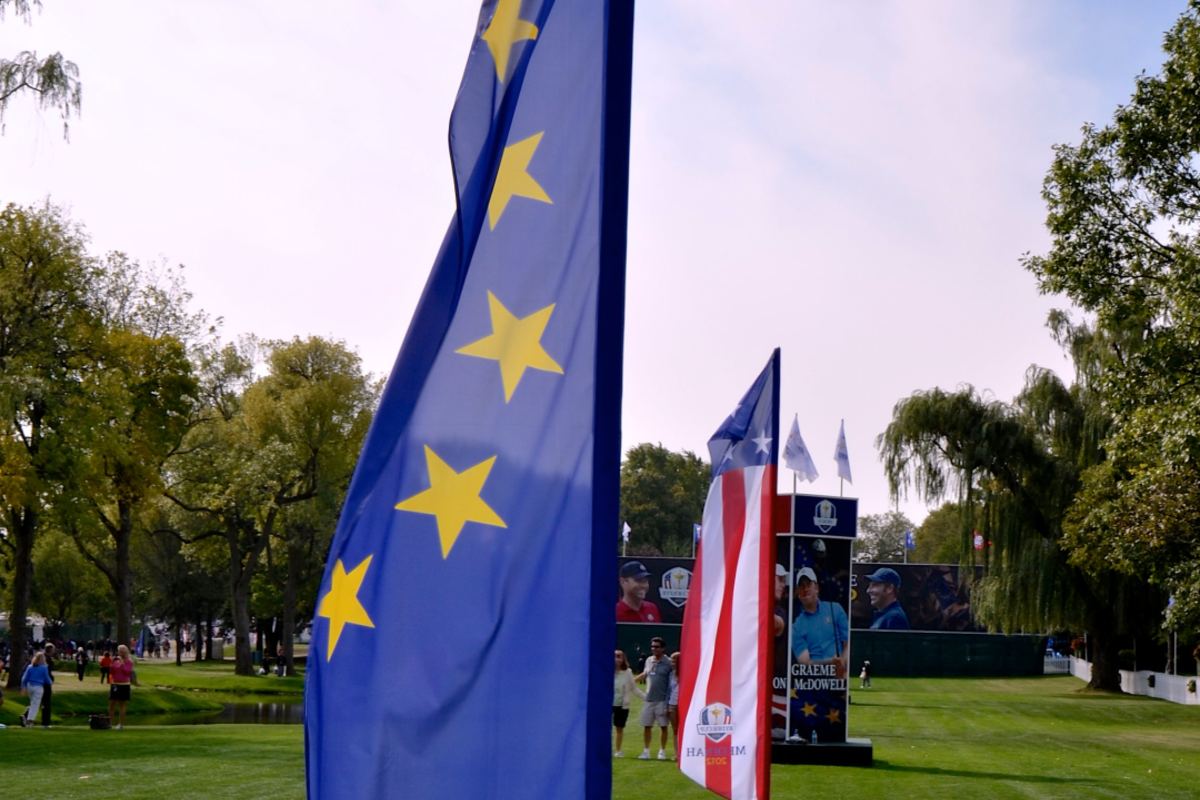
The name appears to be a play on golf’s Ryder Cup, but this format does little to evoke anything about that intense, emotional affair.
For one thing, it’s one multi-table poker tournament. The No. 1 driving force for whichever players make the final table and whoever ultimately wins is going to be variance. There’s just no getting around that in a sample size of one tournament.
For another, what happens if the final table is just nine Europeans or vice versa? Or seven Europeans and a couple of short-stacked rest-of-world players who quickly bust out?
And with or without a representative sample of players, is anyone going to care? It’s hard to imagine Joe Poker from Oklahoma being glued to the results of this in hopes that someone like Belarmino De Souza, the top non-European finisher at WSOP Paradise, can topple Bernhard Binder and Jean-Noel Thorel.
Other Formats Could Do a Better Job Than WSOP’s Rounder Cup
First off, I want to say that the WSOP and anyone else trying to innovate in poker deserve credit on some level. Trying new games and formats should be lauded. I don’t think it’s generally necessary, as poker players will happily accept and play the basics, but there’s little harm in experimenting, especially on a small scale.
I can think of many reasons to dump on the WSOP over the years, but this isn’t one of them. Overall, I’m glad they are trying new things.
But if the goal is to make a poker product similar to the Ryder Cup or give the game some regional flair, I think there are better ways to go about it. They are a little bit clunky themselves, and I don’t know how realistic they are. But I did have a couple of ideas.
Heads-Up Poker, With Team Captains
If we really want to make it Europe vs. the world or the U.S.A. vs. Europe or some such, then just rip the match-play format straight from the Ryder Cup.
Each region has a team captain. The captain fills out the roster in a similar manner to the Ryder Cup teams. Then, the players battle in a series of heads-up poker matches. The winning player’s team earns points, and much like the Ryder Cup, the team with the most points at the end wins.
Maybe there’s a variety of games featured, encouraging captains to fill out their rosters with a wider selection of players rather than heads-up no-limit hold’em specialists.
I don’t know if this sort of event is economically viable from the operator’s point of view, but the teams could be filled out with reasonably representative players already planning to attend, if a festival were big enough.
Or maybe this could only go down somewhere like the PokerGO Studio. In that case, viewers might actually tune in and care, as the teams would presumably be filled with big names.
Certainly, if the goal is to get players and fans to care about regional rivalries, I feel like I’d be more likely to watch Phil Galfond vs. some elite European pot-limit Omaha player in the last match for all the marbles than six random European tournament grinders and some rest-of-world flotsam at the end of an essentially normal poker tournament with a special name.
Region-Based Fields, Winners Combine at Final Table
This idea might fit better at a big festival like WSOP Europe. What if we divide the players into five or six regions, and each plays its own segregated tournament, then the winners combine at a final table?
It sounds cumbersome for the operator, but how much harder can it really be than separating out the players into Europe and the rest of the world as planned? Maybe something like this could work:
- Europe
- U.S./Canada
- Mexico/Central America/South America
- Asia
- Oceania/Africa/Middle East
Presumably, each region would have its own prize pool to account for varying field sizes. Then, the operator could reserve a chunk of the prize pool for the overall winner, or maybe even the whole final table. At least this method ensures a representative from various parts of the world when compared with the Rounder Cup as it stands.
Admittedly, these ideas have plenty of flaws as well. But I’m just not seeing how branding a poker tournament “Rounder Cup” and separating the fields on Day 1 accomplishes anything meaningful or provides any kind of distinct product. Kudos to the WSOP for trying something new, but I feel like there are more fun ways to do this.
Image credit: Brent Flanders/Flickr (license)