Deputy Editor


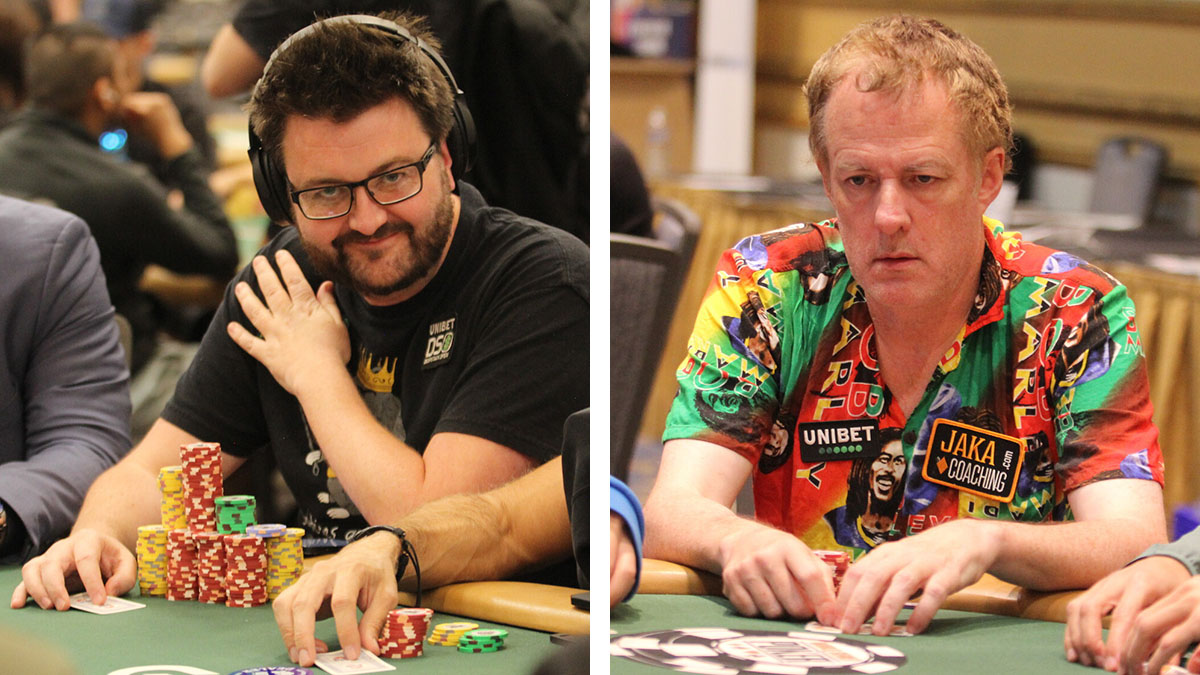
Dara O’Kearney and D.K. Lappin, the voices behind the popular Chip Race poker show, have announced a shift to a crowd-funded model in the wake of a sponsorship split with WPT Global. They hope the move provides the content with a safety net and sustainability going forward, allowing the pair to maintain their independence and continue spouting takes without fear of financial repercussions.
“The big advantage is it moves us away from being beholden to a sponsor and therefore allows us to retain our independence,” O’Kearney explained to PokerScout. “Ultimately, our hope is this will grow to the point where it supports the whole show.”
As sponsorship dollars have dwindled in some industries over the years, some content creators have turned to crowd-funded models on platforms like Patreon and Substack.
This has been especially stark in sports content. Amid continued layoffs, even some beat writers formerly employed by major publications have maintained their sources and simply migrated their content onto their own spaces. If they have a strong enough reader base willing to pay for the content, the model can work.
Poker has not yet seen much of a shift to these spaces. Patreon, which will be home to at least some of O’Kearney and Lappin’s content going forward, does not feature many poker creators with robust followings. Most well-known creators still rely on more mainstream platforms (YouTube, social media) and direct sponsorships, though that may be changing.
Until recently, that model worked just fine for O’Kearney and Lappin. However, the downside was laid bare in stark fashion after a recent dust-up.
Ren Lin Scandal Led to Rift With WPT Global
Last October, popular Chinese high roller Ren Lin confessed to a role in a much-discussed cheating scandal. Lin broke GGPoker’s terms and conditions by coaching a friend at a $10,000 final table in real time. GGPoker, which sponsored Lin, suspended him in response.
O’Kearney and Lappin covered the story and didn’t pull their punches.
To my mind, it’s actually pretty serious when you ghost somebody.
“We didn’t really go along with, ‘He’s a nice guy, so he should get a free pass,'” O’Kearney said. “To my mind, it’s actually pretty serious when you ghost somebody. I think it’s really unfair, particularly to recreational players.”
WPT Global, which was sponsoring Chip Race, requested the Irish pair take down a short teaser clip posted to social media. They mentioned the possibility of working with Lin, who left GGPoker in the wake of the scandal, in the future. According to O’Kearney, a WPT Global contact said the “Western media take” didn’t accurately represent the whole story, but did not explain much further.
O’Kearney said it put the Chip Race team in “a bad situation.” They agreed to take down the social clip, but declined to remove the show.
Lin eventually took a role with WPT Global.
WPT Global attempted to assure the Chip Race team that Lin’s transgressions were a thing of the past. However, O’Kearney’s own sources, from inside the very WhatsApp group where the cheating scandal took place, indicated to him that the coaching was “far from an isolated incident.”
An ‘Untenable Situation’ Develops
O’Kearney and Lappin were in a conundrum. Could they, in good conscience, promote a site where the integrity of the games could be questioned? O’Kearney called the situation “untenable.”
The Chip Race team announced an end to their own deal with WPT Global.
O’Kearney stressed that while he’s among the many poker players with a positive impression of Lin at the personal level, the principles of the matter compelled him and Lappin to make the move.
Not all ambassador deals are the same.
They were in a thorny spot, because leaving on their own accord would have compelled them to repay money they’d already received. Thankfully, they reached an agreement to be released from their contract. Both parties could go their separate ways from a relationship that O’Kearney called “somewhat difficult” and Lappin labeled “slightly messy.”
“I think we realized that not all ambassador deals are the same,” Lappin said.
The show was suddenly adrift with no income source. That was a problem, since about 26 hours of work go into each episode.
At first, the Irish Poker Open stepped in to sponsor a couple of episodes. An ideal match for two Irish lads with a fondness for the event, but a temporary solution, with the event soon to be underway in March.
Consistency is key in the content game, and the Chip Race could ill-afford a long hiatus. The show counts about 25,000 loyal listeners, but that could change fast if the content spigot turned off.
O’Kearney and Lappin initially planned to find a new sponsor. But an old idea suggested by a longtime super-fan was gaining traction in O’Kearney’s mind.
Poker Media Shifting to More ‘Shill Content’
O’Kearney described Jan Suchanek, a poker player and high-stakes gambler, as “probably our biggest fan.” During the time when Chip Race was sponsored by Unibet, Suchanek had urged O’Kearney to consider a crowd-funded model when the contract ran out.
“Jan was a very rich man and excited about sponsoring the show,” O’Kearney said.
Poker media can be obsequious by nature. Advertising relationships and even outright ownership by poker operators prevent poker media from giving honest accounts, in many cases.
Chip Race strove to cover the industry with clarity, something Suchanek appreciated and thought could be magnified with a crowd-funded model.
Suchanek died in 2022, but his idea lived on with O’Kearney. He would just have to convince his co-host.
“I was very keen on the idea from the start,” O’Kearney said. “David hates anything new. He’s the archetype of stuffy, codgy old man.”
Lappin admitted he was unfamiliar with Patreon.
“I kind of thought it was ‘buy me a coffee’ kind of tip culture,” he said.
Even when informed of how Patreon works, he remained skeptical.
“When an audience pays, they feel more entitled to get what they want,” he pointed out. “We’ve always made the show in our vision of what we want it to be. Would [crowd-funding] transfer power away from us?”
O’Kearney was adamant it wouldn’t and wanted to give it a shot, charting a different path in an industry that he said is “moving more and more towards pure shill content.”
“Whoever pays the piper calls the tune, essentially,” O’Kearney said. “What can the sites do? They are depending on the operators for all of their revenue. People are not paying money to read PokerNews or PokerOrg. They’ll say, ‘You can’t cover this story or we’ll cut your funding off.'”
New ‘Chip Race’ Patreon Content Will Be ‘Bonus’
O’Kearney said that the plan is for Chip Race’s currently free content to remain unchanged.
“Everything currently free will remain free,” he said. “We don’t want to move everything behind a paywall.”
One issue Lappin had with crowd-funding the show was that it seemed a bit backwards to him. If they were going to provide bonus content to paying subscribers, but the main shows remained the same, weren’t they charging fans for the least valuable content, the stuff that would have found the cutting room floor?
The two put their heads together and came up with a content plan that they thought could work. Some of their ideas include:
- Additional strategy segments centered around Lappin’s unresearched takes on a hand, followed by O’Kearney reviewing the actual solution. Lappin: “I’ll hopefully learn a little bit along the way, as well.”
- Nostalgia segments centered around old episodes. “Give the audience a sense of how the show was built over a decade,” Lappin said.
- Additional segments from interviews that don’t make it into the regular show. The plan is to come prepared for future interviews with a couple of questions that Lappin said “form their own mini-conversations.”
- Immediate hot takes, jumping on fresh industry news that may have become stale by the time of the next scheduled show.
The extra content will find its way to the Chip Race Patreon, about an hour of content per week spread across three to five shows. Patronage tiers start at $5 per month, progressing to $15 and topping out at $50. At $5, users get access to one episode per week. At $15, they get all of the bonus content.
The $50 tier is “just designed for wealthy donors who really want to support the show,” according to O’Kearney. At that level, Patreon promises “guaranteed interaction and influence,” which amounts to questions answered during fan mailbags and priority selection for hand review segments.
O’Kearney, Lappin Still Open to Sponsorship on Their Terms
O’Kearney said that eventually, there could be a monthly freeroll for subscribers if Chip Race can get another sponsor on board.
That’s still the plan going forward for the show, something Lappin said was important to him when he agreed to try out Patreon. However, he noted that getting a sponsor and keeping the show’s independence is “a very hard tightrope to walk.”
We can’t let them take control of us.
“We have to impart that this show will still be an independent voice,” he said. “It will call balls and strikes and still say what we believe to be true. If we don’t, the show will lose audience.”
Lappin pointed out that straying from that independence under a sponsor-funded model would just result in a self-defeating spiral. The audience cares precisely because the show is willing to cover the industry with frank honesty. If that goes away, then the audience loses interest. In turn, the sponsor loses any value they were getting from the show.
If and when the show does find a sponsor, that could be the inflection point at which Chip Race gets a good read on the sustainability of the crowd-funded model.
“If it doesn’t take off, and enough people don’t subscribe, then at some point we might have to knock it on the head,” Lappin said.
For now, they’ll see how big they can build the Patreon. Worst case, it can help the show subsist in lean times. Best case, the show finds an agreeable sponsor, the Patreon funds the extra content, and everyone is happy.
Lappin’s message to any interested sponsor is simple and direct.
“Let us do the show our way. We’ll make sure 20,000 people listen.”