Deputy Editor


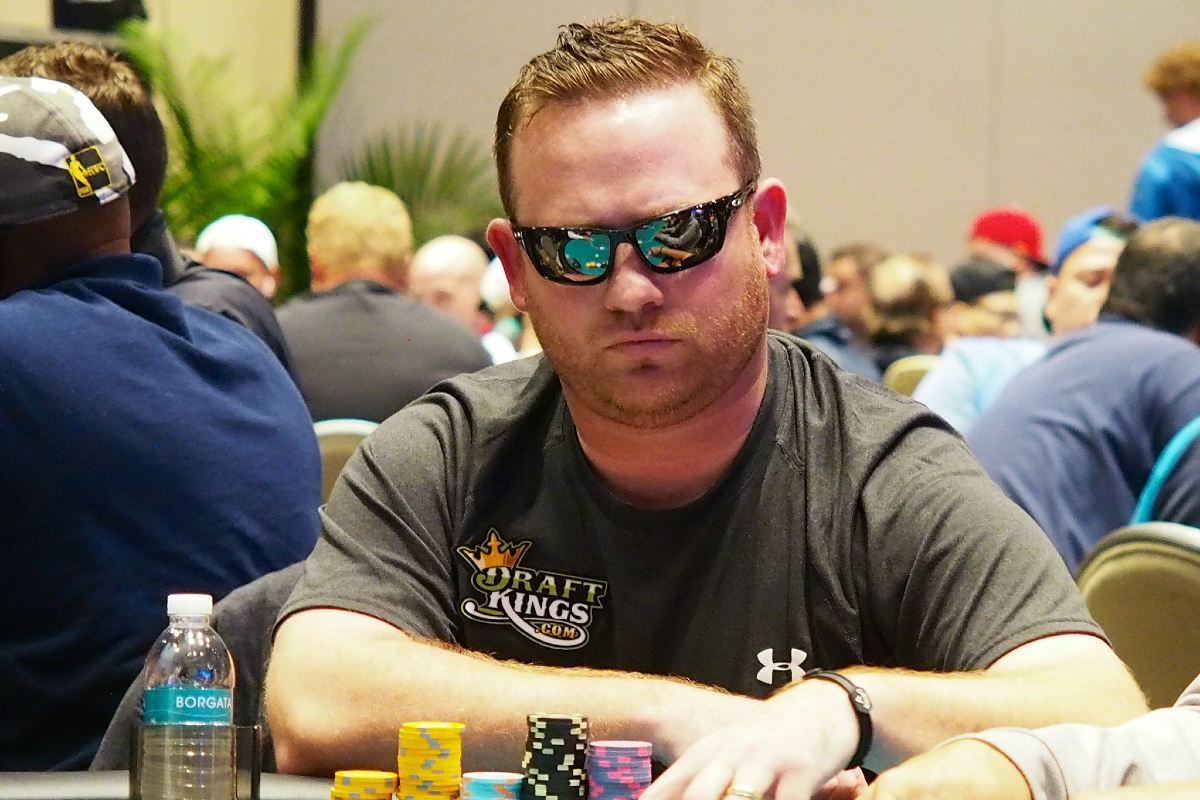
Early this week, news broke that DraftKings had gained approval to pool players across multiple states for its Electric Poker product. As Electric Poker limps along with a minuscule market share, the obvious question is whether the online sports betting giant has bigger plans in the poker space.
The Michigan Gaming Control Board released a statement on Monday announcing the approval. DraftKings can now combine players from Michigan, Pennsylvania, and New Jersey. These are arguably the three most important online poker markets. They’re certainly the most important ones for DraftKings, which is persona non grata with Nevada regulators, stemming from its days as primarily a daily fantasy sports operator.
But does DraftKings have any serious plans in poker? Or is it content to let Electric Poker add a couple of relative pennies to its coffers every month?
Keep Reading
What is Electric Poker on DraftKings?
Electric Poker is DraftKings’ version of a lottery sit-and-go. In these formats, three players get seated at the table, and a randomizer determines their prize pool. The three players compete in a short-stacked sit-and-go with fast-paced blinds. Many take only a few minutes.
Most of the time, they’ll play for a lower prize pool than their combined buy-ins. In these cases, the extra money gets added to something akin to a jackpot pool. Eventually, one of the games that starts will land on the jackpot multiplier, and the players can get a huge windfall, usually at least 1,000 times the buy-in.
Electric Poker says it can pay out 10,000 times the buy-in.
If that sounds attractive, well, someone should tell the poker players. They have yet to engage with this product at any kind of scale.
When PokerScout first covered Electric Poker almost exactly a year ago, the product was coming off a six-month start to 2025, during which it peaked at 0.6% of the market.
Electric Poker has only thinned out further from there. According to PokerScout’s tracking estimates, Electric Poker has only generated about $45,000 in revenue through May of this year. It hasn’t cracked $20,000 in a single month since last September.
To give a frame of reference to that number, BetRivers, which sits a distant fourth in the operator rankings, pulls in around $600,000 per month.
DraftKings May Have Some Kind of Plan if it’s Jumping Through Regulatory Hoops
So, why would DraftKings go through the trouble of jumping through regulatory hoops to get multi-state poker approved for a product that’s pulling in crumbs relative to its massive sports and casino businesses?
The obvious potential answer is that DraftKings has bigger plans in the poker space. But thus far, there’s been very little indication that DraftKings takes poker seriously.
After all, DraftKings could have launched an actual online poker room with cash games and tournaments instead of just lottery sit-and-gos. It could have bought a tech stack like BetRivers did with Run It Once Poker. It chose not to do those things, and it launched a product that has gained essentially zero market share in going on two years (Electric Poker launched in September 2024).
Archrival FanDuel maintains a presence in the space thanks to its ownership of PokerStars. It’s been gaining momentum in recent months, following years of underinvestment.
Given all of that, it would have hardly counted as a surprise if DraftKings folded up shop on Electric Poker. The available revenue is orders of magnitude smaller than DK’s casino and sports businesses.
Yet, the company has opted to combine player pools and keep chugging along. Its possible future plans in poker remain a mystery. But it’s hard to imagine DraftKings just keeping the status quo.
Any serious DraftKings investment in poker would be a welcome development for the industry, but what form that could take is anyone’s guess at this point.
Image credit: World Poker Tour/Flickr (license)