Poker Writer


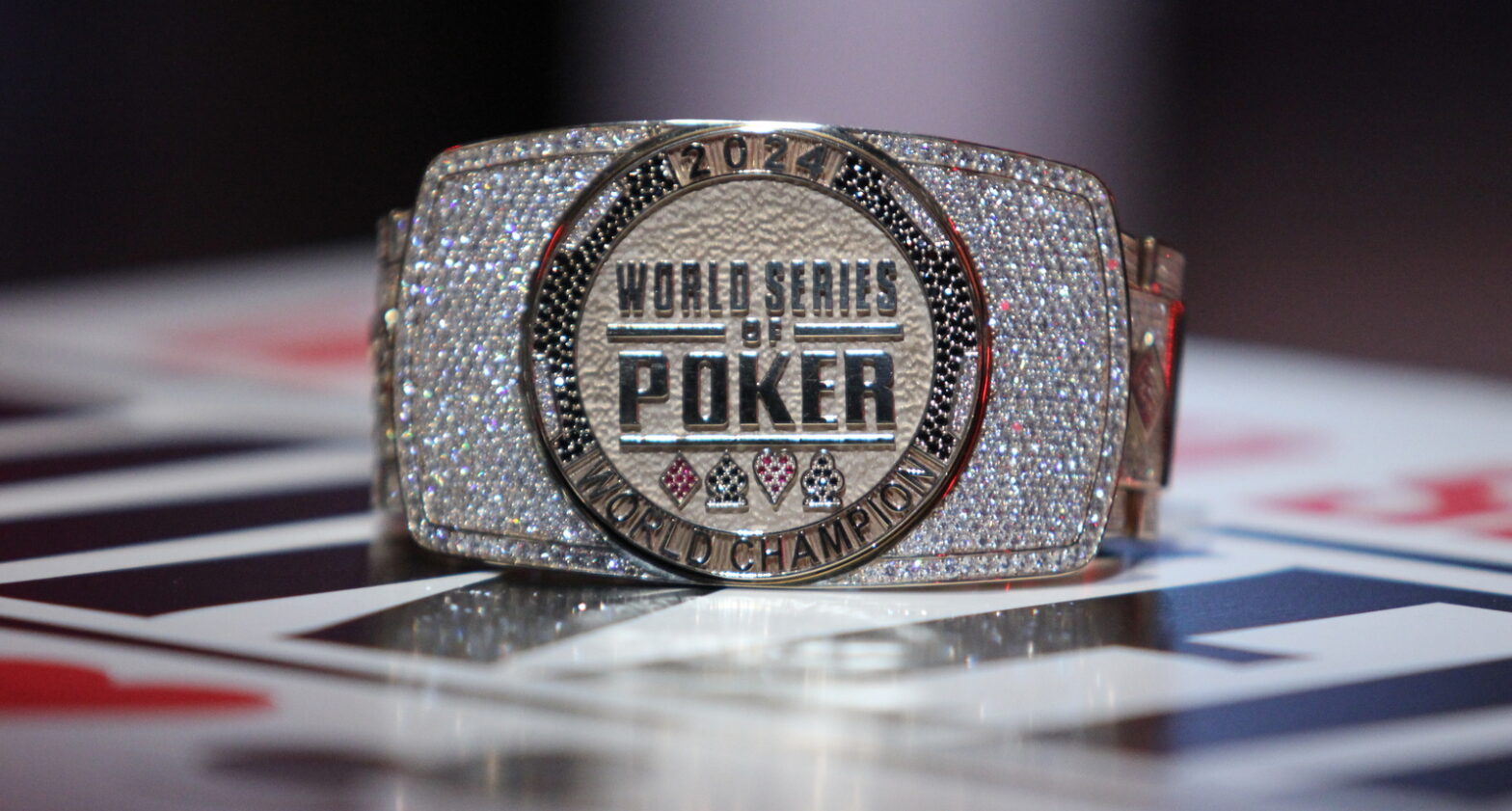
Michael Mizrachi won the 2025 World Series of Poker main event in dominating fashion, adding another chapter to his illustrious career. The man known as “The Grinder” needed just 79 hands to finish off the rest of the table for his eighth WSOP bracelet and a $10 million payday.
However, where does this rank in terms of all-time WSOP main event final table dominance?
The Florida native was all in with A-K against eventual runner-up John Wasnock’s pocket Kings with seven players left. A miracle Ace on the river gave him the chip lead, after which he never looked back. But despite some good fortune, Mizrachi put on a big stack clinic and steamrolled the rest of the table once he had the lead.
But since he needed quite a bit of luck in the early portion of the final table, I think it knocks him slightly out of the top five performances of all time. In chronological order, here are the cases for the five most dominant WSOP main event final table performances in history.
2004: Greg Raymer
Greg “Fossilman” Raymer began the 2004 Main Event final table with 8.215 million, or about 33% of the chips in play. Matt Dean started the day in second with 4.92 million, only slightly more than half of Raymer’s stack. Raymer kept his foot on the gas and eliminated the two shortest stacks first. He needed to come from behind to do it, but unlike Mizrachi, his tournament life wasn’t at risk since he had the bigger stack.
Raymer retained a lead of at least double the second-largest stack for almost the remainder of the final table. Despite a couple of bad beats during seven-handed play, Raymer plowed onwards to eliminate seven of his eight opponents at the final table. His terminator-like run through the table set up heads-up play against David Williams, where Raymer held a better than 2-to-1 chip lead. Raymer finished it off in quick fashion to put an exclamation point on a fully dominant display.
2006: Jamie Gold
In 2006, the WSOP attracted 8,773 people to Las Vegas to put up the $10,000 for their shot at a Main Event title. Until 2023, when the event drew more than 10,000 entries for the first time, Gold held the distinction of topping the largest field in the history of the event. In a similar fashion to Raymer, Jamie Gold went wire-to-wire with the final table chip lead to win the bracelet and $12 million. The Californian entered the final table with 28% of the chips in play, with 25.65 million. The next closest competition was the much heralded four-time bracelet winner Allen Cunningham, who had 17.7 million. Many were expecting Cunningham to chase down Gold to win.
ESPN broadcaster Norman Chad was one of the many who believed Cunningham was the favorite to win. He made it known at the start of the final table broadcast.
With one-third of the chips in play, it is hard to bet against him (Gold) but naturally I will. Allen Cunningham is the best player at this table. For once, I’d like to see the best player win.
But Chad’s prediction did not come to fruition. Gold only extended his chip lead, taking out a short stack in ninth and quickly growing his stack to more than 35 million. On the other hand, Cunningham’s stack srunk to 12 million.
Like Raymer, Gold eliminated every player at the final table except one. Cunningham was eventually eliminated in fourth place to set up a three-handed dynamic where Gold had more than two-thirds of the chips in play.
By the time Gold was heads-up with Paul Wasicka, he held a 9-to-1 chip advantage. Gold’s chip stack covered an entire section of the table with about 70 individual stacks of 20 chips. But those were the days before more frequent color-ups. Gold finished off heads-up play quickly to secure the then-record payout.
2010: Jonathan Duhamel
It’s next to impossible to talk about Jonathan Duhamel’s win in 2010 without mentioning the absolutely brutal beat he put on Matt Affleck with two tables left in the tournament. It is one of the most famous hands of all time and gave Duhamel a massive chip lead with just 15 players left.
The brutal blow to Matt Affleck propelled the Canadian to a big final table chip lead. Duhamel started with 66 million and almost a full 20 million more than John Dolan. The third-largest stack, Joseph Cheong, started the final table with about a third of Duhamel’s chips.
This year’s champion made his first main event final table this year, only adding to the skill level on display at the 2010 final table.
Unlike the first two performances, Duhamel’s chip stack suffered swings. Cheong, Mizrachi, and Duhamel all held the chip lead at different points of the final table. Moreover, Duhamel became the short stack during six-handed play.
His ability to rebound is what made this a dominant showing. Cheong took the chip lead and looked to be running away with it. But Duhamel eliminated Mizrachi in fifth-place and closed the gap by the time three-handed play started. Cheong held a slight lead, while John Racener was barely hanging on in third.
Cheong lost the lead and then played one of the most famous pots in WSOP main event final table history. He six-bet jammed all-in with A-7 against Duhamel’s pocket queens in a 176 million-chip pot. Since 2010 was the first year starting stacks were tripled to 30,000 Chad claimed it was, at the time, the largest pot in main event history. After the queens held, Duhamel has 83% of the chips in play against Racener who was happy to slide into second place.
2015: Joe McKeehen
The 2015 WSOP Main Event final table was the most straightforward in history with a wire-to-wire chip leader winner and no drama whatosever. Unlike the first three final tables on this list, this was played in the era when every hand of final table was broadcast on ESPN. This one featured almost zero interesting hands or spots of worry for Joe McKeehen.
With 63.1 million, McKeehen entered the final table with 33% of the chips in play. It was more than double Zvi Stern’s second-largest 29.8 million chip stack. Sitting right in the middle of the table, McKeehen was the “table captain” the entire time, running into no challenging spots and keeping his foot on the gas. He would eliminate six of his eight final table opponents en route to the title.
2021: Koray Aldemir
Koray Aldemir’s victory in 2021 was very similar to Mizrachi’s. Heading into the final table, Aldemir had 140 million which was 34% of the chips in play. He was well ahead of the second largest stack George Holmes of 83.7 million.
Aldemir was not only the largest stack but also the most experienced player by far at this final table. Thus, many assumed it was set in stone that he would coast to the bracelet. And, for the most part, he did. Aldemir’s lead grew even larger when the third-largest stack, Alejandro Lococo, barreled off all of his chips into Aldemir’s full house. Lococo exited in seventh and gave Aldemir 53% of the chips in play with six players remaining.
Overall, Aldemir eliminated six of the eight final table opponents. The only hiccup he had, which kept his performance from being as dominant as Gold’s, Raymer’s, or McKeehen’s, was during heads-up play. After Jack Oliver went out in third, Aldemir had 65% of the chips vs. Holmes. But Holmes fared well at the start of heads-up, actually taking a slight chip lead at one point. Eventually, 48 hands after Holmes took the lead, Aldemir was able to finish it off with a memorable final hand where he made a tough all-in call, covering Holmes by only 10 million.