Poker Writer


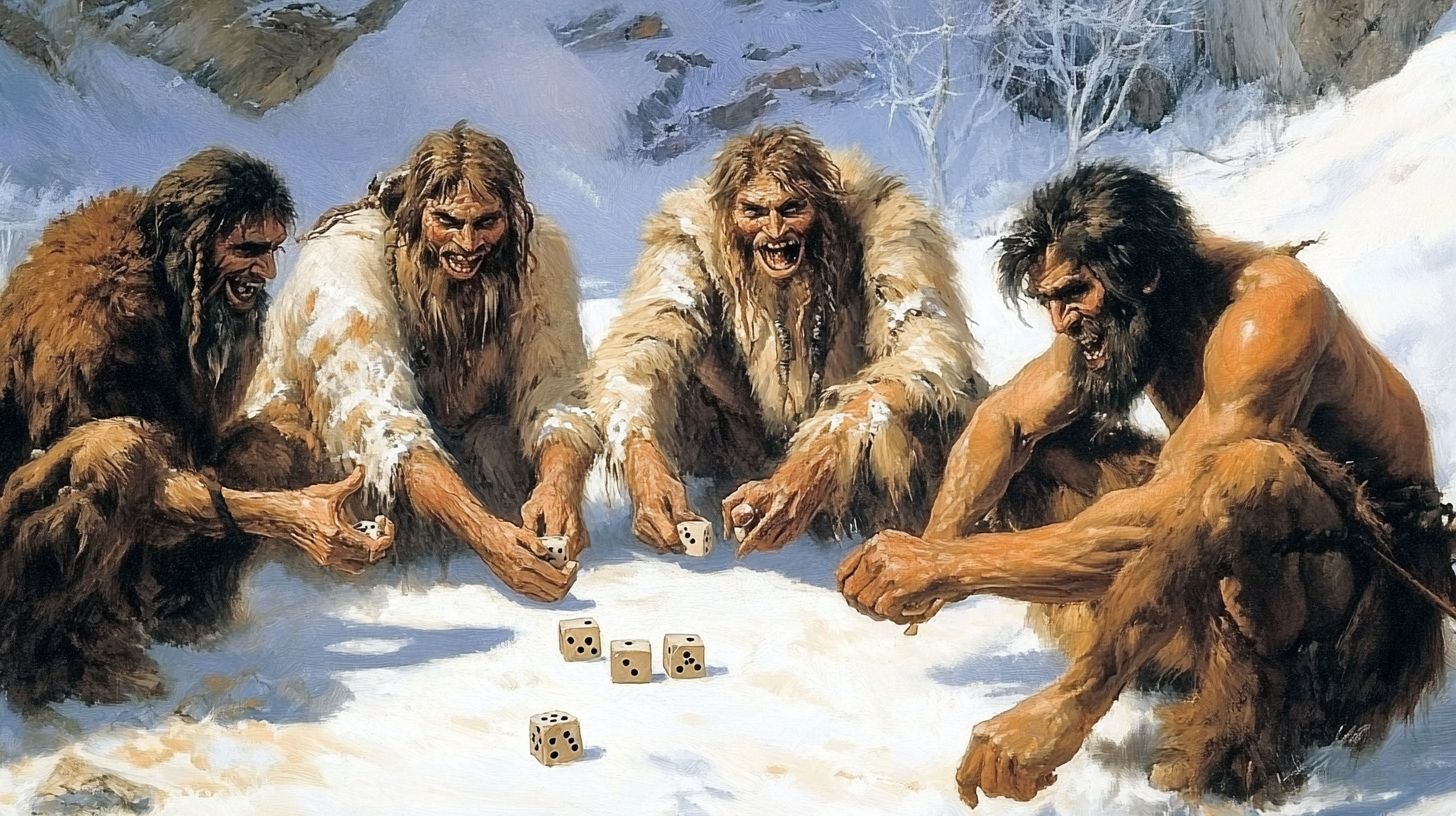
Native peoples in the Americas were using gambling paraphernalia as far back as 12,000 years, based on new findings. In the journal American Antiquity, Colorado State archaeologist Robert J. Madden published documentation of prehistoric Indigenous North American games of chance and gambling.
He examined photos of 12,000-year-old artifacts that strongly suggest that people from many generations ago engaged in probability thinking and gambling, not much different than people of today. Madden traced the lineage of two-sided dice-like devices, which he theorized were used in games of chance. In the photos provided with Madden’s study, one side of the device would typically have etches or carvings, distinguishing it from the other side. The oldest ones came from sites in Colorado, Wyoming, and New Mexico.
Findings Pre-Date Previous Beliefs of Gambling History
The methods and complexity of games of chance may have changed over the millennia of human history, but fascination with randomness and the desire to participate in it appears to have been innate in humanity for even longer than we thought.
Other archaeologists are fascinated by the new discoveries. Robert Weiner of Dartmouth had this to say:
This is the most exciting paper I’ve seen in North American archaeology in at least the last five years. Demonstrating this Native American contribution to global intellectual history is fantastic.
Prior to these findings, it was widely believed that dice originated in roughly 6,000 B.C. in ancient Mesopotamia. Ancient Egyptians were also known to play old board games that used dice. There was also gambling involving dice in the Ancient Tang Dynasty in China. The popularization and spread of modern cubic dice are usually attributed to the Ancient Romans.
Those forms of gambling, while better documented, post-dated Madden’s findings by thousands of years.
Ancient People Understood Randomness
Madden’s findings show that people from some of the earliest points of recorded human history already thought in terms of probability and chance.
Madden admitted that he expected ancient people would struggle to understand randomness and would have been more likely to view every event as following a predictable force. But the revelation that they used dice-like objects to gamble shows that they did think in those terms, at least in some respects.
According to Weiner, the games reveal the way that people think about the world:
…people are engaging, both in intellectual and sort of spiritual ways, with that universal human question of why things happen.
History of Playing Cards
The concepts of gambling and probability have become increasingly complex over the course of human history. The history of modern cards has a more recent past, dating back hundreds of years rather than thousands.
There are some indications that card games began in the Tang Dynasty in China around 900 A.D. But the more traceable path goes back to the 14th century. The earliest confirmed record of playing cards was found in a manuscript written by a German monk, Johannes, in 1377.
Initially, card games were reserved for more wealthy individuals, given the cost and artistic nature of the earliest cards, which were often elaborately designed. But eventually, they became simpler and more accessible to the everyman.
The modern four-suited 52-card deck began to emerge in the 15th century as France became the pre-eminent center of card culture and established the two-color red-and-black deck. The names of the four suits came from England.
Cards remained popular worldwide and continue to this day.
Modern Poker Equipment Continues Evolution of Gambling Paraphernalia
Now, 12,000 years after the earliest recorded use of games of chance, humans continue to play competitive games of chance for money and recognition. Poker became a popular card game dating back to the 1700s. The modern term “poker” is traced to New Orleans in 1829.
As poker grew in popularity in the United States, establishments began to create a system where money was represented by gold nuggets, coins, and, eventually, chips in the late 1800s.
As modern technology has advanced, poker technology has advanced with it. Things like automatic shufflers became popular in the mid-20th century. Shuffle Master, founded in 1983, produced automatic shufflers for casino blackjack tables. They quickly became more prominent in casinos after the first automatic shuffler machine was sold to Bally’s Casino in 1992.
On television, the poker hole-card camera became popular in the 2000s and helped launch the “poker boom” era. Poker’s popularity soared once viewers could more closely follow the action. Now, RFID technology is common on poker streams. “Smart” cards use radio waves to transmit data wirelessly to a reader, which identifies the cards for viewers.
Without a doubt, more innovations in poker and gambling paraphernalia will continue in the coming years. And according to Madden’s research, it can all be traced back to simple, two-sided devices from 12,000 years ago. The simplest of all gambling games started it all: the flip of a coin.