Deputy Editor


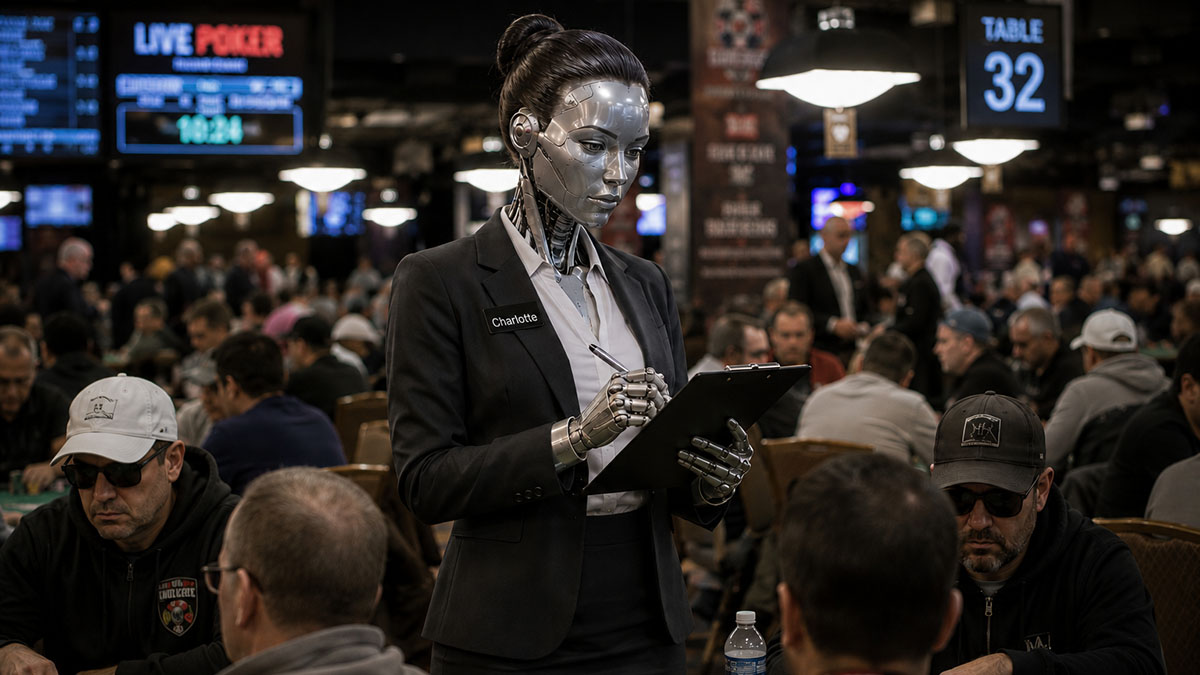
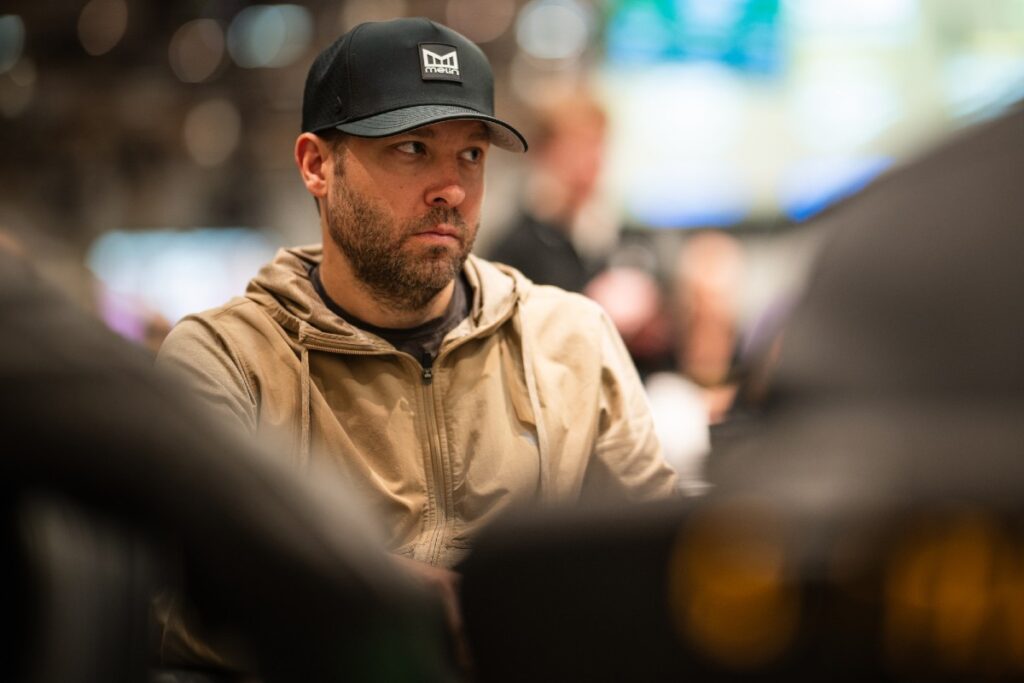
For the past decade, Art Parmann has been mulling ideas for what he calls “some kind of poker alert software.” Now, he’s built that and much more with “Ask Charlotte,” his AI-powered poker assistant.
While the project remains in its early days, Parmann believes it’s ready for some public stress testing. In some ways, its humble roots are still evident. But Parmann also thinks it’s brimming with potential and has been years in the making.
Asked by PokerScout for the Ask Charlotte elevator pitch, Parmann responded:
I would say my vision is your personal assistant for poker. All of the stuff that takes some of your time, even in micro-doses, can be automated.
Keep Reading
Parmann had been grinding live cash games for years in Las Vegas when his first light-bulb moment occurred. An online pro who transitioned to live games right around Black Friday, Parmann was grappling with a minor logistical issue.
If a juicy game started up somewhere in town, how would he know? Sure, he could scroll through Bravo Poker Live like everyone else, refreshing every 15 minutes. But even if a new game started, it might fill up before he could grab a seat. He knew there had to be a better way.
Parmann can’t remember exactly when he started trying in earnest to tackle this problem. He estimates it was sometime around 2018.
“I was playing $5-$10 no-limit at the time,” he told PokerScout. “The Bellagio games were not, like, super soft or anything. People were telling me like, ‘Oh, when the rodeo’s in town, $2-$5 or $5-$10 pops up at the South Point, and you don’t want to miss it.'”
“What if there was something that alerted you?” he thought to himself.
Parmann tried to build out his idea. He called it Shark Alerts.
“The technology wasn’t really there,” he said. “Maybe it was, but my ability to access it wasn’t.”
That first effort culminated in a system that sent him an email anytime a game started up at stakes of $5/$10 or higher. The project stalled out on two fronts. Firstly, the software he used to automate the emails “got a little tighter,” as he puts it. And COVID-19 brought live poker to a screeching halt.
The idea never really left his brain, though.
Advent of AI Opens the Door for Ask Charlotte
Parmann doesn’t have any formal programming training. But the advent of “vibe coding” — letting a large language model (LLM) write code for you via simple chat prompts — opened a door that had previously been shut to him.
“I’ve always had ideas to build stuff, but never the chops to do it,” he said.
Ask Charlotte isn’t even Parmann’s only pet vibe-coding project. He has also built Slotmaps, an AI agent that responds to questions about slot machine game states to help unearth advantage plays. Parmann said he spends two to three hours every morning refining his projects and trying to learn more about the software. He described himself as “really deep in the weeds.”
His poker playing and game-running hours, his content project (The Table 1 Podcast), and his family time (he has a wife and two children) only leave so much opportunity for AI tinkering.
But Parmann feels he’s far enough along to open Ask Charlotte up for business. The cash game scouting is plugged into both Bravo and Poker Atlas, so more than 150 rooms are monitored. And it has a variety of other functions relating to both tournaments and general minutiae relating to the poker grind.
A Versatile Poker Agent
Users with a Charlotte account can communicate with the automated agent through a variety of media. Ask Charlotte supports email, text messages, WhatsApp, and Telegram.
Its uses as a poker agent are equally varied. Parmann’s goals with Ask Charlotte have extended far beyond his original idea of cash game alerts. For instance, Charlotte can scout tournament tables and give an assessment of opponent strength. It can handle minutiae such as tracking session results, backer/horse splits, and pieces bought and swapped.
There’s functionality for game runners who need to track players’ statuses, waitlists, etc.
Fans can follow the progress of players via publicly available data from both World Series of Poker and Triton Poker Series. Thanks to the granularity of those apps — they track each entry from each player — Charlotte can actually track profit and loss.
That comes fraught with its own ethical and privacy questions, which Parmann admitted he hasn’t really thought deeply about. He noted that the first thing many visitors do is check the WSOP results database for the biggest winners and losers.
“It’s probably better for poker if there’s not P&L on everything,” he said after some thought. “It might be something that I don’t put on there long-term. I’m not married to anything, really. Our Table 1 brand is to make poker fun again. If it ends up being bad for poker to have something like this, I’m not opposed to wrapping it up, shutting it down.”
The WSOP data powers a fantasy poker functionality that Parmann hopes players will test out this summer. It’s set up to help users optimize lineups in both the $25K fantasy draft and the $500 ODB league, a salary-cap style game using the $25K prices.
Ask Charlotte uses a Marcel projection, a system popularized in baseball. It weighs the most recent three seasons (or, in this case, summers) at 5/4/3, so that the most recent set of results has the greatest impact on the projection.
Marcel projections are designed to forecast athletic performance, which brings some issues when translating the system to poker. Poker players don’t “age” the same way baseball players do. And the sample sizes are inherently minuscule when accounting for tournament variance.
Parmann said he’s not a big fantasy player, but he plans to put his money where his AI assistant is and enter a couple of lineups. Backtesting the system produced a +143% return on investment.
“I’m really excited to see how it does this year,” he said. “It actually won outright two years, according to the historical results. It didn’t do a great job projecting market prices, but it did do a good job grabbing players who it thought were below market value.”
Parmann hopes to program in fantasy-specific sweating functionality that allows fans to follow their players as the summer rolls along.
This Spider Still Has Bugs
While AI has created new opportunities in programming and other areas, it has issues and limitations, and Ask Charlotte isn’t immune to the “AI hallucination” problem. When PokerScout tested the system out, it made several notable mistakes.
In one strange case, the system’s calendar seemed to have frozen. Though PokerScout was interacting with it on a Tuesday, it insisted the day was Monday and quoted the wrong poker schedule at a local casino.
Parmann said he’s run into some issues with the dates and said this particular one likely stemmed from a power outage. The entire system was down for 36 hours and seemed to take some time to catch up.
PokerScout also asked it to follow a particular player over the course of a WSOP Circuit series. In one case, Charlotte reported that the player in question had “finished 12th, locked into at least $1,842” out of a 41-entry field. When PokerScout pressed for confirmation that 12 people were paid in a 41-entry field, it quickly corrected and said only six players were paid.
The system also said it has different functionality on Telegram than text, which Parmann said shouldn’t be a thing. He said he’ll be looking to fix that and the issues with the dates as soon as he can find the root causes.
“I’ll get that buttoned up,” Parmann promised.
Will ‘Fun Project’ Turn into a Poker Business that Scales?
Parmann has launched a paid version of Ask Charlotte that charges users $99 per month, but he described the system as still in a form of beta and said he just wants players to try it out. In that vein, he recommended folks sign up with his code (“ART”) and notes that no credit card is required — it’s a truly free demo with a trial period that the code will extend to 30 days.
Parmann is unsure if the nascent business will ever actually scale into something profitable.
“I have a few subscribers that use this, but the API calls and all this stuff, the $100 a month doesn’t even really cover that,” he said. “The efficiency is not really there, but I just like it, so I just keep playing with it.”
If people do try it, that would provide a much-needed stress test. Parmann said Charlotte runs on “a PC in my garage” with no dedicated server.
“I’m curious to see how this thing holds up over the course of a World Series,” he said. “I’m not sure if it’s gonna be something that breaks with too many people using it. If it starts to get traction, I will upgrade all of the components.”
Worst-case scenario, Parmann has built a system that will help him run his poker games and serve as the game scout he once dreamed up. However, there’s significant upside if Ask Charlotte holds up through the summer’s testing and proves its value to players.
“It’s a fun project to me,” Parmann said. “I do want people to try it. I try to provide as much value as I can for people and see what comes out the other end.”