Managing Editor


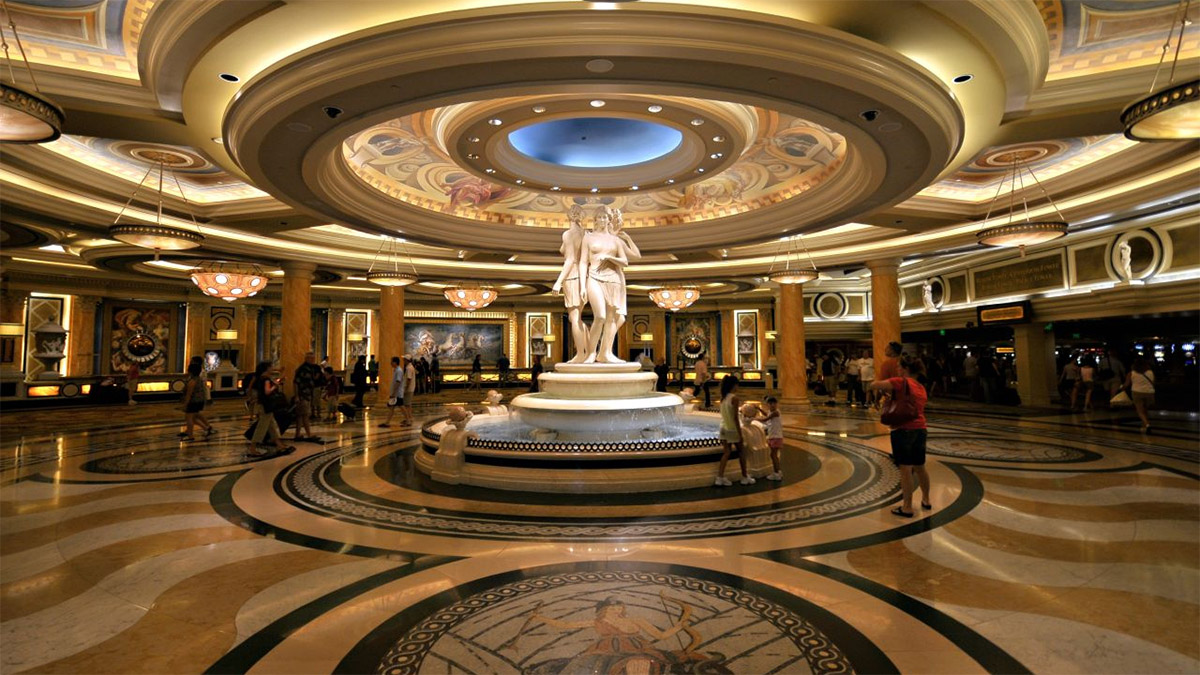
Caesars Entertainment has agreed to pay a $7.8 million fine to resolve a complaint by the Nevada Gaming Control Board (NGCB) dated Nov. 10, 2025. The fine stems from an investigation into gambling activity at its flagship Caesars Palace Resort on the Las Vegas Strip by Matthew Bowyer, a convicted illegal bookmaker who took bets from Shohei Ohtani’s interpreter, Ippei Mizuhara.
Bowyer received a one-year sentence in August following his guilty plea last year. Mizuhara is currently serving a 57-month sentence for stealing nearly $17 million from Ohtani to pay his gambling debts.
Caesars’ settlement still needs approval from the Nevada Gaming Commission (NGC). A hearing is scheduled for November 20.
Once the settlement is approved, Caesars will become the third Strip operator to pay a fine stemming from its failure to bar Bowyer from gambling. Like MGM Resorts International and Resorts World before it, Caesars was investigated for violating the Bank Secrecy Act (BSA). Under that 1970 law, banks and other financial entities have the responsibility to monitor transactions and prevent money laundering. Casino companies over a certain size are considered to be financial institutions under the BSA because they habitually extend credit to patrons.
The obligations imposed by the BSA include flagging any suspicious transactions with federal authorities. However, employees may feel pressured not to interfere with the gambling of the casinos’ most valuable customers. As a result, anti-money laundering compliance failures are a recurring issue, not only in the U.S., but virtually anywhere casinos operate.
Caesars owned the World Series of Poker until last year, but sold it to GGPoker in October 2024.
Caesars Noted Red Flags, Didn’t Ban Bowyer
The investigation found that Caesars Palace had accepted seven deposits from Bowyer in 2017, each in the hundreds of thousands of dollars and totalling over $3 million combined. He also made three deposits totalling $685,000 at a Caesars-owned Harrah’s property in California in 2019, and attempted a half-million deposit at Harrah’s/Harveys Lake Tahoe in 2021.
Throughout most of this time, Caesars had Bowyer flagged as “high risk,” according to the investigation report. It had also temporarily suspended his account twice, but didn’t permanently ban him until January 2024, following the news that his home had been raided by federal authorities.
Each suspension came after Bowyer had accumulated about $2 million in losses without Caesars being able to determine the soure of his funds. He managed to have the first suspension lifted after showing nearly $3 million in winnings from the Cosmopolitan, an MGM Resorts property. Caesars lifted the second suspension after reviewing his 2019 and 2020 tax returns, despite the fact that these showed lower income than his 2018 return, which hadn’t been deemed sufficient to lift the first suspension.
Caesars also had a note on Bowyer’s file indicating that he was suspected of being a “bookie” due to an anonymous call in 2019 identifying him as such.
Investigations Extend Beyond Sibella’s Sphere
MGM Resorts and Resorts World had allegedly also ignored warnings about other bookmakers by activist gambler Robert Cipriani. These included Wayne Nix, who was named alongside Bowyer in the investigation into MGM.
Cipriani, who goes by “Robin Hood 702” is a self-described activist gambler who has made it a mission to expose what he considers wrongdoing by Las Vegas casinos. He sued Resorts World unsuccessfully, claiming that the casino had retaliated against him after he attempted to warn its security team about Nix and others he said it should have banned from its property.
The investigations into and subsequent fines paid by MGM and Resorts World had a connection in that their respective violations had both occurred on the watch of Scott Sibella, a longtime gaming executive who lost his license in Nevada as a result of the scandal.
The NGCB had already investigated Sibella once — albeit on slightly different allegations — and found no evidence of wrongdoing. However, a subsequent federal investigation brought the matter to light and forced Nevada regulators to take another look.
This outcome for Caesars shows that these issues are bigger than a single executive, however. The NCGB’s investigation doesn’t mention any Caesars executives by name, nor does it assign individual responsibility for the failures. The President of Caesars Palace in 2017, when most of Bowyer’s deposits took place, was Gary Selesner.
Selesner passed away in September 2024.