Managing Editor


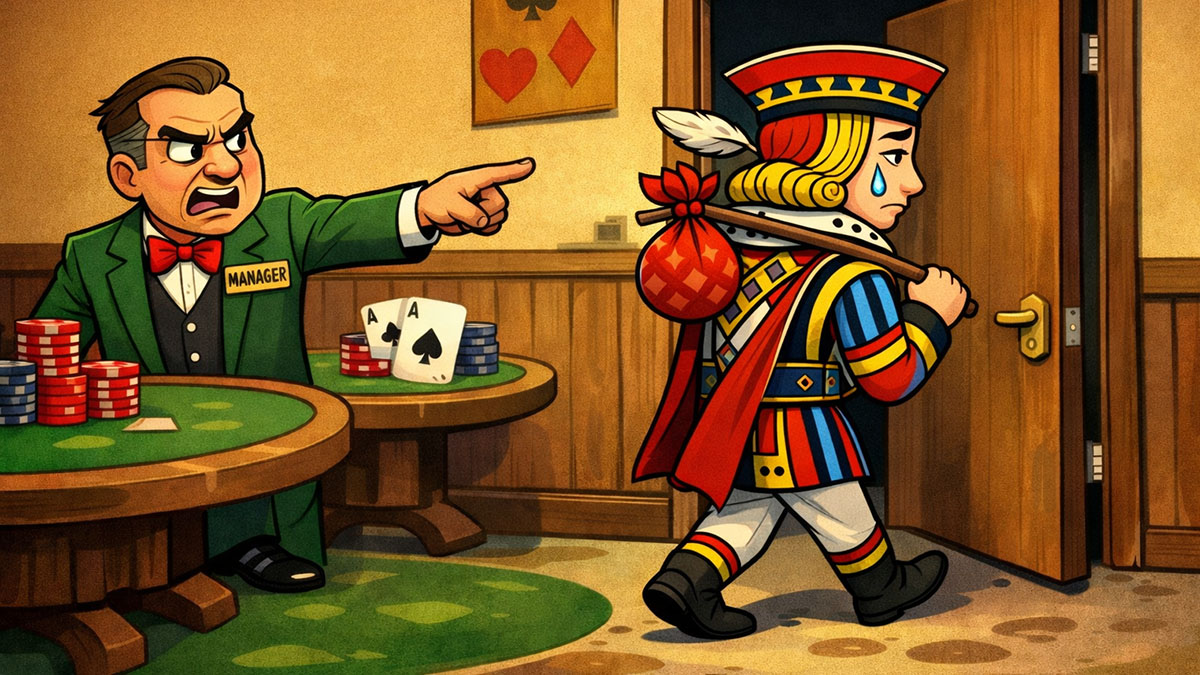
The California Department of Justice has received final approval for new rules for cardrooms in the state, which will ban blackjack and require that the “player dealer” role be periodically accepted by actual players and not only by third parties paid by the cardroom to sit in the game. Jointly, these two rules will make it more difficult for the cardrooms to offer a casino-like experience.
The Office of Administrative Law approved the new rules on Monday, February 9.
The state’s gaming tribes will surely be happy about the new rules. They have objected strongly and for many years to the cardrooms’ practices, which they say infringe on their exclusive right to offer casino games. They have tried and failed twice to have the games declared illegal in court. After receiving an unfavorable ruling in federal court in 2019, they won the one-time right to sue in state court thanks to the 2024 Tribal Nations Access to Justice Act. However, last year, their case was quickly dismissed as the judge ruled that it was a federal issue, since the tribes’ exclusivity came via a compact under the Indian Gaming Regulatory Act.
Despite losing the battle on that front, the tribes have earned a significant victory through this regulatory rules change. Although it doesn’t give them all that they would have wanted, it ensures their exclusivity over blackjack and related games, while making it more difficult for the cardrooms to offer table games with jackpot-type side bets.
Technically, the new regulations come into effect on April 1. However, cardrooms will have an additional 60 days to prepare a compliance plan, so the changes might not be complete until as late as May 31.
Keep Reading
Rules Require Non-Compensated Players to Accept Dealer Role
California cardrooms have been dealing poker since the Gold Rush era. As the state modernized and formalized its policies on gambling, these were grandfathered in. However, the rules that were created to govern them left loopholes that allowed them to offer casino-style card games as well as poker.
The rules stipulate that cardroom games cannot be house-banked. However, the cardrooms’ workaround for this was to pay third-party “prop” players to sit in the game and accept the dealer role. That allows for a casino-like experience for the other players, just with a middleman banking the games instead of the casino.
The new rules still allow for third-party prop players. However, they mandate that at least two other players — who do not have a relationship with the cardroom — be willing to accept the dealer role for at least one hand each, every 40 minutes. Failure to meet that requirement means that the game must break and can’t resume until a non-prop player agrees to take on the dealer role.
Players might have been willing to do so for blackjack, where the maximum liability for the dealer is manageable. Even with multiple opponents and the potential to double, split, and/or hit blackjacks, it would be rare to lose more than, say, ten times the bet in a single hand.
On the other hand, prop dealers are almost obligatory when it comes to games with side bets offering long odds. Recreational gamblers want to bet a little to win a lot. Few would enjoy taking on the dealer role in a hand where they’re potentially on the hook to pay out a jackpot at 300-1.
Cardroom owners are, no doubt, already wracking their brains to come up with new workarounds.
One possibility is that new social conventions could emerge among players to keep the games running. For instance, if the cardrooms allow a low minimum bet on such games, players could jointly agree to bet the minimum and avoid side bets during the mandatory two non-prop hands. Once the prop dealer takes over again, regular play could resume.
Another possibility is that the third parties could offer jackpot insurance to the players taking on the dealer role, capping their risk.
Blackjack Ban is Harder to Get Around
Whether or not the cardrooms come up with innovative solutions for the player-dealer issue, it does look like blackjack is going away.
Anticipating, perhaps, the likelihood that cardrooms would introduce a slightly tweaked game under a different name, the rules go to great lengths to ban all the key features that make blackjack what it is.
Specifically, all the following are now off-limits:
- Any game with “blackjack” or “21” in its name.
- Any game involving a target total of 21.
- Any game where receiving an ace plus a ten or face card results in an instant win.
- Any game in which the dealer wins ties.
- Any game in which exceeding a certain target number results in a loss for the player.
Those forbiddances still allow for games where players can choose whether or not to take more cards and are aiming for a specific total. However, the necessary adaptations would produce a game that would feel quite different from blackjack.
When the rules were first proposed last summer, PokerScout took a look at what a hypothetical California 30 game might be like if cardrooms attempt to develop something that’s as close as possible to blackjack while remaining compliant.