Deputy Editor



A detention letter from the Department of Justice reveals new details regarding the individuals arrested last week for allegedly rigging poker games and fixing sports matches. The poker allegations involved the use of pro athletes as bait and the letter offers more detailed evidence implicating the accused. That evidence includes text messages, player lists, and an explanation of the signaling system used in the poker cheating scheme.
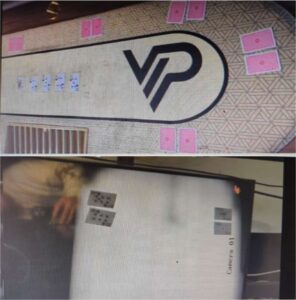
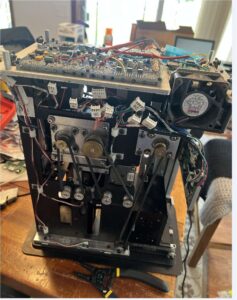
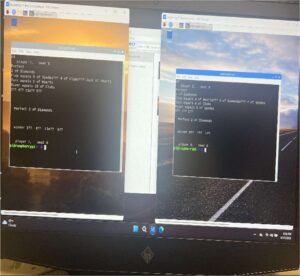
The DOJ included a number of photos in its letter. In addition to the text messages, these include photos of the alleged perpetrators of the scheme and shots of the cheating devices. Among the latter are the interior components of a Deckmate 2 automatic shuffler, ostensibly in the process of being rigged for use in cheating. There’s also a card table that appears to reveal the value of the cards in each player’s hand, as well as an output from a computer program connected to the rigged automatic shuffler.
The letter recommends that 13 of the individuals be detained pending trial, while the other 18 could be released only if they post “substantial” bail.
Keep Reading
Photos of Alleged Poker Cheating Technology
The FBI alleges that the X-ray table pictured below allowed perpetrators to know players’ card values:
Perpetrator Shane Hennen, who has a history as an alleged poker cheat, reportedly possessed the following Deckmate 2. The FBI found the photo on his iCloud account. It appears in a state of disassembly, possibly in the process of being reprogrammed for the scheme.
The following photo shows the computer outputs from the rigged shuffler. It appears to show which player will have the winning hand (“player 7, seat 6” in the photo on the left).
Player List Includes At Least Seven Conspirators at Nine-Handed Table
Authorities released a text message from one of the defendants, John Mazzola, which indicates the cheating may have targeted as few as one victim at a time.
At an allegedly rigged game in Miami in September 2024, a player identified only as John Doe No. 4 lost more than $60,000 in the following lineup:
- Nelson ‘Spanish G’ Alvarez
- ‘Lex’
- Michael ‘Mikey’ Renzulli
- Mazzola
- Tony ‘Tone’ Goodson
- Kenny Han
- Robert ‘Lil Robbie’ Stroud
- Jamie ‘Jamie Friend’ Gilet
- Redacted victim (‘fish’)
The detention letter doesn’t make clear who ‘Lex’ is. But since that person isn’t identified as a fish, or a target of the scheme, it looks like the game is set up to specifically defraud one person.
Chip Dumping, Soft Play, Signaling System Outlined in Text Messages
More text messages from the detention letter outline further aspects of the cheating scheme. These include chip dumping and an explanation of the signaling system used by the “quarterback” to tell the players who had the winning hand.
The quarterback or “driver” would wirelessly communicate with an off-site operator who could see the computer outputs pictured above.
Mazzola texted Stroud and Goodson a list of the signals.
- Playing with a $1,000 chip meant Renzulli had the best hand
- Playing with a green (possibly $25) chip meant “Chad” had the best hand, though it isn’t clear who Chad was
- Playing with a $500 chip meant Lex had the best hand
- If the QB touched his chin, it meant Alvarez had the best hand
- If the QB touched his wrist or arm, it meant Mazzola had the best hand
- Playing with a black (possibly $100) chip meant the victim had the best hand, and everyone should fold
The scheme bears a resemblance to the one outlined as a possibility by WIRED in a recent video. There, an investigative reporter teamed up with a hacker who knew how to compromise the Deckmate 2, the automatic shuffler pictured above. The two successfully cheated unsuspecting opponents at a home game using similar signals.
During the course of the rigged poker games, the text message evidence shows that perpetrators took measures to lose at times. This intentional losing served a couple of purposes.
For one, it allowed a celebrity like indicted NBA player Chauncey Billups, who was allegedly in on the scheme, to keep up appearances that he was a whale. If Billups consistently won while playing terribly, it would look suspicious. The solution: have Billups win absurd hands, then lose that money back to other conspirators.
The players also dumped the occasional pot to the victims for appearance’s stake. For example, in the Miami game involving John Doe No. 4, Renzulli instructed the other players in the game to “please let [the victim] win a hand.”
“He’s in for 40K in 40 minutes,” Renzulli said. “He will leave if he gets no traction.”
Conspirators Stole Rigged Deckmate 1 at Gunpoint
Another interesting nugget from the DOJ’s letter is about the gunpoint robbery of a rigged automatic shuffler. That detail of the case was already known from the indictment, but what’s interesting about the letter is that it says the conspirators stole a rigged Deckmate 1.
All of the discourse around rigged shufflers in home games has generally revolved around the Deckmate 2. A follow-up model released in 2012, the Deckmate 2 cut the time of the automatic shuffle roughly in half. Most crucially for nefarious purposes, though, the Deckmate 2 includes an internal camera.
Cheating uses for the camera are obvious, but the Deckmate 1 doesn’t have that feature. In fact, Doug Polk, who has often railed against the trustworthiness of any game with an automated shuffler, specifically told social media followers to look out for the Deckmate 2 in a lengthy thread.
There are 2 types of auto shufflers used in poker. Deckmate 1 and Deckmate 2, both made by the company shuffle master.
Deckmate 1 is random shuffle and has no way to know which cards are where. Deckmate 2 has a camera and can sort the cards (to bring decks back to factory order)
— Doug Polk (Code Doug) (@DougPolkVids) May 27, 2022
However, the perpetrators’ possession of a rigged Deckmate 1 shows that games using that particular shuffler are not above suspicion, either.
A study by three tech-savvy individuals (“Shuffle Up and Deal: Analyzing the Security of Automatic Card Shufflers”), one of whom is featured in the aforementioned WIRED video, came to the same conclusion. While the cheating utility of the Deckmate 2 was obvious, they wrote that Deckmate 1 can be manipulated for poker cheating as well.
“Once the firmware of the shuffler is compromised, the threat of cheating is real,” they wrote. “This is true even for cases (such as with the DM1) where the device is incapable of determining the deck state.
“Moreover, the security of both shuffler models was found to be well behind the state-of-the-art for secure devices. Basic security principles … were either entirely missing or badly implemented.”