Editor


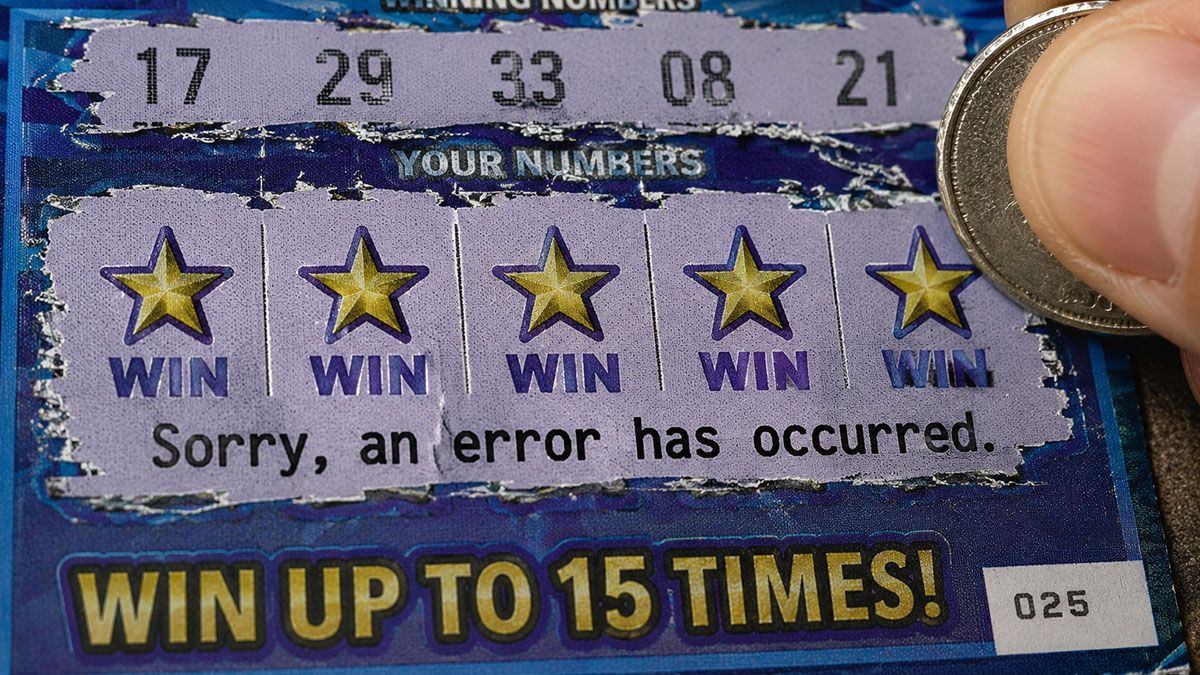
A forklift driver from Indianapolis thought he had won $100,000 after scratching off a $5 Space Invaders Cash Invasion ticket last week, only to quickly learn that he could not keep the life-changing sum.
Mike Fields drove straight to the Hoosier Lottery headquarters to try to collect his winnings after a store scanned the ticket and told him he was only entitled to $20.
Lottery officials refused him once again, citing a “technical issue” with the new game. They only offered him $20. Other people faced a similar predicament and arrived at the office that day trying to claim prizes. Another player, Glendon Jones, expected to receive $2,500 before officials told him about the misprint.
After realizing what had happened, the Hoosier Lottery quickly stopped selling any more $5 Space Invaders scratch-offs, which had only launched on June 2.
A page for the game states:
The $5 SPACE INVADERS™ Cash Invasion Scratch-off launched with a technical issue. We halted the sales of the ticket to ensure the game experience upholds the integrity we strive to provide.
The lottery urged anyone with a disputed ticket to submit a protest form by mail.
Same Fight, Different Machine
Unfortunately, similar stories are common in the gambling space, especially when it comes to slot machines. One well-known case occurred two years ago, when Roney Beal of Shamong Township, New Jersey, played a Wheel of Fortune-branded slot machine at Bally’s Casino. She landed what she thought was a $1.2 million jackpot, with a multiplier that would have doubled the sum. However, the casino later informed her that the jackpot had been displayed in error.
Casino staff told Beal that the machine malfunctioned due to a “reel tilt,” a phenomenon specific to electromechanical slots. As she argued her case, one attendant told her, “Lady, get it in your head, you won nothing.” Beal has attempted to fight the casino and the machine’s manufacturer in court, without much success so far, though she hasn’t yet exhausted her options. An investigation by the New Jersey Division of Gaming Enforcement found that Bally’s committed no regulatory violation.
Electromechanical slots determine the game result internally, using a digital random-number generator. The physical spinning reels may appear like a randomization device to the player, but are in fact only a display device, technologically and legally speaking. When the physical reels don’t match the result of the RNG due to a mechanical failure, the machine classifies the incident as a “reel tilt” and the round is void.
The situation with the Indiana Lottery appears to be the scratch-off ticket equivalent of the same thing. The manufacturer encodes a fixed number of prizes into the tickets’ serial numbers and barcodes during production. The symbols that the players uncover while scratching present those results in a more interactive and exciting way, analagously to the machine’s reels, but the Lottery’s perspective will be that they’re only decoration and don’t actually determine the result.
A Pattern of Heartbreak
Players rarely succeed when they take legal action in cases where the internal and external results of a game differ. Katrina Bookman thought she had won $42 million at Resorts World New York in 2016, before the casino shocked her by offering only $2.25 and a steak dinner. Her legal action failed.
Although slot machines are the most common culprits in these cases, this isn’t the first time a lottery player has encountered false hope and subsequent disappointment. One high-profile case involved Washington, DC, resident John Cheeks, who had a lawsuit against Powerball quickly dismissed after incorrect draw results appeared on the website, leading him to believe he had won $304 million.
These types of cases generate outrage, as people feel like gaming institutions are cheating them out of something they won. It’s an inevitable result of the design of these products, which obscures the actual mechanism determining the wins and losses.