Deputy Editor



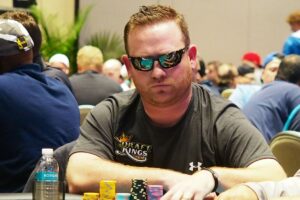
Laurence Escalante, the CEO and founder of Virtual Gaming Worlds (VGW), has stepped down from the company following a highly publicized arrest in his native Australia. Police arrested him following accusations of domestic violence by his ex-partner, while additional charges were added after authorities said they found cocaine, methamphetamine, and ketamine in his home. It’s the second time Escalante has faced drug possession charges.
VGW owns Global Poker, a popular online sweepstakes operator serving American customers. It also runs online sweepstakes casinos such as Chumba Casino and LuckyLand.
VGW called his exit a temporary “leave of absence,” while Escalante described it as a shock and said he will fight the charges.
“From the little I know of the allegations at this stage, I can only say that they are untrue and will be defended,” he said in a statement.
The company President, Mats Johnson will take over executive functions at VGW during Escalante’s absence, the company announced.
Keep Reading
Authorities took Escalante into custody on Jan. 29. He appeared in court the following day, where he faced eight charges. These included aggravated home burglary, assault, and possession of drugs with the intention to sell.
The arrest stemmed from a dispute with a 24-year-old woman described by local news sources as Escalante’s ex-partner. Escalante, 44, was reportedly in a relationship with the woman that lasted about a year. She told police that he broke into her home on Jan. 26, punched her, and stole valuable jewelry. She also said that it wasn’t his first violent outburst, and he had assaulted her on multiple other occasions.
When police arrested him days later, they allege that they found 30 grams of cocaine, 18 grams of methamphetamine, and 12.2 grams of ketamine in his possession. Recreational doses for each of these drugs are a fraction of a gram.
Arrest isn’t Escalante’s First Run-in With the Law
The arrest isn’t Escalante’s first time running afoul of Australian law enforcement. And it isn’t his first time in court facing drug-related offenses, specifically.
In 2022, Escalante returned to Australia after a trip to Las Vegas on his private jet. On that occasion, airport authorities confiscated cocaine, ecstasy, and LSD from Escalante, who said that the drugs must have ended up in his bag after a weekend of partying and that he was unaware they were there.
Escalante eventually pleaded guilty but avoided jail time thanks to a lack of prior criminal record. A local judge released him on a good behavior bond, describing him as “hardworking, generous, kind, family-oriented, and philanthropic.”
VGW Faces Uncertain Future
While Escalante has reportedly amassed wealth in excess of AU$5 billion (~$3.5 billion) thanks to VGW’s success, the company was already facing an uncertain future prior to his arrest. The company itself is also charting a course through serious headwinds, and Escalante has clashed with investors over his strategy and a perceived lack of transparency. In one expletive-laden tirade last year, he encouraged his doubters to sell their stake in the company. They proceeded to do just that, approving a plan for him to buy out the remaining 30% of the company he didn’t already own.
One bone of contention from the former stakeholders was Escalante’s decision to open a second company, Kickr Games, offering sweepstakes-based sports predictions. Although owned by Escalante, Kickr has its own CEO, Todd McKee, so its operations seem unaffected by his arrest.
Both companies face increasing scrutiny from U.S. regulators and legislators. Many states have passed bans on sweepstakes products within the past year. Others have issued cease-and-desist orders on an operator-by-operator basis.
The number of states evicting sweepstakes operators only looks likely to continue growing. Indiana, Iowa, and Florida are among the states considering bans as the new legislative season begins.
VGW launched a trade group called the Social Gaming Leadership Alliance (SGLA) to advocate for the industry. The SGLA has pushed for legalization and taxation in lieu of statewide bans.
Among other strategies, the SGLA has tried reframing sweepstakes games as “Social Plus.”
The SGLA’s efforts have amounted to little thus far. States like New Jersey and California appeared to largely ignore its lobbying efforts, passing sweepstakes bans with little debate.
Image credit: Wikimedia Commons (license)