Deputy Editor


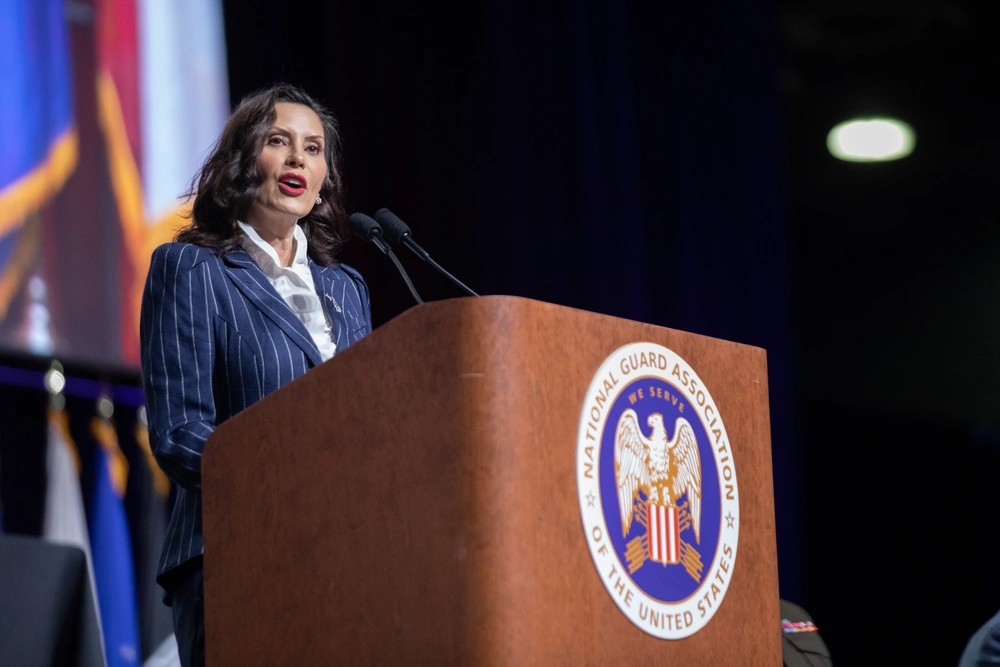
Facing federal funding cuts to Medicaid, Michigan Gov. Gretchen Whitmer is eyeing increased taxes on online gambling operators as a way to cover the budget shortfall. Whitmer’s proposed budget includes heightened taxes on both online casino and online sports betting operators.
The proposed tax increases fit into a larger pattern seen across the nation. Many states (and even cities, in one case) have either already raised taxes on gambling operators or have proposed such a move.
It’s unlikely that companies in the affected industries would be enthusiastic about paying higher taxes regardless of circumstances. But recent hikes have drawn especially loud complaints because regulated gambling sites are already under considerable pressure from unlicensed competitors in the sweepstakes gambling and prediction market spaces. DraftKings, for instance, has seen its share prices cut in half over the last six months.
Keep Reading
Higher iGaming Tax Expected to Add $135M Per Year
Whitmer’s budget proposal claims that raising taxes on online casino operators could add $135 million to the budget in the next fiscal year.
As things stand, Michigan’s iGaming tax is on a sliding scale based on gross revenue. The current rates cap out at 28%. Whitmer’s proposal would raise the ceiling to 36%, with the higher rates applying to operators earning over $185 million in a single calendar year.
Based on 2025 revenue, that means the higher taxes would affect four operators: FanDuel, DraftKings, BetMGM, and BetRivers. However, based on its Q4 numbers, Fanatics will likely have entered that bracket by the time the proposed change would take effect.
To put that projected $135 million increase into context, Michigan’s 15 iGaming operators paid a combined $778 million in state and local tax in 2025. The five that would be affected, including Fanatics, paid $656 million of that.
Pennsylvania’s Slots Tax Rate Provides the Excuse
The budget tries to frame the tax increase as well within industry norm, comparing it to that of Pennsylvania.
“The majority of internet casino profit comes from slot machines,” the proposal notes. “Michigan’s new 36% tax rate would remain significantly lower than Pennsylvania’s 54% rate for internet slots.”
Indeed, it seems likely that Michigan arrived at the 36% figure by looking at Pennsylvania’s effective overall rate. Although table games are taxed at just 17%, the effective tax rate for slots and tables combined has hovered around 35% for most of the state’s history and recently begun creeping a little higher, toward 36%.
The proposal further notes that Pennsylvania casinos paid more than 50% more in taxes than Michigan ones, despite generating a lower profit.
Additionally, Whitmer’s budget proposes increasing online sports betting taxes via a per-bet surcharge. It’s a match for the one Illinois implemented, charging 25 cents for the first 20 million wagers and 50 cents for each one thereafter. Whitmer hopes to raise a further $38.8 million via the proposed increase.
Again, the budget notes Michigan’s friendly sports betting tax regime, relative to other states.
“Michigan’s sports betting tax rate currently ranks 28th out of the 30 states that have legalized the activity,” the budget says. “Michigan’s tax rate remains the lowest among neighboring states.”
Online poker isn’t specifically mentioned in the budget proposal. According to PokerScout’s tracking, Michigan’s online poker market produced an estimated $9.6 million in taxes last year. While that figure is larger than any other state, it’s still a relative drop in the bucket compared to other, more popular verticals.
States Continue Squeezing Gambling Operators With Higher Taxes
If Michigan does follow through with the online gambling tax increases, it will fit right in with many other states. As budgets continue to tighten, states with legal online gambling have increasingly squeezed operators with ever-higher rates.
Neighboring Illinois provides a prime example. Illinois has hammered the sports betting industry in recent years, jacking taxes from 15% to as high as 40% in 2024 (the tiered system starts at 20%). It further added the aforementioned per-bet tax in 2025.
Arizona Gov. Katie Hobbs has proposed increasing the state’s sports betting tax to a 45% rate on the highest-grossing operators. That would be a massive increase from the current 10% number, one of the nation’s lowest.
Multiple factors are converging to spur these states to demand more from gambling operators. Budget shortfalls abound, and the money has to come from somewhere. Nobody wants to raise state income taxes. And seeing states like Pennsylvania tax operators at rates north of 50% emboldens local governments.
Online gambling is an easy target, particularly in a sociopolitical environment that has turned unfavorable due to recent scandals.
Opponents of the tax increases maintain that they just serve to push players to less safe offshore options. However, as long as state governments see gambling taxes as an easy shortcut to cover budget gaps, they’ll likely continue.