Deputy Editor


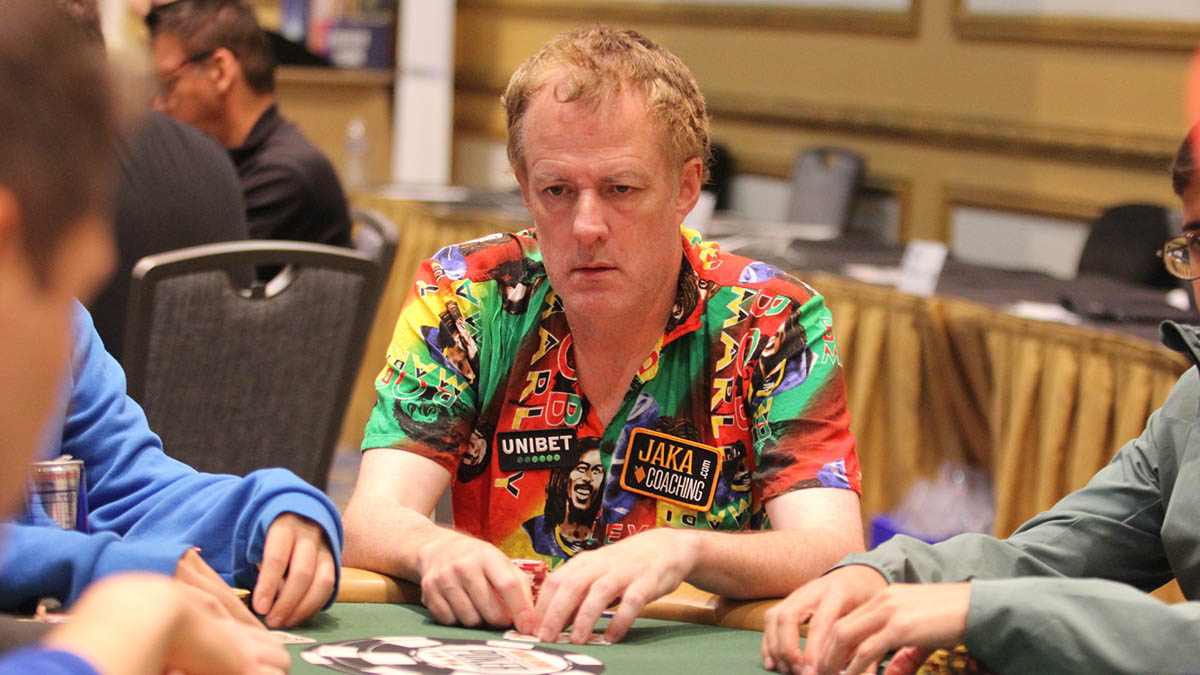
Poker in Ireland may be facing imminent extinction, thanks to a restrictive new regulatory framework that comes into play this year. Dara O’Kearney, one of the country’s best-known pros and poker authors, told PokerScout that limits intended to curb problematic use of slot machines will be a “death knell” for online poker if the game doesn’t receive a carve-out.
Monday marked the first day of licensing applications under the new Gambling Regulatory Authority of Ireland (GRAI). The GRAI is accepting both retail and online applications.
However, prospective licensees have to grapple with highly restrictive regulations. Under the GRAI, licensees offering “relevant games” can only accept a maximum stake of €10 and offer a maximum payout of €3,000.
O’Kearney told PokerScout:
If the regulations are applied in the strictest possible sense, it’s the death knell for regulated online poker here. Everything will move to unregulated apps, as is the case elsewhere.
While the payout limit will rein in jackpot slots, the stake limit will only affect high stakes players. Conversely, applying the same limit to poker would rule out everything except microstakes play.
That’s assuming that the law does apply to poker. It isn’t clear at this juncture what “relevant games” will ultimately mean. PokerScout reached out to the regulator, and a GRAI contact said that licensing hasn’t yet begun for poker providers. The regulator is working on establishing a framework that would allow for the continued existence of poker in Ireland, though.
The clock is ticking on the new restrictions coming into place. Existing online gambling licenses are set to expire on July 1, while retail licenses are set to expire on Dec. 1. Any operator running an applicable poker game after those dates would have to operate within the bounds of the new framework.
Ireland’s New Gambling Framework Aims to Modernize Laws
The existing framework for gambling in Ireland is out of date. Most rules date back to the 1931 Betting Act and 1956 Gaming and Lotteries Act, both of which came long before anyone had conceived of internet gambling.
Ireland’s attempt to modernize its gambling laws began with the Gambling Regulation Act of 2024. That update puts a number of restrictions on the industry. These include:
- Gambling ads will be forbidden to run on TV and on the radio between 5:30 a.m. and 9 p.m.
- Credit card deposits are now banned.
- ATMs won’t be allowed in gambling establishments.
- The GRAI will build a national self-exclusion register, and all operators must abide by it.
Studies say that one in 30 adults in Ireland suffer from problem gambling. The government hopes the new restrictions, which also include bans on certain types of ads (“targeted inducements”), will help curb the issue. The Gambling Regulation Act also establishes a Social Impact Fund. Some amount of taxes collected from operators will go to the fund.
Irish Gambling Regulator Consulting With Poker Industry
A GRAI contact responded to a PokerScout query regarding the new law’s application to poker. He said that while poker isn’t part of the initial licensing phase, it will fall under the regulator’s purview under the new framework.
“Poker does fall under the definition of gaming under the Act as it is a mix of chance and skill,” he wrote.
Furthermore, the Gambling Regulation Act does allow for varying the restrictions if industry stakeholders can reach an agreement with the regulator.
“Regulations made under section 83 of the Act also allow the Authority to vary the amount of maximum payment or the amount of maximum winnings with the consent of the Minister. We are planning on conducting further consultation with the public and industry on this. Further updates on this will be communicated in due course.
In due course likely means any news regarding the future of poker is months away, as the GRAI focuses on sports betting licenses initially before shifting to casino and poker.
O’Kearney said that Irish poker stakeholders are holding out hope that the changes “won’t be too drastic.”
Dara O’Kearney Warns of Dire Consequences for Irish Poker
The current licensing system allows Irish poker players access to the international “dot-com” liquidity pool, which includes all the biggest sites like PokerStars and GGPoker. O’Kearney confirmed to PokerScout that the new regulations would put that in jeopardy. Major operators might choose to cease service rather than provide microstakes-only play. Even if they were to remain, many players would choose to play on offshore sites instead, in order to have access to a range of games and stakes.
Shifting Irish poker demand offshore would have consequences for players and for the country. Unregulated sites tend to have few responsible gambling controls, if any. Sites vary widely in terms of how much effort they invest in preventing cheating. When offshore sites encounter financial difficulty, winners can sometimes struggle to get paid. For sites using “club” models, the effective rake can be prohibitively high.
O’Kearney said that if the worst-case scenario comes to pass, he will probably end up taking regular trips out of the country to play. Many American players adopted a similar strategy in the years after the “Black Friday” crackdown of 2011. Pros would relocate to Mexico or Canada for weeks or months during high-profile online poker tournament series. Some set up longer-term “poker houses” with their friends.
Questions Remain Regarding Future of Live and Online Poker in Ireland
An attitude of doom and gloom would seem a natural reaction to the upcoming changes to Irish gambling law. However, it’s still too early to bury the local poker industry. Many questions remain.
For instance, O’Kearney noted that he understood the law’s intent was to limit slot machines.
That makes sense when looking at the mechanics of the restrictions. It’s possible regulators won’t even apply the law to poker. Poker is small potatoes compared to casino and sports betting in the grander scheme of gambling.
And yet, if the rules are applied more broadly, it wouldn’t be the first time that poker has been collateral damage for regulators aiming to curb higher-volume gambling verticals.
While most reporting on the topic has focused on the future of regulated online poker in Ireland, even live poker could become a casualty of the GRAI licensing. In that environment, even the lowest stakes of play would vanish, as it isn’t economically viable to run a live cash game or tournament with a maximum buy-in of €10.
It would be tragic to see poker disappear in the country. The Irish Poker Open has become one of the most popular destinations for globetrotting poker players each spring. The upcoming 2026 festival, set to begin on March 26, will presumably run without issue under the old licensing framework. However, if the new regulations apply to live poker, it would become effectively impossible to run a tournament legally on Irish soil.
O’Kearney, at least, thinks that live poker will continue undisturbed. He notes that an industry source told him, “No one expects poker festivals to change in any way.”
Image credit: Ron Cogswell/Flickr (License)