Poker Writer


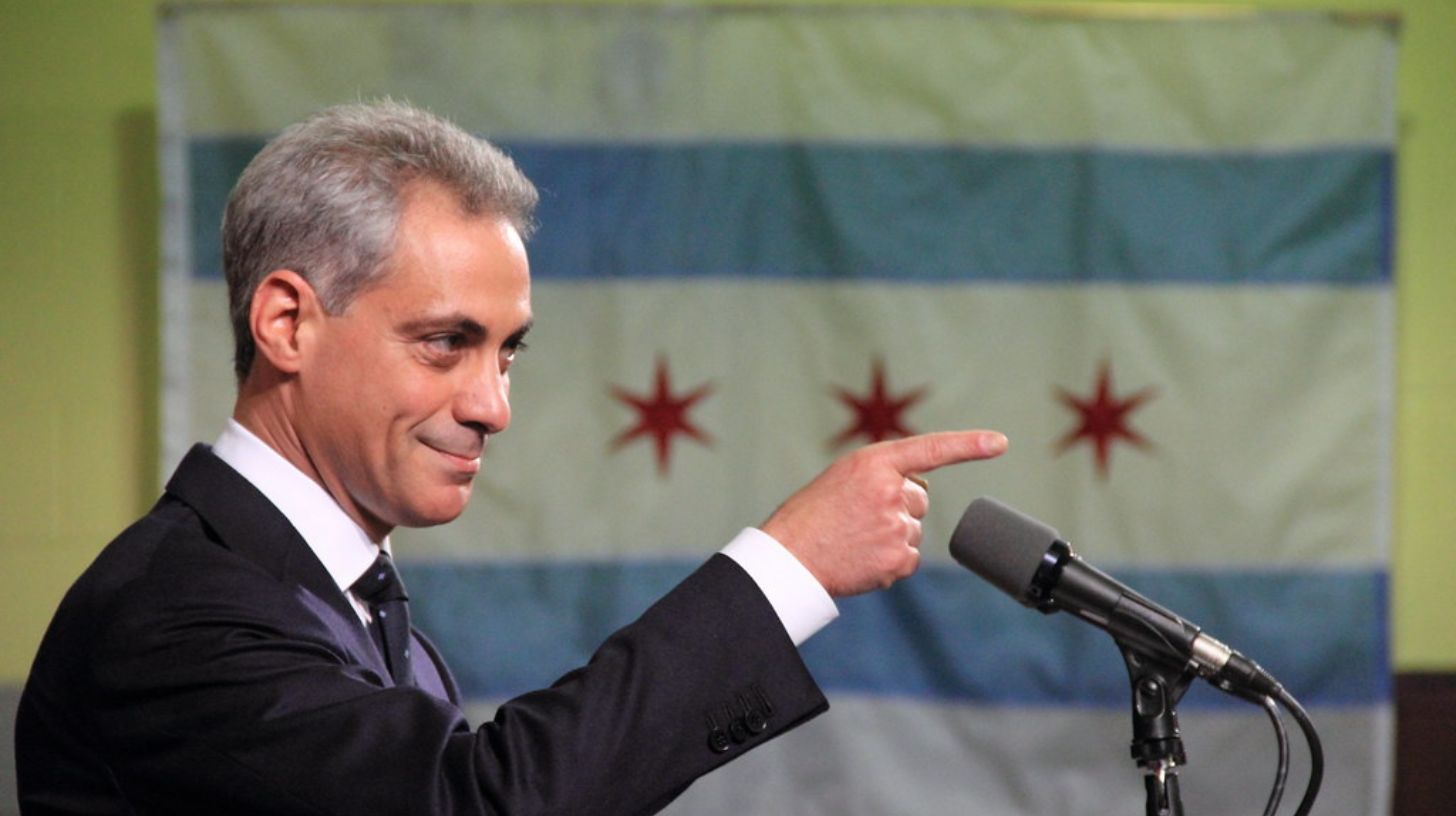
Former Chicago Mayor and possible 2028 Democratic presidential candidate Rahm Emanuel is proposing a new tax on online gambling and prediction markets to fund research across various areas.
The proposal would put a 10% federal transaction tax on any wager made in licensed online sportsbooks and prediction market apps. Emanuel believes that such a tax could generate an extra $30-50 billion in revenue. However, that’s assuming that the businesses would remain viable under those conditions. As things stand, there is already a 0.25% federal excise tax on sports bets, and even that is too much, according to the American Gaming Association. The trade organization claims that any tax on transactions rather than profit forces operators to widen their margins, allowing offshore sportsbooks to offer better odds.
Nonetheless, Emanuel’s vision is to use the money to fund research on topics such as artificial intelligence, quantum computing, and national security-related technologies. President Trump has cut research spending heavily during his term, so potential Democrat candidates are looking for ways to restore that without raising taxes across the board.
Emanuel compared his proposal to other “vice” taxes, such as those on alcohol and tobacco.
Emanuel talked about rewarding the entrepreneur over the gambler:
To me, raise a 10% fee. It goes into this Innovation Fund. I’m tired of people betting against America. I want to bet on America. I want to not reward gambling. I want to actually reward the entrepreneur.
Punitive Taxes on Gambling Are Bound to Be Polarizing
While Emanuel wants to position the tax as a positive source of funding for research, there will be widespread opposition to it. The many Americans who use the platforms would not welcome the new tax, nor would the companies involved in the now massive online betting and prediction market industry.
On the other hand, there is likely to be strong support for the tax among non-gamblers. Betting companies and prediction markets have made themselves extremely unpopular with the non-gambling public through their hard-sell tactics and rapid expansion. There are many who would like the idea of those platforms having to pay extra in order to continue pushing what is seen as an unethical business model, and for whom the claim that it would kill the industry sounds like an argument in favor of the proposal, not against it.
Poker Players Lost in the Shuffle Again?
Most of the attention of this proposal will go toward the online betting and prediction markets. But not nearly as much attention on how it could impact poker players. They’re a small niche in the betting world, but often take the brunt of the damage when there’s a pinch.
As things stand, poker is already not a huge money-maker for gambling companies. Under the proposal, betting companies that offer poker would see their margins dwindle to nothing. Scaling back rewards might not even be enough under a 10% transaction tax. Increased rake might be inevitable.
One online player mentioned that this would make it almost impossible to play profitably.
I’m a long run winner at poker and this would effectively make it impossible to play profitably. I would stop immediately. That said, I’m not sure this tax would be enough to dissuade problem gamblers. They’d just go broke faster via higher fees.
In his view the tax would not do a lot to curb problem gambling or addiction, but rather it would actually cause those problem gamblers to go broke even quicker.
Photo credit: Daniel X. O’Neil, Flickr (license)