Deputy Editor


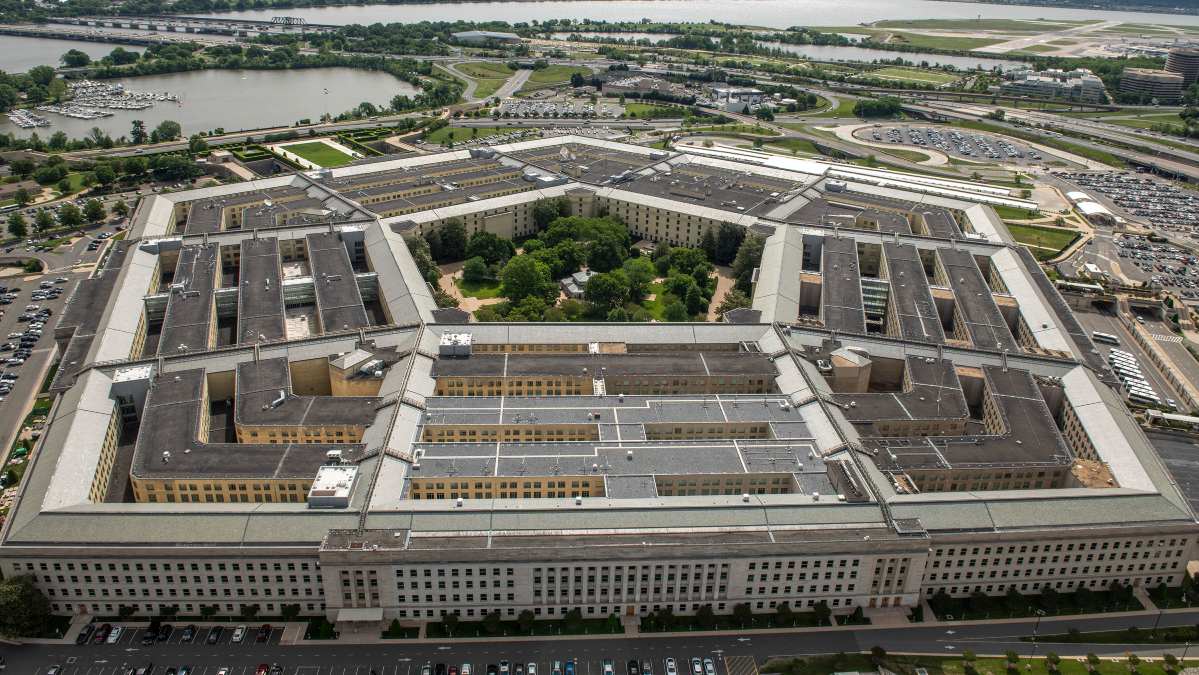
Prediction markets such as Kalshi and Polymarket could be used to aid national security efforts, according to a report from military intelligence specialists.
Retired Army Commander Stephen P. Ferris and current Navy Captain Raymond M. Ferris co-authored a report explaining how intelligence agencies could use prediction markets to their advantage. Proponents of these exchanges tout the “wisdom of the crowds” as one of the public benefits of allowing the products. They have, at times, proven more accurate than traditional methods of predicting world political events.
Ferris and Ferris wrote that this feature of the market could provide early signals to help effectively mobilize and direct security efforts.
Contract Prices Could Provide Early Warning for Threats
The central thesis of the paper is that prediction markets can be more than just a fascinating source of future probabilities or an opportunity for financial speculation. They can provide an early indication of future threats to national security.
A quick scan of prominent markets on Kalshi reveals plenty of comical, unserious options. What will Eric Cartman say as Charlie Kirk on South Park tonight? Will Mr. Beast’s next video get more than 100 million views in the first week?
Polymarket, which crowdsources its contracts, has even more exotic and irreverent options. One market asks whether someone will throw a sex toy onto the floor at a WNBA game before Friday. (That one has a 53% chance at the time of writing, for those wondering.)
It would be easy to see that stuff and quickly close out of the tab, mentally filing away these sites as nothing more than internet absurdities endemic to life in 2025.
However, the frivolous contracts come alongside more serious questions of international and domestic politics, economics, and business.
Ferris and Ferris see the political contracts as more than just a gambling or financial product. For instance, consider the following markets:
- Will Israel and Hamas reach a ceasefire before 2026?
- Will Chinese President Xi Jinping be ousted in 2025?
- Which countries will have a recession before the end of 2026?
The answers to these questions would impact global stability and security.
The premise of the authors’ paper is that some level of efficiency exists in these markets. That is, the liquidity available highly incentivizes people to find the right answers. Those who might not reveal their information publicly might still use it to place bets.
Therefore, an intelligence analyst could track changes in these markets and infer when an important shift may have occurred that impacts key global dynamics.
Report Suggests Integrating Markets With Traditional Security Efforts
The best way to use this information, the authors suggest, would be to treat the markets as a signal to follow up with more traditional intelligence methods.
For example, if the likelihood of an Israel/Hamas ceasefire goes from the current 46% to 32%, that could indicate instability brewing. If there’s nothing in the current intelligence that points to that, it might reveal a blind spot worth investigating.
Those making decisions about resource allocation can then react accordingly. Perhaps they’d inquire with local sources as to whether anything had changed. Or, they order a satellite sweep of the area to see if any notable military movement had occurred.
The key factor, the authors note, is relying purely on traditional methods takes far more time and effort than simply scanning over these publicly available probabilities.
Finally, Ferris and Ferris noted that advances in artificial intelligence may allow faster, more complex analysis in the near future compared with what humans can do today. That would help further leverage prediction markets for national security purposes.
Prediction market users might get a kick out of markets about South Park and sex toys. But if these military intelligence officers are correct, they could have a very real role in the future of national security.
Image credit: Air Force Staff Sgt. Brittany A. Chase (license)