Deputy Editor


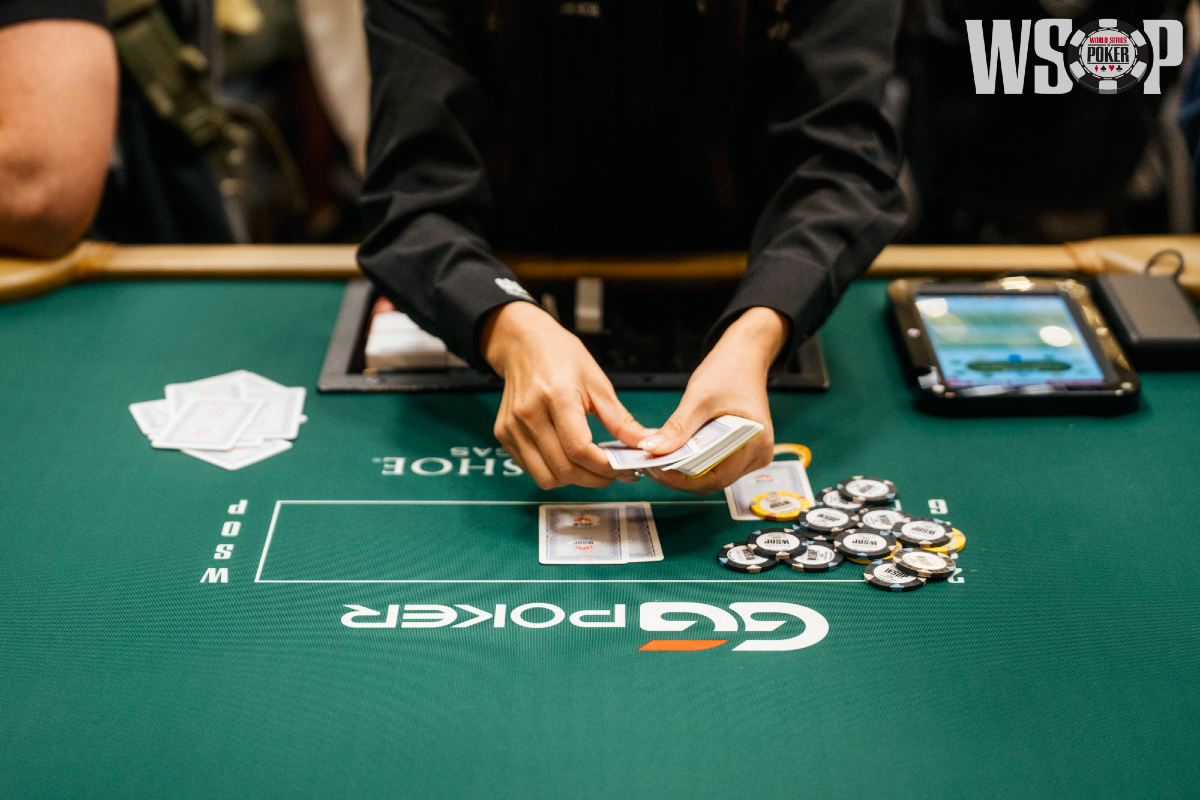
The World Series of Poker is really testing the “any publicity is good publicity” theory after a poker hand went viral in one of the worst possible ways.
American poker player Ricky Landais saw his run in the $10,000 GGMillion$ High Roller come to a rather brutal end in 22nd place. Short-stacked, he jammed over a raise with As-Kc, and initial opener Bobby James called with Ad-9s. The CoinPoker ambassador and content producer hit a straight on the river to end Landais.
But it was the flop, not the river, that caused a viral stir. The dealer spread four cards instead of three, one of which was a king. Pairing his king would have all but assured Landais a double.
Instead, the king wound up as the burn card. Unfortunately for Landais, the ruling was completely correct, as top tournament director Matt Savage explained. He posted the Tournament Directors Association rule governing four-card flops:
If the flop has 4 rather than 3 cards, exposed or not, and regardless of whether the door card is presumed known, the floor will be called. The dealer then scrambles the 4 cards face down, the floor randomly selects 1 as the next burn card and the other 3 are the flop.
In other words, Landais was unlucky on multiple fronts. Not only did he lose as a 72% favorite according to the Card Player odds calculator, but he had a 75% chance of keeping the king as part of the flop before even taking the bad beat on the river.
Keep Reading
The whole hand can be viewed here. One can hear three sounds made by the dealer peeling the flop off the top of the deck, so it seems two of the cards were stuck together. When she spreads the cards, the 4h is in front, followed by 5d-Kd-6d.
Assuming everything spread in order, which appeared to be the case, the flop “should have” been 4h-Kd-5d. In that case, Landais would have been fading running cards. With the 6d additionally burned, he would have been in excellent shape to double.
As it happened, of course, the Kd was selected as the burn, a massive stroke of misfortune for Landais and great fortune for James. Suddenly, he was one card away from winning the pot rather than needing runner-runner.
After the 8h and then 7c fell, he made a winning straight. The critical king sat face down in the burns, useless to Landais.
Keeping Subjectivity Out of Poker Rules
Generally speaking, most rules in games — sports, gambling, and otherwise — are set up to leave as little subjectivity as possible. That makes sense, because objective rules make everything cleaner and easier to enforce.
Attempts to introduce more subjectivity can create even messier situations. For instance, the NFL tried making pass interference reviewable after a high-profile missed call cost the New Orleans Saints a likely berth in the Super Bowl. That experiment proved unpopular and short-lived.
This rule comes down to rectifying a dealer’s mistake in the most objective manner possible. Four cards have come off the deck. Instead of trying to guess which one “should have” been the burn, simply randomize which one is the burn. It makes sense because it’s objective. Three random cards are being picked for the flop, and no outside influences have a say in which ones.
A parallel exists in craps. “No-rolls” are invalid throws. If the dice don’t contact the back wall, don’t stay on the felt, and don’t land flat, everything is no-action, and someone has to roll again. It doesn’t matter if one of the dice is barely leaning on something, and it’s obvious it would have landed on whatever number. A cocked die is a cocked die, and ruling it so prevents anyone from deciding how cocked is too cocked.
On a four-card flop, the only objective and fair thing to do is to randomize one of the cards as the burn.
Nothing to be Done But Move On
Despite some calls for some kind of restitution paid Landais’ way, there’s nothing to do here but move on. Everything was handled correctly.
Landais voiced his displeasure on social media, and his frustration is understandable. He isn’t a regular in $10,000 events. He was taking a shot, and the $41,942 he earned for 22nd place was the second-biggest cash he’s had.
As for James, he finished 12th for $51,528.
“Today’s loss just doesn’t sit right with me,” Landais wrote. “I received a ruling that was not only idiotic but senseless.
“This is painful. I’m angered. To grind and be eliminated like this is sad.”
Dealer complaints are nothing new at the WSOP. In most cases, the dealers assigned to high-dollar events like this $10K are the more experienced ones. However, even they make mistakes from time to time.
It’s unfortunate that one happened in such a high-profile spot and ended in a viral outcome to boot. If the king had simply come back out on the flop, and Landais had scooped a double, almost nobody would be talking about this hand. But it happened, it’s part of poker variance, and everyone just has to accept it and move on.
Image credit: WSOP/Monique Marestein