Managing Editor


On Saturday, the Russian Orthodox Church defrocked the head of its Western European branch, Archbishop Nestor Sirotenko, who had for at least the past year been entering poker tournaments under his legal name, Yevgeny Sirotenko. The head of the church, Patriarch Kirill of Moscow, has initiated ecclesiastical judicial proceedings against him and appointed Bishop Mark Arndt of Germany as an interim replacement.
The superficial strangeness of the story has caused it to circulate widely in the Western gambling media. However, the scandal has deep political undertones.
A source within the Orthodox Church, who did not want to be named, told PokerScout that Sirotenko’s poker playing would have been a scandal regardless, but that politics are also a factor.
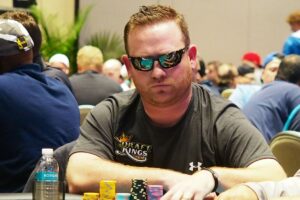
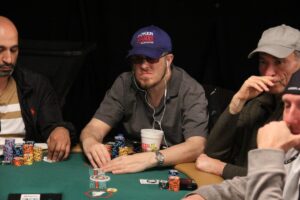
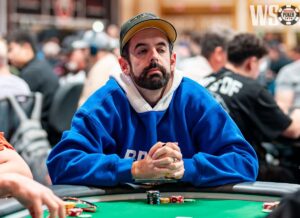
Gambling is considered a sin in the Orthodox Church, and Sirotenko’s participation in poker tournaments would have made it impossible to keep his gambling a secret. His name appears in the public results for tournaments in France — where he lives — as well as the Netherlands, St. Maarten, and Cambodia. He has also been photographed at the tables.
Orthodox canon includes references to defrockment of a bishop for “playing dice,” according to Novaya Gazeta, an independent Russian newspaper that reported on the scandal. However, the article also notes that Sirotenko and his defenders may argue that the skill component of poker differentiates it and makes it more of a sport. That’s a familiar argument, which comes up frequently in court cases and legislative debates in other countries as well.
More importantly, however, the defrockment also comes against the backdrop of increasing tension between Sirotenko’s subordinate clergy and Patriarch Kirill. Whereas the Russian Church’s central authority has been supportive of Russia’s military action in Ukraine, many of its churches in Western Europe have been calling for peace. Some have even been explicitly supportive of Ukraine.
The Russian Orthodox Church’s Support for the War
Although Russia has a nominal separation of church and state, the Russian Orthodox Church has been supportive of Vladimir Putin’s regime over the past two decades. In particular, the official line pushed by Patriarch Kirill has been endorsement of the war.
For instance, Kirill issued a proclamation that death on the battlefield in service of the country would “wash away all sins.” Notably, that statement came two months after Russia began offering convicts clemency from their sentences in return for serving with the paramilitary Wagner Group.
However, Kirill’s exarchs (regional archbishops) have not all toed the same line. Sirotenko faced strong criticism from some of his peers for not cracking down on so-called “Russophobia” and disloyalty among the clergy reporting to him.
In a post on Telegram, former Archbishop Leonid Gorbachov — the one-time exarch for Africa — posted a screed against Sirotenko. In it, he alleges that an Orthodox Church in Vigo, Spain, had been soliciting donations for what he calls “attack drones for the Azov terrorists,” presumably referring to the Azov Brigade, a Ukrainian volunteer militia. He blames Sirotenko and others for not reporting this up-chain, writing:
Now answer me this question. Why does the Russian Orthodox Church accept such clergy into its ranks? Why didn’t the entire responsible vertical of church authority—that is, the Patriarchal Exarch of Western Europe, Metropolitan Nestor; Bishop Peter Pruteanu of Kafa; the Chairman of the Department for External Church Relations, Metropolitan Anthony Sevryuk; and the Patriarch’s advisor, Archpriest Nikolai Balashov (who oversees inter-Orthodox relations)—inform the Patriarch of such views!?
(Translated from Russian. “Metropolitan Nestor” refers to Sirotenko, using the term for a city-level bishop, one of the ranks he held.)
Sirotenko’s Dissent Over Ukraine
Sirotenko’s sentiments vis-à-vis Ukraine went beyond tacit tolerance of his subordinates’ preaching. In April 2022, shortly after the start of the war, he co-signed a letter with the Catholic Archbishop of Granada, Francisco Javier Martínez, condemning the invasion. Translated from Spanish, it reads, in part:
Our Churches unite in the face of the pain and suffering inflicted on so many of our Orthodox, Catholic, and people of all faiths by Russia’s invasion of Ukraine […] We call upon all those who believe in being able to stop violence and barbarism, who are aware of the voice of God, who reject evil and war, and who rebuild universal brotherhood.
Perhaps even more controversially, he is said to have met informally with Oleksandr Drabinko, a bishop in the recently formed Orthodox Church of Ukraine (OCU). The legitimacy of this offshoot is not recognized by the Russian Orthodox Church, which considers it “nationalistic” and “schismatic.”
Even in Russia itself, there is not strong support for the war. A study published in the Journal of Contemporary European Studies found that within the demographic most favorable to Putin — low-education men in rural regions, without exposure to global social media — opinions were fairly evenly split on whether the war was good or bad for the country. Conversely, among well-educated urban women who got their news from social media, support was almost nonexistent.
Nonetheless, the study found that between “the state’s control over media, economic redistribution policies, and suppression of dissent,” Russia had successfully prevented individual dissatisfaction from turning into unrest and maintained some optimism at the population level.
The picture is quite different when looking at the Russian diaspora. Outside the Russian government’s direct control, much more overt resistance to the war has emerged among some groups of Russian expatriates. In fact, one group, the Civic Council of the Russian Diaspora, has actively begun recruiting Russians to fight on the Ukrainian side of the conflict.
The Orthodox Church’s Internal Struggles
A similar split has happened within the Orthodox Church. Russia’s grievances with the OCU stem from the fact that there are now two branches of Orthodoxy in Ukraine. The older one, the Ukrainian Orthodox Church (UOC), was part of the Russian hierarchy until very recently, and is considered by the Ukrainian government to be loyal to Moscow.
The Eastern Orthodox Church consists of a number of “autocephalous” (literally self-headed) churches — each with a hierarchy not unlike that of the Catholic Church, but with no singular Pope at the top. To the extent that there is an overall leader, the Ecumenical Patriarchate of Constantinople (EPC) can be called the “first among equals,” although the Russian Church may aspire to that status itself.
The exact number of autocephalous churches is a matter of intense debate amongst them, as are the terms under which new ones can be created.
In 2018, the EPC announced its intent to recognize the autocephaly of the new OCU, formed from various splinter sects of the UOC. At that time, the UOC still officially reported to Patriarch Kirill of the Russian church. In terms of the political timeline, this was in between Russia’s 2014 annexation of Crimea and the eventual invasion of Ukraine.
That decision triggered the so-called Moscow-Constantinople Schism, in which the Russian church unilaterally severed communion with Constantinople. The OCU was controversial in the Orthodox community not only for turning away from the Russian church, but for embracing traditions more similar to Western Christianity, such as celebrating Christmas on December 25, instead of January 7.
Persecution of the Ukrainian Orthodox Church
In May 2022, three months after Russia began its invasion, the older UOC also declared its spiritual independence from the Russian church. However, while a total of four branches of the Orthodox Church (including Constantinople) now recognize the OCU, the Georgian Orthodox Church is the only one to have recognized the UOC as anything other than an arm of the Russian establishment.
In particular, the UOC is regarded with extreme suspicion by the Ukrainian government, and its clergy have been subject to detention and interrogation. In 2024, the Ukrainian government passed a controversial law outlawing religious organizations with ties to Russia. Since then, UOC congregations have been forced out of their historical houses of worship and replaced by OCU congregations.
Russia has made an end to that persecution one of its conditions for any peace with Ukraine.
None of this is related in any direct way to Nestor Sirotenko’s poker playing, which appears to be nothing more than a personal choice — if perhaps a questionable one for a religious leader in a denomination that frowns on gambling. However, it’s important background for understanding the political context amid which he’s being stripped of his titles and perhaps banished from the Church.
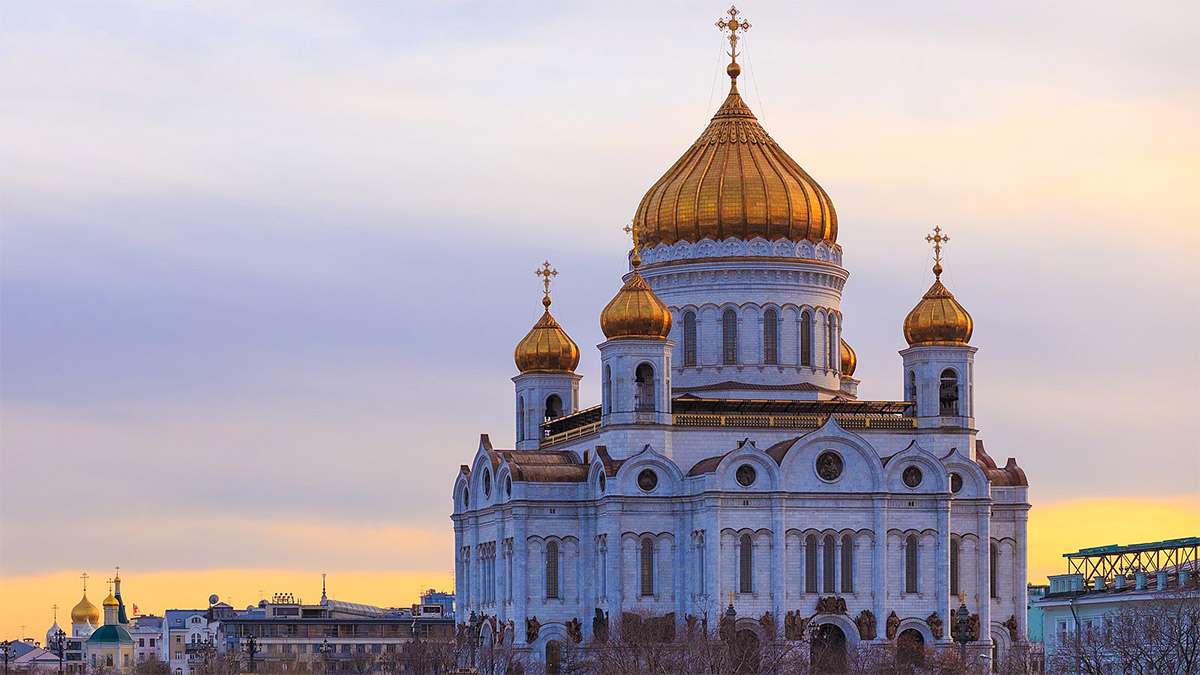
Image Credit: Dmitry Guryanov via Wikimedia Commons (license)