Deputy Editor


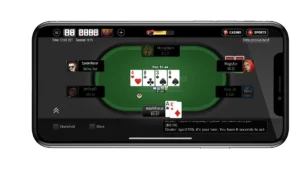
The WSOP announced over the weekend that it has updated the WSOP+ app to include a built-in ICM (Independent Chip Model) calculator. It will tell players the approximate value of their stacks once they’ve reached the in-the-money phase of the tournament.
The value of chips isn’t linear in a tournament as it is in a cash game. After all, the player who ends up with all the chips only receives a percentage of the prize pool, while even just a few chips on the bubble can make the difference between a min-cash and nothing at all. ICM is the generally accepted way of estimating what a given number of chips is worth in a particular tournament situation. However, WSOP+’s calculation of ICM is contingent on other players in the tournament self-reporting their stacks in a timely and accurate manner, which is not guaranteed.
Many players reacted negatively to the announcement. Some likened it to built-in real-time assistance (RTA), which would normally be considered cheating if done with a third-party app. Others complained that the WSOP is further reducing the skill gap between the studied players and the recreational crowd, making it harder for the skilled players to profit. Nearly all well-known players seemed to agree that the addition of the ICM calculator is a net negative for poker.
Overall, the announcement of the app addition raises several questions, particularly given the WSOP’s historic animosity toward deal-making.
Keep Reading
Pushing ICM on Players an Odd Choice for WSOP
One of the more intriguing aspects of the announcement is that ICM has a couple of major functional uses, one of which is to facilitate deal-making. ICM is probably the most common method for generating altered payouts. However, the WSOP and deals have a very contentious history.
The WSOP has long maintained a policy of not facilitating deal-making. That’s not to say deals in WSOP events don’t happen. It’s been common knowledge for years that they can happen, but the players have to split the payouts themselves.
That creates not only the potential for fraud, but a burdensome tax situation. Essentially, someone will always have to sign for an amount greater than what they actually pocketed when a deal is struck.
This past summer, two players incurred the WSOP’s wrath when they made what’s become widely accepted as an under-the-table deal to ensure one of them won a heads-up match for a bracelet. That assured him of earning a $1 million promotional payout from a third party. The WSOP responded by not awarding a bracelet and reportedly banning both players, though the latter is not confirmed.
Given the WSOP’s attitude toward deals, readily providing players with the most useful tool in making them seems like a very strange dichotomy.
First Modern Official WSOP Deal Quietly Glossed Over?
Ironically, fans and players may have just witnessed the first modern chop facilitated in a bracelet event. Event #2 of WSOP Paradise wrapped up over the weekend. The tournament ($75,000 pot-limit Omaha) crowned Matthias Eibinger as the winner, but he reportedly won $1,570,640. Second-place Mike Watson earned $1,459,360.
PokerNews’ official coverage of the event quietly mentions a deal, well below the lead paragraphs.
It’s worth noting that this particular event is among several that are co-promoted by WSOP and Triton. PokerStrategy’s Barry Carter inquired whether chops are only allowed in Triton co-branded events or in all events now. The WSOP did not respond.
PokerScout also reached out privately with a similar question and did not receive a response.
Mechanics, Promotion of ICM Calculation Seem Sketchy at Best
Beyond the strange dichotomy of the WSOP promoting ICM calculations while (presumably still) disallowing deals, the mechanics themselves of the app’s ICM numbers merit some scrutiny.
For one thing, ICM calculation relies on precise knowledge of the other remaining stacks in the tournament. Sam Greenwood mused that the WSOP+ app’s ICM calculation will rely on “self-reported data from your opponents,” making it essentially useless.
It’s worth remembering that one of the main functions of the WSOP app is to provide up-to-date chip counts on breaks for both players and fans. Dealers count the stacks at their tables on each break and enter them into the app. Therefore, the ICM numbers should be somewhat accurate at that point.
However, once a single hand is played after the break, everything will change.
No ‘Instant Clarity’ in WSOP+ ICM Calculator
The WSOP’s promotion of the ICM function in the app is also misleading at best. The WSOP released a short video ad promoting the in-app calculator:
Ever wondered the ICM value of your stack? Well now you can know for sure with the newest feature on WSOP+!
Once you are in the money, just enter your chip count into the app and receive instant ICM value! pic.twitter.com/gAcn1sut6f
— WSOP – World Series of Poker (@WSOP) December 6, 2025
“Stop wasting years studying ICM,” the video says. “With the WSOP+ app, post your chip count any time during the tournament, and see your live ICM value the moment you’re in the money. No more guessing what your stack is worth. Just instant clarity.”
Experienced tournament players generally aren’t “studying ICM” to figure out what their stacks are worth. Free calculators exist that can do that for them on break.
Studying ICM is about understanding how various stack-size dynamics coupled with payout structures inform strategy choices deeper into the tournament. Being ICM-savvy requires far more nuance than simply looking at a number that reflects stack value.
So not only is the WSOP promoting an ICM calculation that will only provide an intermittently accurate value, the company’s ad is actively misleading players into a false sense of security.
Inexperienced players may think they now have access to a shortcut that helps them close a knowledge gap on their more seasoned foes. In reality, players who wish to learn about ICM will need to dedicate serious time and effort into studying it. Simply looking at a possibly inaccurate number on an app may do them more harm than good.
Image credit: Images Money/Flickr (license)