Deputy Editor


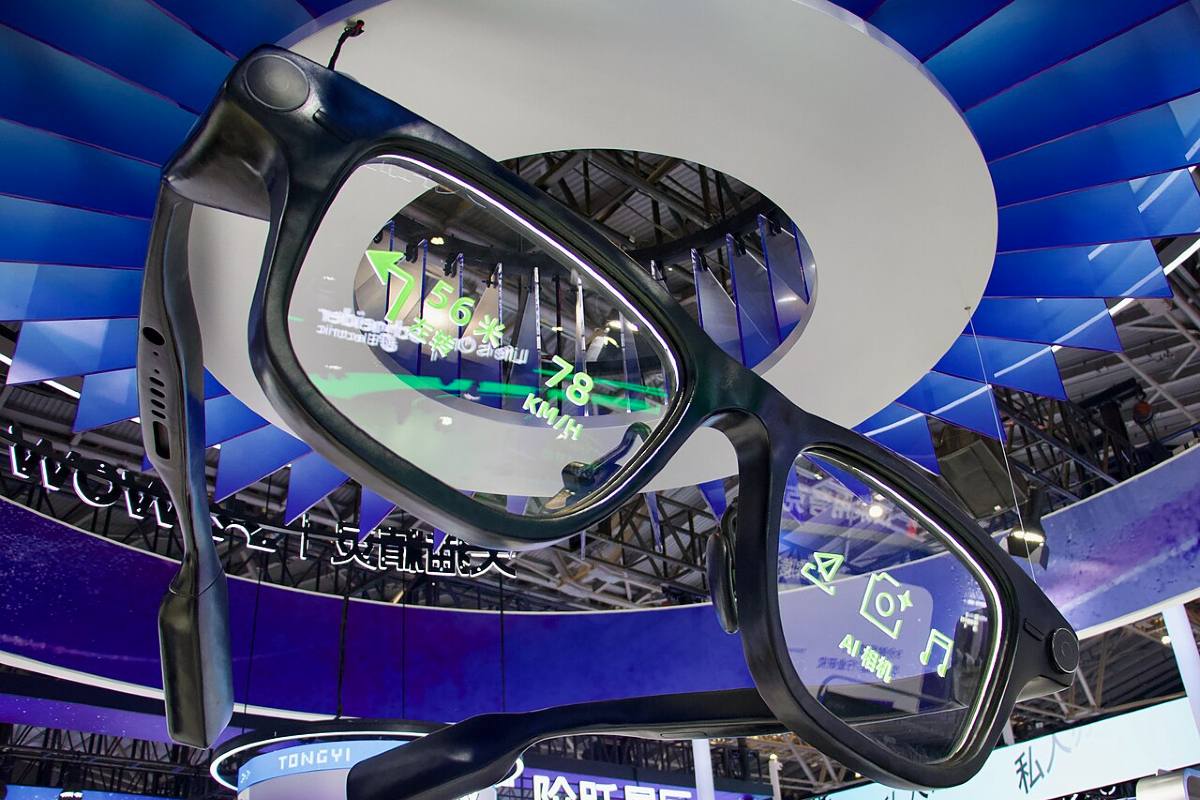
Artificial intelligence (AI) seems to make new inroads into our lives every week. And live poker might be next.
Earlier this week, PokerOrg ran an article examining the possible effects of wearable technology on live poker. Author Luke Geel, whose listed credentials include “AI engineer,” went over some possible uses for things like AI glasses, available to consumers for a few hundred dollars.
Should poker players be concerned about wearable technology when they walk into live poker rooms?
I’ll explain why I’m not panicking just yet.
Keep Reading
Wearable Technology Seems Unlikely to Provide Actionable Poker Info on its Own
What sorts of edges could wearable technology provide for live poker players?
In one of the examples Geel provides, he says that AI glasses might soon be able to examine our facial expressions and contrast that with past hands to help determine if we’re bluffing or betting for value. The article’s lead photo seems to suggest that a built-in heads-up display could provide players with statistical info about their opponents.
That type of thing doesn’t really concern me.
For one, think about the pace of live poker. If you’re lucky, your table is dealing around 25 hands per hour. It takes hundreds of hands, at least, to build a sample size that has any meaning on any one opponent.
Buying into HUD stats based on a few orbits of live poker is as likely to lead a player astray as it is to give them a meaningful read.
The same thing is likely true of any physical tells. As the great Phil Galfond has frequently said, it takes a long time and many showdowns before you can put any weight into a live tell. It’s easy to get caught up in confirmation bias and ascribe a tell to a showdown without considering all of the other times a player might have done that same apparent tell with a different level of hand strength.
As with the HUD stats, I’m skeptical that any face-scanning technology is likely to be able to put anything meaningful together.
And as far as AI providing poker strategy advice, PokerScout has covered the possibility before. In a nutshell, these programs simply aren’t capable of providing coherent poker advice at this time.
RTA Boogeyman Moving to Live Poker is a Concern
One danger Geel raised is the possibility that a player could program the AI glasses to read the board and action, reference a solver, and spit out the optimal play. Essentially, wearable technology could provide real-time assistance (RTA) cheating.
That definitely has my attention.
RTA has become a very real problem in online poker. Many players have been busted over the years, and one reason is that poker sites can theoretically detect when players run solver programs alongside the poker client. Players can also self-police with tools like the fair play checks and their own data analysis.
Obviously, these possible security catches disappear in live poker.
On the positive side, while I’m no programmer, building a setup in which the AI glasses query a solver in real time seems rather involved. Streaming video to a collaborator seems a bit easier, but then the cheating player would have to split the profits, lessening the appeal.
Either way, the good news is that I’m not sure the juice is going to be worth the squeeze there.
Is the Juice Worth the Squeeze?
In order to really make this sort of thing worth it, a player would probably have to get into some pretty big games.
The regulars good enough to play in such a game would probably figure out relatively quickly that they were being cheated. Poker players at that level are sharp. If they’ve never seen someone, and that person suddenly shows up to their games and plays nothing but solver-approved lines, they’re going to get suspicious pretty fast.
Again, we come back to the very real possibility that the cheating scheme doesn’t pay for itself.
“Is this the stuff of far-fetched science-fiction?” Geel wrote. “It’s not available right now, but I believe it’s on the horizon.”
Geel noted that some poker rooms are already policing wearable technology. Between that and the logistics involved, I don’t think live poker players have anything to seriously worry about anytime soon.
At the same time, some kind of cheating scandal using this stuff does feel inevitable. Hopefully, it will be caught early and serve as a cautionary tale to perpetrators and casino security alike.
Image credit: Xuthoria/Wikimedia Commons (license)