Managing Editor


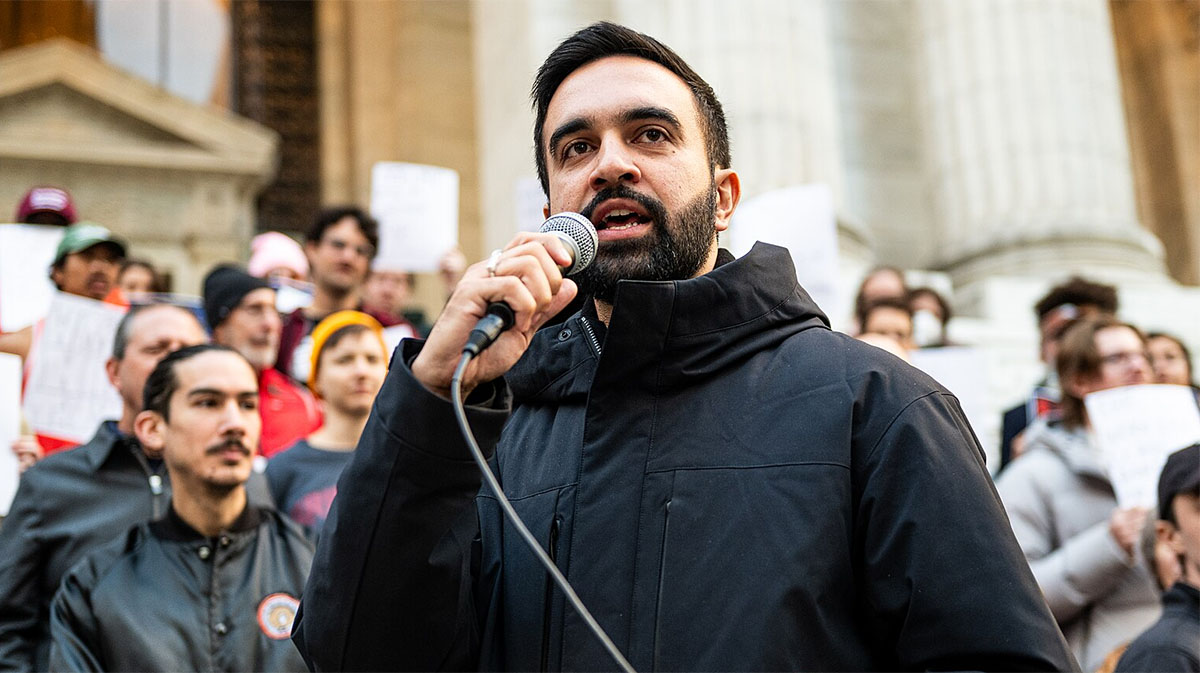
New York City Democrats will pick their candidate for the upcoming mayoral race tonight, and predictions markets have it shaping up to be an unexpectedly close race between former Governor Andrew Cuomo and his challenger Zohran Mamdani.
Cuomo is the obvious establishment candidate, while Mamdani has ridden a wave of popularity among younger, more progressive voters to make his way to the top of the polls. Speculators on predictions exchanges agree with the pollsters, which hasn’t always been the case in other races. As of mid-afternoon, the various sites have it as follows:
- Kalshi: 56% Mamdani
- Polymarket: 56% Mamdani
- PredictIt: 55% Mamdani
All three had Cuomo as a significant favorite until the day of the primary. Polymarket, for instance, had him trading at around 80% last week and slowly coming down to around 67% by Sunday, before plunging Monday morning after new polling data came out.
As usual, Polymarket has the greatest number of related markets, including some that break down the voting in quite granular fashion. For instance, bettors can trade contracts on each candidate’s share of the first-round voting. Mamdani and Cuomo are both expected to get over one-third apiece.
The last-minute drama has Kalshi scrambling to offer new markets as well. In the last 24 hours, for instance, it has added a proposition on the number of rounds that will be required to find a winner in New York’s ranked-choice voting system. Polymarket has listed that option since mid-May, but a flurry of late activity may have tickled Kalshi’s interest. The early assumption was that a large number of rounds would be needed, but three has emerged as by far the most popular answer in the last few days, accompanying Mamdani’s surge in the polls.
Ranked Choice Voting Might be the Key
If the wisdom of the predictions market crowds is borne out, this might be an election where the voting system plays a big roll. All markets still have Cuomo as the favorite to win the first-round voting, though they now see him as the underdog to be the final winner.
New York Democrats voting for the mayoral candidate don’t just pick one name. Instead, they’re asked to pick up to five candidates and rank them in order of preference. There is then an automatic runoff, which works like this:
- Count the votes at the top of each voter’s list.
- If a candidate has majority of votes, they win. Otherwise, the candidate with the fewest votes is eliminated.
- Voters whose chosen candidate is eliminated have their vote switched to the next lower name on their list.
- Repeat the process until one candidate has a majority.
The idea of this kind of system is to reduce vote splitting and strategic voting. That may work against an establishment candidate like Cuomo in such a packed field. As the first pick for an expected 35% to 40% of voters, the establishment candidate would be likely to win a straight race, while dissenting voters would be split among all other options.
New York’s system, however, allows citizens the chance to vote strategically and with their hearts. Someone who wants “anyone but Cuomo” but prefers, say, Adrienne Adams to Mamdani could put her first, and him second or third.
The prediction market lines suggest that’s exactly what will happen. The belief appears to be that Cuomo will be many voters’ first choice, but not appear at all on others’ ballots. Conversely, Mamdani should be picking up lots of second- and third-choice votes from people whose most-preferred candidate is eliminated in the early rounds.
Gambling Implications of the New York City Mayoral Race
Even gamblers without direct skin in the game may be interested in the outcome of the primary. Most gambling policy decisions happen at the state level, but that doesn’t mean mayors have no impact.
For instance, City Council is responsible for land-use decisions that may sink or save some of the proposals for downstate casinos. The current mayor, Eric Adams, has already influenced one such decision to keep Bally’s in the running. Adams is not amid the candidates for tonight’s primary, having elected to drop out amid low popularity numbers.
A mayor might also indirectly influence law enforcement decisions, such as whether to raid New York’s underground poker clubs.
Of the two front-runners, Cuomo is likely to be the more friendly toward the regulated gambling industry. As Governor, he flip-flopped on the issue of online gambling, but ultimately came down in favor of expanding retail sports betting to include mobile betting.
Mamdani, on the other hand, is more likely to be an opponent of expansion. Seeing his Kalshi odds while still an underdog, he quipped, “gambling is haram,” meaning forbidden by Islam.
Although in context, he was clearly joking, a reporter from Politico used the opportunity to ask him his stance on Caesars’ bid for a casino in Times Square. He replied:
My general position is in opposition to casinos at large. I also know that it’s not the city which decides which casino gets the permit.
Image credit: Bingjiefu He