Managing Editor


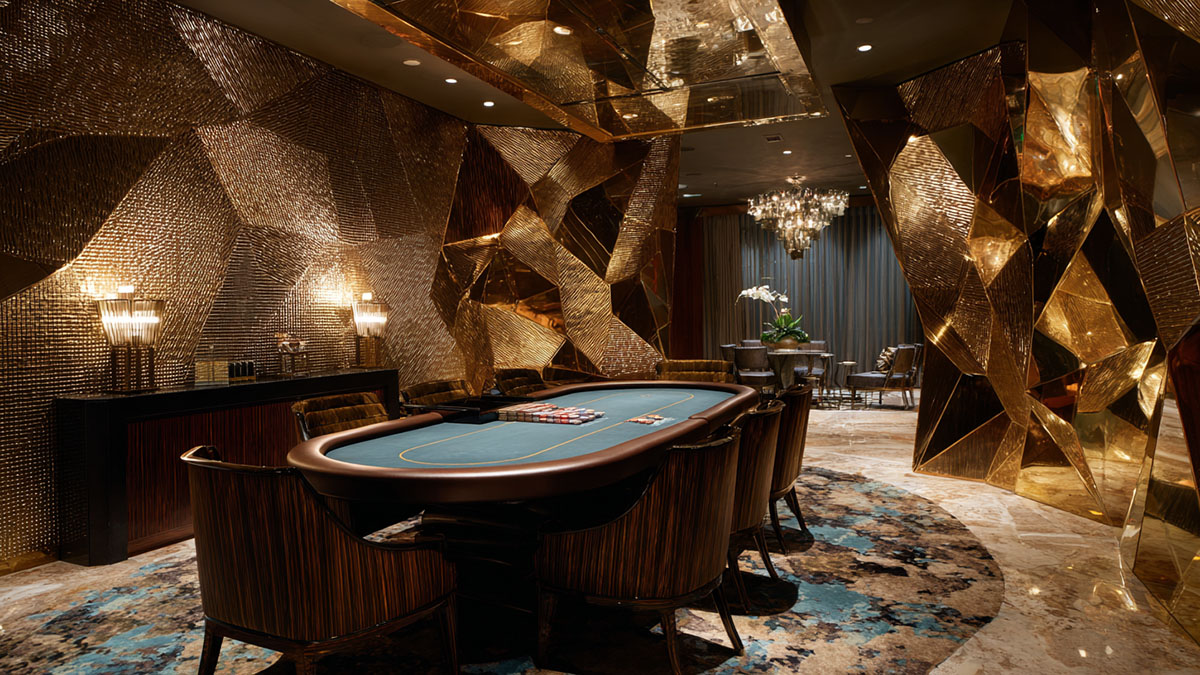
Private poker games are now officially legal at casinos in Las Vegas and throughout Nevada, so long as players bring at least $10,000 to the table, or the casino obtains special permission to lower the buy-in. The new games would fall under gaming salon rules, which are an exception to the general Nevada policy that all for-profit gaming must be open to the public.
On September 25, the Nevada Gaming Commission (NGC) approved changes to the rules governing gaming salons. Among those tweaks was the addition of poker as an acceptable game for inclusion in the salons. At the same time, the NGC drastically reduced the minimum financial requirement for salon access, from $300,000 to just $20,000.
The $10,000 minimum buy-in for salon poker is based on the logic that a game of poker requires at least two players, who would jointly reach that $20,000 threshold.
The status quo for private poker in Las Vegas is that players either seek out home games — which are legal as long as they don’t collect rake — or to use various tactics to make it hard for outsiders to get into their games in public gaming areas.
Under the new system, high rollers could request a private room for an invite-only poker game at any casino willing to offer the service. Casino industry representatives say they expect to make money by drawing in players who would otherwise be playing home games, while the players may benefit from casino-level security and professional dealers.
Keep Reading
About Nevada’s Gaming Salon Laws
Senior Deputy Attorney General John Michela appeared virtually at Thursday’s hearing to explain the changes, answer legal questions, and assist with revisions.
Nevada lawmakers created the concept of gaming salons in 2001. Michela explained the rationale at the time:
When gaming salons were created as a statutory exception to the general policy that gaming must be open to the public, the focus was on high rollers who would otherwise not gamble in Nevada and thereby generate revenue for the state.
He went on to say that times had changed and that a new set of policies would retain the intent that private salons are an exception, not the rule, while “reflecting changing market conditions, the growth of non-gaming revenue, and the importance of accommodating patrons, like celebrities, who value privacy but may not meet prior thresholds.”
The 2001 rules for salons had numerous stipulations, including a $500,000 minimum. That was reduced to $300,000 in 2008.
This week’s changes drop that to $20,000 by default, while granting the Nevada Gaming Control Board (NGCB) discretion to allow even lower minimums on request. They also:
- Permit poker games in salons, as long as all players meet the buy-in minimum (no guests)
- Remove the need to host at least one table game, in case of guests who only want to play slots
- Remove the $500 minimum bet for slots in private salons
- Allow salon guests to stay for up to 24 hours after the primary patron leaves, rather than the current six-hour time limit
- Allow casinos more leeway to convert rooms from private salon to public gaming space and back
Existing ‘Private’ Games in Vegas Are a Gray Area
The legality of private poker games varies by jurisdiction. Nevada, like many states, allows private games outside a casino environment, as long as the hosts aren’t taking money out of the pot.
At the casinos, however, all games must technically be open to the public. That may surprise anyone who has attempted to get a seat at one of the functionally private games running in the city.
The thing is, there are a limited number of seats at any poker table. To meet the standards of being “open to the public,” a game only needs to be taking place in a public part of the casino, and have a waiting list anyone can add themselves to. But being on the list provides no guarantee of ever getting a seat.
In practice, those with connections can keep outsiders out of their games by creating their list long in advance and filling it with their potential guests. Then, it’s a matter of making sure a replacement is on hand before any of the initial group of players gets up to leave. That way, all seats remain filled, and non-invitees remain on the waitlist forever.
According to one PokerScout contact, some games also have a second tier of alternate players who can sit in the game temporarily when holding a seat for the primaries. When one of those first-string players shows up, it’s expected that the alternate will leave the game voluntarily, if they ever hope to be invited back. Generally, the second-tier players are pros who benefit from access to a relatively soft high-stakes game, while the primaries are the “action players” who make those games desirable to be in.
Changes Pushed Through Despite Commission’s Hesitation
Nevada has a two-tiered regulatory structure. When it comes to policy changes, the NGCB drafts the new rules and the NGC approves them.
Although Commissioners passed the changes to the salon rules with only one small adjustment, it wasn’t without hesitation. The process took about an hour, and there were several concerns raised. Some of these involved the potential for unspecified compliance violations by guests of the primary salon patron. Ultimately, all parties agreed to address this through the addition of two words, requiring casinos to log all comings and goings of salon guests as well as the primary patron.
However, it was clear that some Commissioners were unhappy with the need to make changes at all. Commissioner George M. Markatonis, former Chief Operating Officer of the Venetian, said lowering the financial minimum would defeat its original point and allow some guests to create a nuisance for casinos. He recalls that during his casino tenure, the regulated minimum provided a convenient way to deflect demands from VIPs who didn’t want to put up the $300,000.
“It’s high-end gaming, not a concierge lounge,” he said.
Yet the NGC was obligated to make the changes in some form or another. Like the original salon rules, the 2025 adjustments were mandated by the legislature, through bill SB459, sponsored by Sen. Nicole Cannizzaro and passed at the end of May.
As discussions drew on, Commissioner Brian Krolicki and Chair Jennifer Taglietti pushed for passing the changes in “good enough” form, with the promise to revisit the details as needed. That proved to be enough to produce a unanimous vote to adopt the new rules, with only the one tiny change to the reporting requirements.