Deputy Editor


Atlantic City casino executives are sounding the collective alarm about the future of the once-thriving resort town on the Eastern seaboard.
At a gaming conference this week, the president of Hard Rock Atlantic City said the coming casino competition in New York, plus potential new casinos in North Jersey, posed a massive threat to the market. While George Goldhoff acknowledged that Atlantic City casinos won’t totally disappear, he estimated the current nine-casino market could shrink down to three or four.
He called the effect “a tsunami on top of an earthquake for Atlantic City.”
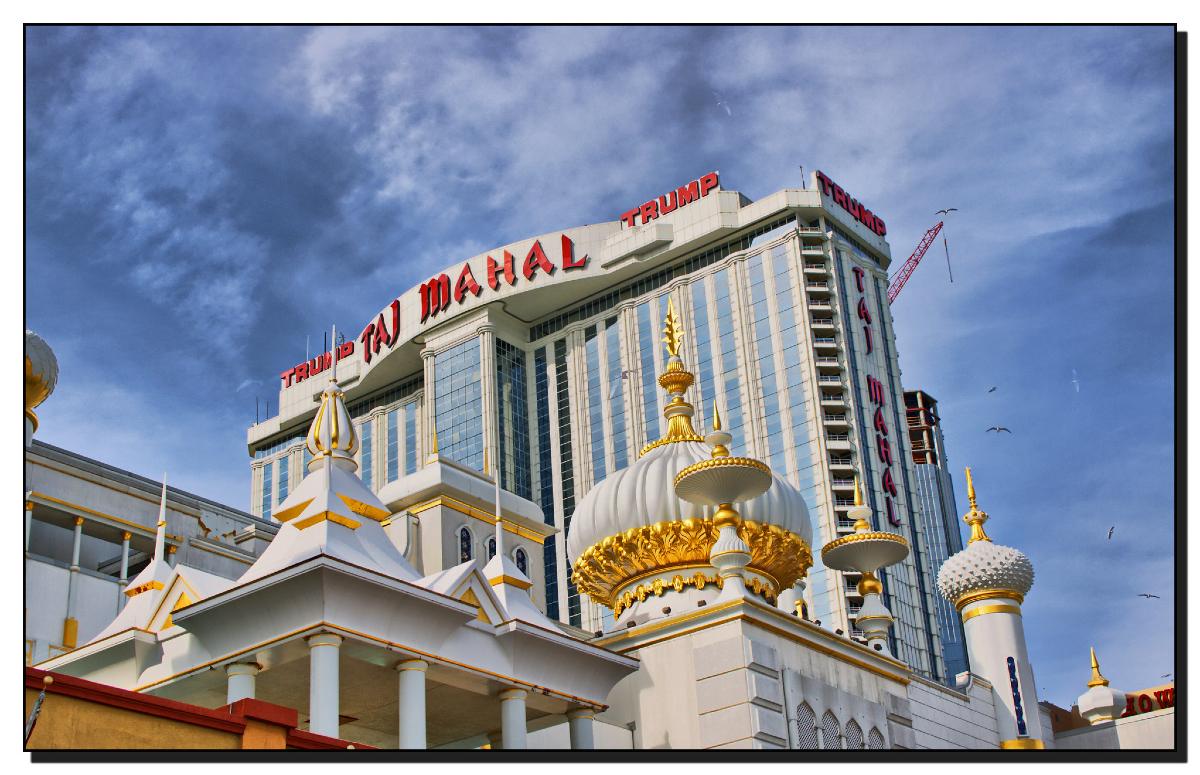
Once a hotbed for poker and gambling in general, recent decades have been a bit rough on Atlantic City. Still, it continues to hang on, and poker remains part of its story nearly two decades after the old Trump Taj Mahal and the city itself played a supporting role in Rounders.
Is that about to change?
Atlantic City Still Has Life For Now
Let’s start with the good news. Atlantic City didn’t show any major signs of slippage year-over-year, in the big picture.
According to the New Jersey Division of Gaming Enforcement’s official numbers, Atlantic City’s casino win was actually up in 2025 relative to 2024. In 2025, the market generated $2,894,141,795, a bump of 2.7% over $2,817,506,790 in 2024.
While that’s not the most exciting result in the world, any improvement stands in stark contrast to the popular narrative that Atlantic City is dying a slow and inexorable death.
The iGaming market is thriving as well. Revenue there added another $4 billion to the state’s coffers, less the percentage earned by partnered national brands like FanDuel and DraftKings.
And the looming NYC boogeyman is still a ways off, for the most part. While Resorts World NYC will open this year as a full-fledged casino, the other two properties need to be built from scratch. The projected timeline there is for 2030, and the world could be a nuclear wasteland by then.
As for the North Jersey casinos, one can be fairly skeptical of their prospects. Efforts to expand casino gaming to that part of the state were resoundingly voted down in 2016. It’s hard to see why voters would change their minds on that at this point.
Consolidation Can Be a Good Thing
If Goldhoff is correct and a serious contraction hits Atlantic City, could that actually be a good thing?
Certainly not for casino owners, workers, and locals whose public works departments might take a hit. But for gamblers, and poker players specifically, consolidation has proven a boon at times.
Las Vegas poker rooms have shown a clear pattern. Every year, the market shrinks in terms of total rooms dealing poker. But the ones that do survive continue to thrive and produce ever more revenue.
Looking at Atlantic City through a poker lens, Borgata is the clear dominating presence. With a 50-plus-table room, Borgata still deals games as big as $10-$25 in a time when public-facing games of that size are all but impossible to find in most locales.
So, there probably isn’t much room for consolidation to help poker in the area, at least in terms of established players. But if the casino itself receives more general traffic, there’s always the chance that some of those players trickle into the poker room.
Longer-Term Questions About Atlantic City Still Loom
Atlantic City, though, has more looming potential issues than just New York City.
Ongoing environmental changes are both shrinking the beaches and causing the city to sink farther toward the shoreline. That has resulted in more flooding each year. Mitigating that demands serious commitment from the local government, resources that could otherwise go toward improving the Atlantic City experience for tourists.
Local stakeholders are demanding investment from the city and state governments, but if the environmental writing is on the wall, does that even make sense?
Stronger poker competition also continues to spring up in the region. Borgata was once a marquee tournament destination, with a product that few East Coast venues could match. It’s still plenty attractive. But as more new casinos are built, it becomes less so every year, relatively speaking.
For example, MGM National Harbor in the Washington, D.C., area, a few hours away, has continued to hold well-attended tournaments. Encore Boston Harbor, while not necessarily known for its tournaments, deals plenty of cash games and offers a similar luxury resort experience.
As the Atlantic City experience continues to decline, players have ever less reason to jump through the necessary hoops to go there. Chiefly, the travel is a pain — Atlantic City is not easy to get to. That hasn’t stopped a place like Harrah’s Cherokee from thriving, but it’s also in an attractive part of the country and located near a bunch of states that don’t have big, active poker scenes.
Borgata doesn’t seem to be in any immediate danger of falling off the poker map, especially with parent company MGM’s ongoing investment in BetMGM. But there’s also talk of that part of the business being sold off.
Overall, the long-term trends aren’t looking amazing here. That’s a bit sad for an area with as much poker history as Atlantic City.
Image credit: Randy Kline/Flickr (license)