Deputy Editor


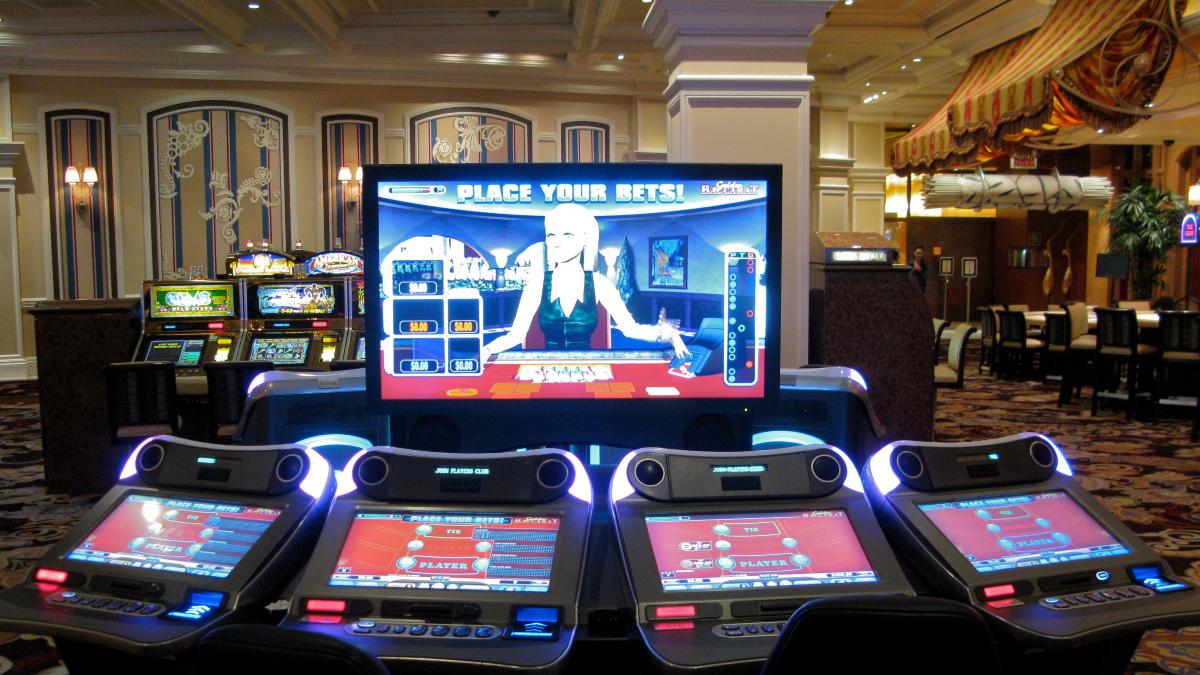
The historic Golden Gate casino in Las Vegas will go completely dealer-free this fall, part of a broader trend toward electronic table games. The poker world has largely been spared that evolution, but not for lack of trying on the part of casinos. We may be poised to see another push toward electronic poker tables, even though previous generations of the technology have failed to resonate with players.
In the last year, automation through artificial intelligence has emerged as a daily global talking point. Casinos have experimented with robot security guards and drink service. Some of the latest electronic table games are also AI-powered. Soon, players might even be taking robot taxis to get to the casino.
Now, the Fremont Street venue owned in part by casino mogul Derek Stevens will take the once-unthinkable step of removing all live-dealer games. The good news for staff is that currently-employed dealers will receive offers for positions at Stevens’ other downtown properties, Circa and The D.
Stevens told VitalVegas he anticipates creating “one of the coolest vibes” in town.
We are building the newest thing people don’t know they want, and when you do that, some people hang onto the past because they can’t envision a different and better future. I know we hit the target on this, but it’s a target no one else can see right now.
AI and Poker
AI has played an outsized role in the continued evolution of poker strategy through the advent of solvers. The latest version of GTO Wizard uses a neural network to approximately solve multiway postflop situations in seconds, where an exact solution would take longer than the age of the Universe.
Yet, the mechanics of the game itself, at least in a live setting, remain largely insulated from the advances of the “robot takeover.”
That is, players still hold physical cards and bet with actual chips. Human dealers pitch them each hand. Human supervisors and tournament directors make rulings when an unusual situation arises, such as the recent buzzed-about hand in Florida in which a player got to showdown with three cards.
But there have been efforts to change that. Players seem to like the physical and social elements of the game, but offering poker would be much more profitable for the venues if they could reduce the staffing overhead.
Electronic Poker Tables–How Do They Play?
Electronic poker tables have periodically popped up at a few casinos here and there. One such casino exists right across the river from my hometown of Omaha. I’ve made a couple of treks across the bridge to Ameristar Casino Hotel Council Bluffs to try them out.
The nearby Horseshoe Council Bluffs has a monopoly on regulated live gaming in the area. It’s an annual stop on the World Series of Poker Circuit and used to host a pretty robust selection of live cash games. Stakes as high as $5/$10 ran regularly at the time Ameristar dabbled in electronic poker.
Seemingly wanting to get in on Horseshoe’s action, but unwilling to invest in a full-scale poker room, Ameristar opted for a half-measure. They opened a small “poker room” for these new-at-the-time electronic tables. My recollection is that they had about three tables squirreled away in a low-traffic corner of the casino.
A friend who played small stakes wanted to check it out. One of the perks of electronic tables is that lower overhead means the venue can offer lower minimums. This game’s affordability—I believe the blinds were just $0.50/$1—appealed to him. So, I agreed to accompany him over there for a session.
It was an odd experience. Each player’s seat included a small screen set into the table. A “deal” produced a pair of graphical cards on that screen. By default, they were shown face down, to avoid other players peeking.
The gimmick was that, to see your cards, you had to cup your hands on the screen, the same way you would shield a pair of physical cards when peeking at them. When the screen sensed your hands in place, the card values popped up. Aside from that, though, the betting was handled in much the same manner as an online poker room, with the player pressing buttons and typing numbers into the touchscreen.
Players Have Largely Rejected Electronic Poker
Those electronic poker tables didn’t exactly take the market by storm. In fact, I’ve been to countless poker rooms inside and outside the U.S., and I can’t recall seeing them anywhere else.
I can’t recall exactly when I played that table at Ameristar, or confirm an exact timeline of that experiment. However, it was at least 12 years ago, probably more like 15. Let’s call it 2010.
(Editor’s note: I played at a table very similar to the one described above, at a casino near Ottawa, Canada, and can put the year at 2007 or 2008).
I don’t get the sense much has changed since then, though.
Compelling reasons exist to explore a transition to electronic tables. Aside from the lower stakes, they could lead poker rooms to compete to offer lower rake, putting more money in players’ pockets. Assuming the technology is robust, there would be game integrity advantages as well. Players could forget worrying about marked cards, “mechanic” dealers, or devices that see cards as they’re being dealt. Venues would no longer deal with the headache of player complaints regarding inexperienced and/or poor dealers.
Still, it’s hard to deny that there’s something visceral about holding cards and shuffling real chips that resonates with poker players.
Mistrust of Digital Randomization
Moreover, many players also still harbor a deep distrust of computer randomization, required for the shuffling and dealing digital cards. Never mind that a computer can be more perfectly random than physical shuffling—many players want to see the appearance of randomness. They play live precisely because they believe their own two eyes are the most reliable judge of a fair, honest game.
Online casinos have to deal with that mistrust on a regular basis. There have been some odd attempts to work around it, like Hard Rock Atlantic City’s failed 2020 experiment with “live online slots,” which allowed players to interact with a set of physical slot machines at the casino through an iGaming interface.
A hybrid electronic game removes poker’s immediacy. It feels too much like online poker, and asks players to trust engineers and third-party testing labs.
I could see electronic poker tables working in certain locales, such as out-of-the-way rooms where staffing a game consistently proves difficult. But I’d be shocked if the industry went the way of the Golden Gate gaming floor in the near future.
Stevens believes a dealer-free floor is the future of table games. He might even be right, but poker is a different animal.
Image credit: Steve Jurvetson/Flickr (license)