Deputy Editor


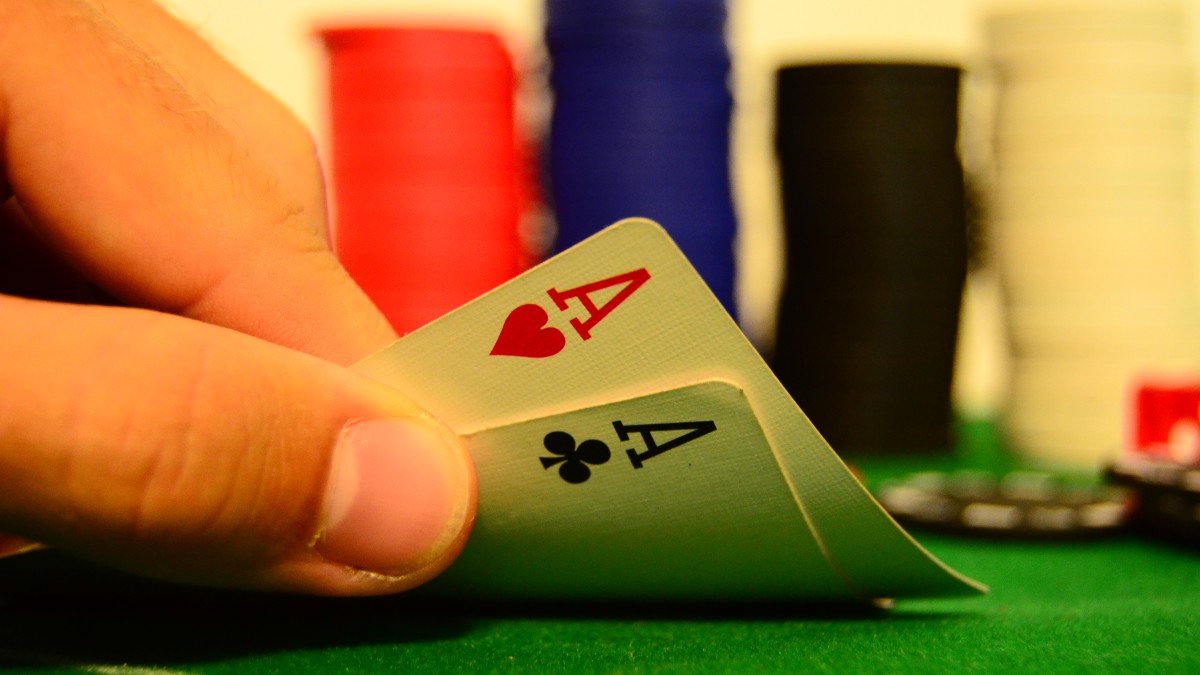
The official GGPoker X account posted a video on Wednesday that had the poker world buzzing. A player at a World Series of Poker Online final table mucked pocket aces preflop, when they had the absolute nuts.
The hand in question, which occurred with seven players left in the $215 Mystery Millions Bounty:
Yes, it really happened… Pocket Aces folded preflop at the WSOP Online Event #7: $215 Mystery Millions — $1M Top Bounty [Day 2] final table 😲
With $576K up top, a WSOP bracelet on the line, plus a $30,000 Super Pass… sometimes even Pocket Aces hits the muck preflop.
Payout… pic.twitter.com/LKu3EMWMwK
— GGPoker (@GGPoker) August 27, 2025
The fold generated a wide variety of reactions. Many observers expressed bewilderment and disbelief. Others lauded the play, noting that “Liverian” would have busted out against the set flopped by “Gboro21.”
Why Did A Player Fold Aces Before The Flop?
Essentially, Liverian was making a decision based on Independent Chip Model (ICM) considerations and the circumstances of the hand. The player had to weigh the value of the extra chips they stood to win against the immediate pay jumps they risked if their Aces were cracked with two short stacks poised to bust.
Liverian had more than 50 big blinds, while four other players at the table, including two who were already all-in, had stacks shorter than 15 big blinds. With a pay jump of more than $82,000 from seventh to fifth, busting out with that sort of stack would have been a disaster.
Here’s a look at payouts for the event:
| Place | Prize |
|---|---|
| 1 | $606,251* |
| 2 | $443,525 |
| 3 | $342,005 |
| 4 | $263,722 |
| 5 | $203,358 |
| 6 | $156,811 |
| 7 | $120,918 |
Plugging the stacks at the table into an ICM calculator reveals that Liverian’s stack was worth almost $380,000.
In No-Limit Hold’em, Aces can be vulnerable, especially in a multi-way pot. In most cases, Liverian would be around a 4-to-1 favorite against Gboro21. (Liverian would have actually had 68% equity for the entire pot, according to Card Player’s Texas Hold’em odds calculator.)
Liverian didn’t want to risk the 20% chance they would bust and miss out on those hefty pay jumps. They wanted to ensure they realized more of that $380,000 worth of equity.
Is It OK To Fold Pocket Aces Preflop?
Generally speaking, the only situation in which folding pocket Aces makes sense is in a traditional (non-milestone) satellite tournament. Survival is the only thing rewarded in that format. Accumulating chips becomes a secondary concern. Essentially, if losing the pot in a satellite puts a player at risk of missing a seat, but winning the pot doesn’t meaningfully improve their chance of winning one, folding Aces becomes best.
This was not such a situation. Strictly in terms of poker strategy, folding Aces was a mistake in this hand, even factoring in the situation’s heavy ICM.
Still, the ICM in this hand provided very real pressure and called for significant adjustments. If Liverian busted out but the short stacks survived, that would equate to a loss of about $260,000 in equity. That’s a pretty painful situation for most poker players who play $215 events.
Liverian did have the right idea, understanding they needed to play exceptionally tight. One responder used Hold’em Resources Calculator software to show that even pocket Kings would be correct to fold in Liverian’s situation. Pocket Aces was the only hand they should have called with.
That said, the sim also demonstrated that folding Aces costs Liverian $36,900 on average.
At the end of the day, some amount of risk is inherent in poker. And the most likely result by far if Liverian called was that they would beat Gboro21’s hand and become the chip leader. That has a ton of value, especially in a bounty event.
The only truly disastrous result of the hand would be for Liverian to lose to Gboro21 while also seeing the short stacks survive. However, most outcomes in which Gboro21 makes a hand better than Aces would also enable them to bust the short stacks. In those cases, Liverian would have still laddered twice to fifth place due to having the deeper stack.
Image credit: Poker Photos/Flickr (license)