Poker Writer


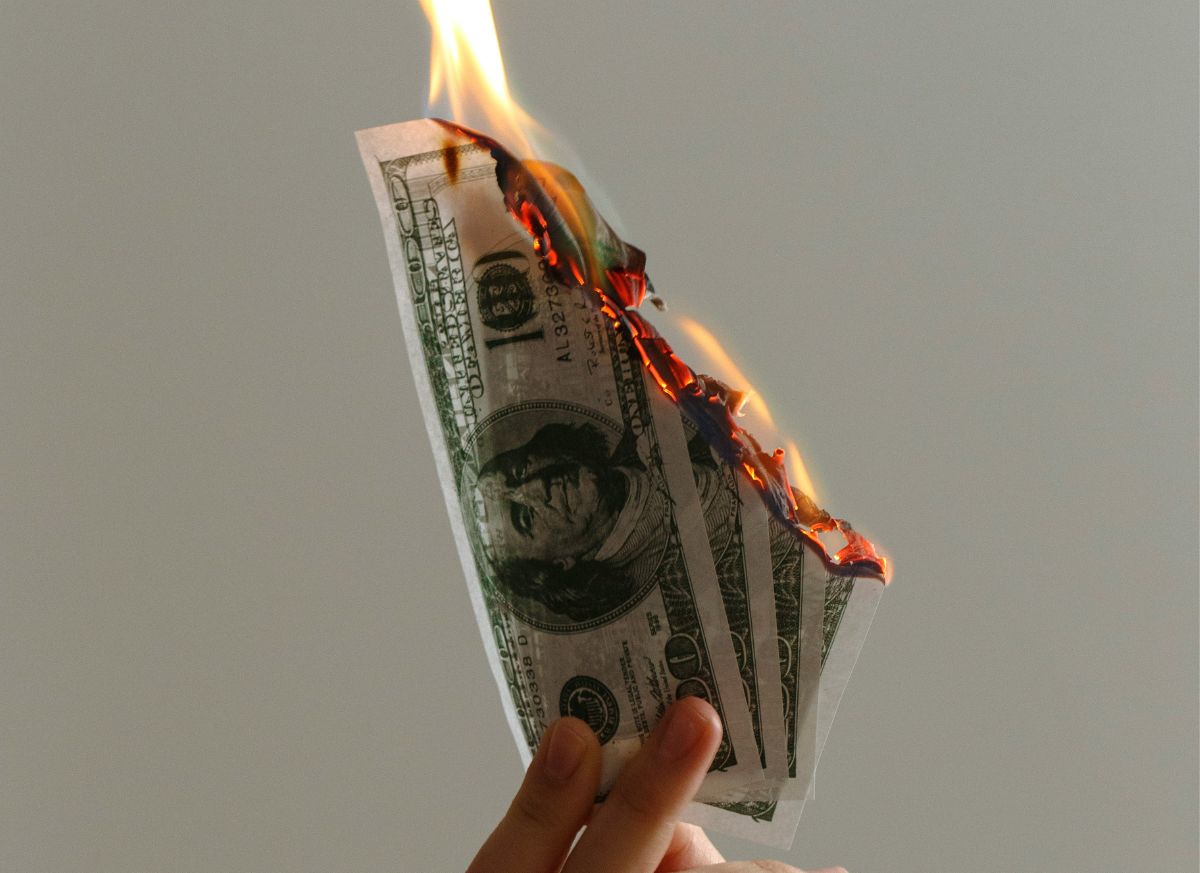
The 90% deductibility on gambling winnings introduced by the Big Beautiful Bill will have a detrimental effect on pro poker players, and PokerScout sought out a player’s viewpoint on how it works.
Poker player Mike Fellman, author of Instructive Poker Hands, spoke with PokerScout to explain why the deductibility tax would be crushing for pro poker players. The small margins involved in poker make it particularly affected, compared to other forms of advantage gambling.
On top of the 90% deductibility, Rahm Emanuel, the former Chicago mayor and possible 2028 Democratic presidential candidate, proposed a new federal tax on online gambling and prediction markets in April.
The entire thing could create a toxic tax cocktail that threatens to devastate individual bankrolls and livelihoods.
Keep Reading
New Tax Cap Wipes Out Edges
Emanuel’s tax proposal can wipe out all of a player’s profits, especially when combined with the controversial gambling tax change that caps deductions at 90% of a player’s losses. That tax change took effect this year.
UFC President Dana White recently appealed to President Donald Trump directly to attempt to have the deduction cap repealed.
Fellman explained the situation from a poker player’s viewpoint:
The tax creates phantom income because only 90 percent of losses are deductible. When win rates are low, this can tax away all profits.
He then went on to explain the exact dynamics of a high-stakes cash game player and how small the margins are for players trying to make a living:
A pro is considered an absolute crusher if they could win 3 BB/100 hands at high stakes. Edges at those stakes are tiny. The lineup involves mostly other pros, a few whales, but those players usually don’t spew.
Most pros are quite happy with 1 or 2 BB/100 in all-star lineups at super high stakes.
Then went into detail about how the new tax would then completely change the profit margins.
Consider a game of $300-$600 where a pro has two sessions. They finish up $60,000 in the first, and down $58,000 in the second. They won $2,000 on net, but for tax purposes, their taxable income is $7,800, since only 90 percent of the $58,000 is deductible (60-58*0.9=7.8).
If they face a tax rate of roughly 37%, they would owe $7,800*0.37=$2,886 in tax. But the actual money they cashed out was only $2,000. So after taxes, they go from a $2,000 profit to an $886 loss.
The tax change wipes out any edge that players have. The small-margin wins, which are quite common at the cash game level, suddenly turn into losses.
High-Stakes Players ‘Screwed’
This not only impacts high-stakes players but also small-stakes crushers. However, Fellman said that a smaller-stakes player is more likely to overcome it with a higher win rate. He also noted that small-stakes players may be less likely to report anything to the IRS if they are winning at a high rate but for low gross dollars.
But a high-stakes pro is screwed. They face a serious risk of audit because the dollar amounts are so high, and their edge likely does not overcome the loss of full deductibility of losses.
Losses Can’t Be Carried Forward
Another underrated issue for pros facing the potential tax increase is that losses cannot be carried forward into the next year if a pro has a losing year. Losing years are almost inevitable, even for the best players, due to live poker’s massive variance. Fellman explained:
A 2 BB/100 hands winner at super high stakes (a very respectable win rate in a tough game) has a 24 percent chance of observing a 100,000-hand stretch where they finish down money. Assume a standard deviation of 90 BB/100, which is about normal. If you assume 45 hands per hour, which is a very fast pace of play live, then this is about 2,200 hours of play.
That breaks down to about 42 hours per week. In theory, that’s doable, but in reality, good games might not run that often. Fewer hours means fewer hands, which means variance has a bigger effect on the bottom line. That, in turn, can lead to a higher likelihood of a losing year.
Overall, being a cash game player as a full-time job is effectively untenable in Fellman’s eyes with an additional 10% tax hit. There is no protection for the player at all.
So if a pro plays 40 hours a week as a full-time ‘job,’ one in four years will be losing. But none of the losses from those years can be used to shield future income from taxes.