Managing Editor


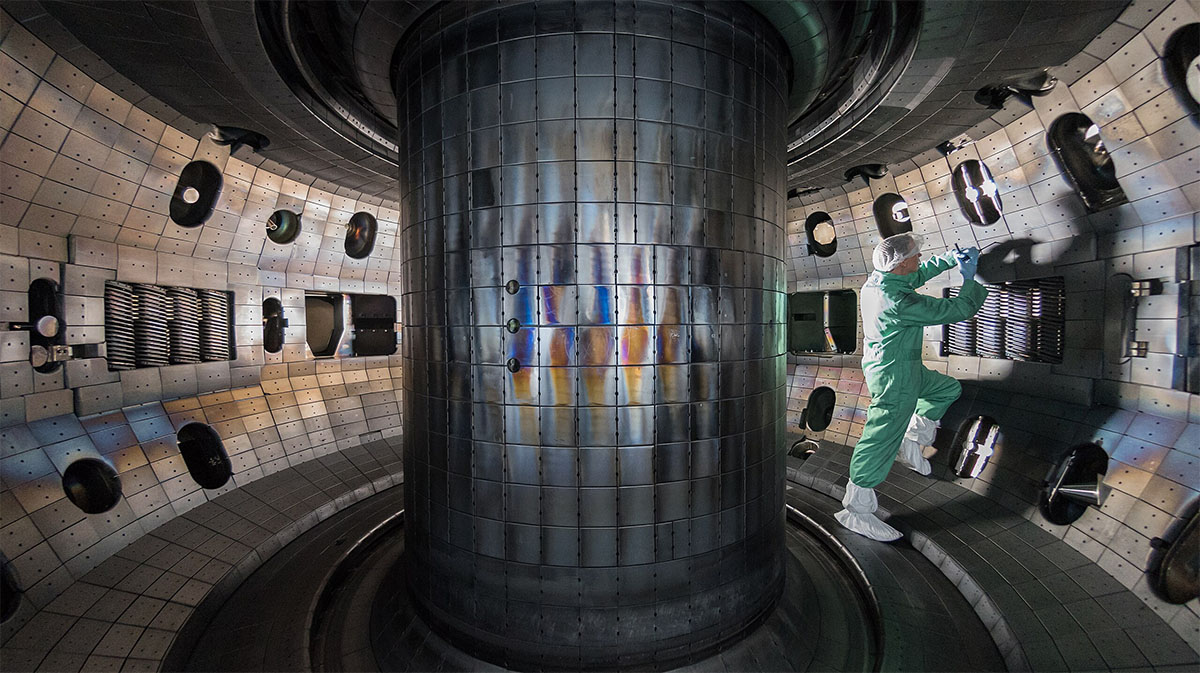
Google made what it describes as a “bet” on nuclear fusion yesterday, investing in Commonwealth Fusion Systems and committing to purchase 200 megawatts of energy from the company’s first commercial plant, slated to open in Chesterfield, Virginia. Coincidentally, the announcement comes less than a month after Kalshi became the first predictions market to offer contracts on fusion power prospects.
Google’s deal with CFS is the second of its kind. The first was between Microsoft and Helion, struck in 2023 and with a commitment for 50 megawatts, a quarter of what Google expects to buy from CFS. Neither is a tremendous amount of power, but neither is insignificant. Most oil plants range between 100 and 1,000 megawatts, and a single megawatt equals the average annual power consumption of approximately 830 U.S. homes.
Microsoft founder Bill Gates is a major proponent of fusion. He’s also indirectly involved with the Google deal, as his Breakthrough Energy Ventures accelerator program has provided funding to CFS.
On the other hand, 200 megawatts is only approximately 0.03% of the total power used by Google’s data centers worldwide in 2023. That power use has likely risen even further thanks to the emergence of energy-intensive AI.
Despite being a hot topic, fusion has generated relatively little activity on prediction markets. Kalshi’s contracts on the timeline to sustainable fusion are the only ones currently available and have generated a trading volume of barely $1,000. The resolution for the proposition may be too far off, and the news too slow-paced for now to interest many day traders. That will likely change in the next few years, however.
When Will Commercial Nuclear Fusion Become a Reality?
CFS hasn’t committed to a specific timeline for its Virginia facility to come online. However, its announcement of the deal says that Google’s financial support will help it meet its “early 2030s plan.”
That’s a more conservative projection than Helion offered Microsoft. That deal included a commitment to start selling power by 2028.
The consensus opinion of Kalshi speculators seems to be that one should be skeptical of Helion’s promises. There are three timelines available to trade on, and Yes Shares for “Before 2030” last sold for 18 cents, suggesting an 18% chance of a commercially viable fusion reactor by that deadline.
There’s more optimism on the 10- and 15-year timescales, however. Yes shares on “Before 2035” and “Before 2040” recently sold for 38 cents and 39 cents, respectively.
The small difference between the 2035 and 2040 timelines might imply a belief that a breakthrough is likely to come in the next ten years, if at all. However, there is limited liquidity in the market, so unusual pricing is inevitable. It appears likely that the price for “Before 2040” is poised to rise as well. There are additional Yes shares available for 2035 at 38 cents, but one would have to pay 48 cents to take a position in the 2040 market today.
In other words, even pessimists think fusion power by 2024 is about an even-money proposition.
Another feature of the low liquidity is huge spreads between the Yes and No sides. For instance, although you can buy Yes Before 2030 shares for 19 cents, no one is currently offering more than 11 cents for them (or, put another way, selling No for less than 89 cents).
Why Fusion is So Hard, and Why It’s Worth It
Nuclear fusion could be described as the “Holy Grail” of clean energy. It’s simultaneously a daunting quest and one with the potential to change the world radically for the better.
Atomic nuclei experience two forces: First, there’s the electric force we all learned about in high school, which causes things with the same charge to repel each other. That makes the protons in the nucleus want to fly apart. However, there’s also the strong nuclear force, which acts like a short-range “glue” that holds the protons and neutrons together.
Depending on the size of the nucleus, the balance between those forces can lean one way or the other. For big, heavy nuclei like uranium and plutonium, breaking the strong nuclear force bonds allows the electric force to split the nucleus explosively. That’s where fission power comes from—like Iran’s contentious nuclear program, which is also the subject of predictions market speculation.
For small nuclei like hydrogen, however, it’s the other way around. There aren’t that many protons to repel each other, but bringing the nuclei together releases huge amounts of energy as they snap together under the strong nuclear force. That’s what happens inside the Sun.
A Difficult Engineering Problem
The catch is that the protons still want to repel each other until they’re very close. That means they need to be going extremely fast to get close enough to stick before electric repulsion diverts them.
At the atomic scale, extremely fast also means extremely hot. The interior of the Sun is about 15 million degrees Celsius (or 27 million Fahrenheit).
Fundamentally, the hard part about creating nuclear fusion is the temperatures involved. When something is tens of millions of degrees, you can’t put the reaction in anything without vaporizing the container. The only thing you can do is use magnetic fields to hold those charged particles together and prevent them from touching anything else.
Scientists have made it that far, but the problem then is that those magnetic fields take energy to sustain. It falls to engineers to make the magnetic containment system efficient enough that they can get more power out of the reaction than it takes to sustain it.
They’ve done that, but barely and only for very short periods. For Google’s bet to pay off—and the Yes shares for Kalshi speculators—companies like CFS need to keep the reactions going indefinitely to make them a reliable source of electricity.
The Greenest of Power
Scientists and engineers have been working on this for decades. Investment in their work rises with every passing year, with $7.1 billion in direct investment last year, most of that from the private sector.
That’s remarkable for a product that doesn’t really work yet. And yet, the payoff if it eventually does can’t be overstated.
Nuclear fission—the uranium-based technology in use today—is considerably greener than fossil fuels and higher-yielding than wind or solar. Yet fusion reactions are high-risk, and safe disposal of their byproducts is a thorny issue. There’s also a very limited amount of uranium available on Earth, and mining it poses other hazards and contentious challenges.
Fusion, on the other hand, needs only hydrogen. There are two hydrogen atoms in every molecule of water in the oceans, readily available through electrolysis. The main byproduct of the reaction is helium, an inert and non-radioactive gas that even happens to be commercially valuable in its own right.
It won’t quite be “free” energy, as building and maintaining the plants is bound to be expensive. However, an engineering breakthrough in fusion, like the one Google is betting on, would have the potential to drastically reduce energy costs worldwide and carbon emissions along with them.
Image Credit: Rswilcox via Wikimedia Commons (license)