Managing Editor


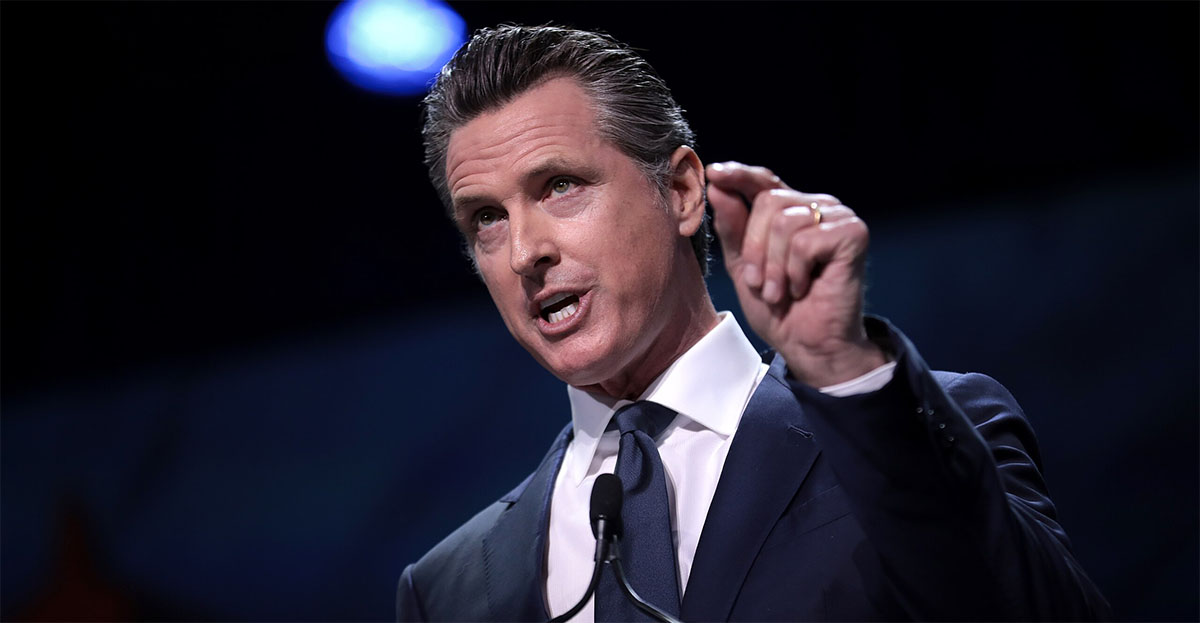
California Governor Gavin Newsom currently looks like Democrats’ best hope to win the next presidential election, and predictions market bettors don’t seem particularly bothered by media attempts to manufacture a scandal out of donations he solicited from the Graton Rancheria tribe.
The overtly conservative-leaning Washington Free Beacon first highlighted the Graton Rancheria’s payments to the California Partners Project (CPP) in mid-July. British tabloid The Daily Mail subsequently requested comment from the Governor’s office and framed the vigorous denials of wrongdoing as a personal “blow-up” by Newsom.
Newsom’s wife, Jennifer Siebel Newsom, co-founded the CPP. The charity’s stated goals are statewide gender equity and ensuring that California media and tech companies are “a force for good in the lives of all children.”
Under California law, any political or charitable donations explicitly suggested by politicians become a matter of public record. The Washington Free Beacon highlighted only two donations made by Graton Rancheria at Newsom’s behest, because the first roughly coincided with a lawsuit he filed against the federal government to the benefit of the tribe. However, the record shows a string of similar requests going back to 2018, three years before the events that provoked the lawsuit.
The lawsuit in question involves a 2021 proposal by a smaller tribe, Koi Nation, to build a new casino resort in Sonoma County. Graton Rancheria opposes the plan, which would create new competition in the immediate vicinity of its Graton Resort & Casino.
Legal controversies surround California tribal gaming
Tribal casinos differ from commercial casinos in that their authorization involved three separate governments. Whereas the state can unilaterally issue licenses for commercial casinos, tribal casinos require a compact between the state government and the tribe’s sovereign government. Those negotiations take place under federal government oversight, as set out by the Indian Gaming Regulatory Act (IGRA).
That means tribal gaming questions can easily devolve into jurisdictional battles. The federal government becomes more directly involved when tribes want to build casinos on land that isn’t part of an existing reservation.
Although some gaming tribes operate commercial casinos outside their lands, or even in other states entirely, to be a tribal casino requires the property to be on tribal land. The process for adding new land to a reservation requires it to be taken into trust by the federal Department of the Interior (DOI).
There are rules governing the circumstances under which the DOI can take land into trust. Typically, the tribe must be able to show that it has an ancestral connection to the land in question or that it represents an “enhancement” to its existing reservation. However, there are exceptions when it comes to the tribe’s economic welfare, and the extent of those exceptions is a matter of ongoing debate in California and elsewhere.
Further complicating matters is the change in administration. The DOI under Biden made certain land-into-trust decisions that new leadership under the Trump administration has sought to reverse.
In 2024, Newsom’s office urged Biden’s DOI not to move forward with two such projects, one of which was the Koi Nation proposal. Graton Rancheria endorsed that opinion. This May, the state government sued the Department of the Interior to try to block the casino.
Six behested payments since 2018
California’s record of “Behested Payments” dates back to 2011 and includes $516 million in total requests. $237 million of those came in 2020 amid the COVID-19 pandemic.
The database tracks payments requested or suggested by Senators, House Representatives, or “statewide” officials like the Governor. It includes over 13,000 separate requests, ranging in value from a mere $12.87 up to $25 million.
About 10% of those requests came from Gov. Newsom (who was in office in 2020) and another 5% from his predecessor, Jerry Brown.
The Federated Indians of Graton Rancheria received eight such requests. Six came from Newsom, starting in 2018, amounting to a total of $2.25 million, and individually ranging between $200,000 and $500,000.
However, the single largest request to Graton Rancheria came from Lieutenant Governor Eleni Kounalakis. In 2023, she asked the tribe for $4.65 million to support the APEC Summit. Former Senate leader Toni Atkins also has one request on the record.
Behested payments are not inherently illegal. Indeed, California’s purpose in maintaining the database is to ensure that such requests receive enough scrutiny to discourage the sort of overt and illegal quid pro quo that the Washington Free Beacon and Daily Mail insinuate is present between Newsom and the tribe. That level of transparency is unique to California. Officials in other states can also solicit donations to non-profits, but those requests and donations aren’t tracked in the same centralized, publicly-accessible way.
Newsom leads Democrats in presidential odds
The 2028 US presidential election is still years off, but already, political predictions markets like Kalshi and Polymarket are offering contracts on the outcome.
With current President Donald Trump in his second term, Vice-President J.D. Vance is the odds-on favorite to be the Republican nominee and winner of the election. However, Kalshi users put him at only about 30% to be the next President, so the race is still wide open. Polymarket sees it as even tighter, at 28% for Vance.
Newsom is in his final term as California Governor and cannot run for re-election at the state level. Therefore, a presidential run would be a natural next step for him. He’s in second place behind Vance, with both markets giving him a 13% chance.
Those odds have been rising steadily, however. His chances were as low as 5% the end of May, and 10% at the beginning of July. There was a tiny downward reaction in mid-July that might have been related to the Washington Free Beacon’s article, but he has been on an upward trend ever since.
Behind Newsom is Alexandria Ocasio-Cortez, a long-time favorite among younger and more strongly left-leaning voters. Although neck-and-neck with Newsom when the Kalshi market opened in May, her odds have not progressed beyond the high single digits.
The next most-likely candidates are Marco Rubio (5% on Kalshi) and Pete Buttigieg (4%). After them is a veritable logjam of possibilities all deadlocked at 3% apiece.
(Polymarket also includes Andy Beshear and Kamala Harris at better than 3%).
Those three-percenters include President Trump himself, despite the fact that the Constitution explicitly prohibits him from running again. Trump has teased that he might try to find a loophole that would allow him to serve a third term, without specifying what that might be.
Image Credit: Gage Skidmore via Wikimedia Commons (license)