Managing Editor


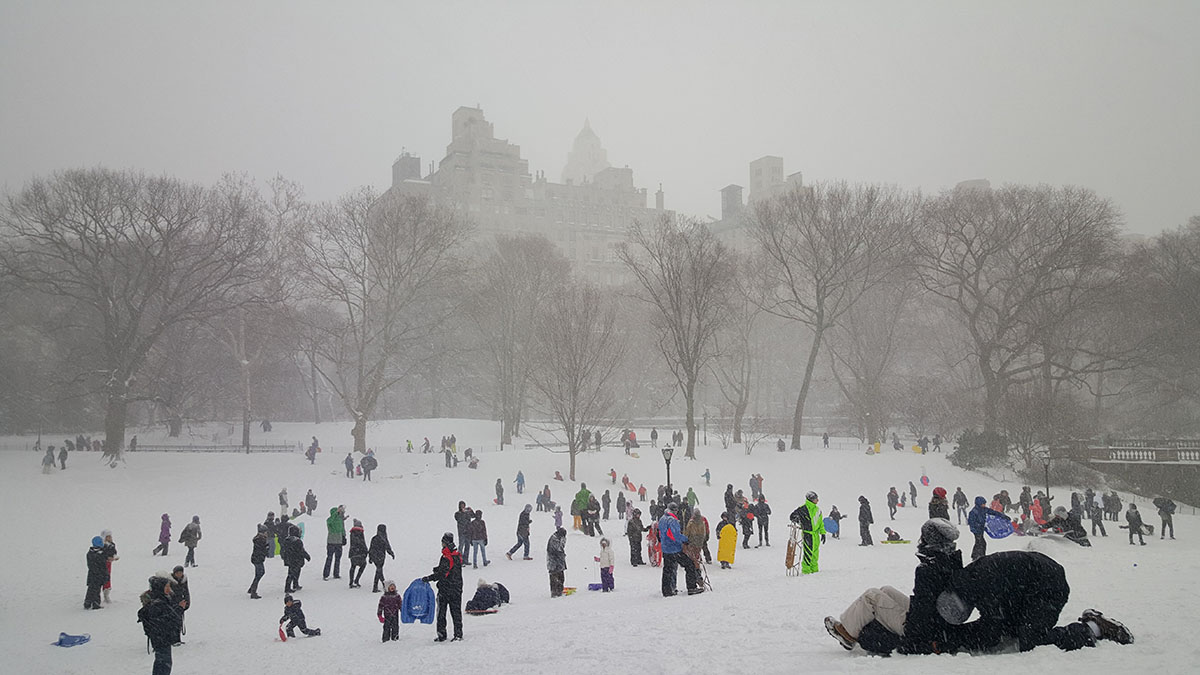
Much has been made of the danger that insider trading poses to prediction markets, but for the average bettor on these platforms, there may be an even greater threat: the fine print. This weekend’s snowstorm generated over $6 million in Kalshi trading volume on the accumulation in New York. Much of that appears to have come from people who thought they’d spotted a chance for free money, only to complain that they’d been “scammed” after the market didn’t resolve as they’d expected it to.
It’s only the latest example of a scenario that can be seen playing out time and again on Kalshi and other platforms. Last week, the people on the wrong end of things were those who were too quick to act on preliminary album sales figures for A$AP Rocky’s Don’t Be Dumb. This week, it was those who hadn’t paid attention to where the snow needed to fall.
Some New York boroughs were reporting more than 13 inches of snowfall at a time when contracts for Over 12.0 Inches were still available to trade. However, in the only place that mattered — Central Park — the accumulation was just 11.4 inches in the final hours of trading, with the precipitation having stopped. Those who’d read the terms were more than happy to take the Under side of things on all that late action.
To put the amount of trading in context, markets for Chicago and Boston each generated less than $200,000 in volume across the entire duration of the storm. The 12.0 Inches line for New York City saw $1.2 million in wagering in the final 24 hours of trading alone. Another $434,000 came in on the 15.0- and 18.0-inch lines.
At that point, everyone thought they knew what the outcome would be. But only some had read carefully.
Keep Reading
Weather Markets Are a Growing Niche
The overwhelming bulk of prediction trading on Kalshi takes place on sports events. However, weather markets consistently feature in the daily top volume lists compiled by PokerScout, once sports and cryptocurrency have been filtered out.
The most popular of these are the daily high temperatures for various cities. Which cities see the most betting varies, but New York is often on the list.
The enthusiasm for betting on the temperature is likely due to the abundance of detailed meteorological data available and the “real-time sweat” aspect of watching the numbers, which makes it not unlike a sports event. Daily low temperatures are less popular to bet on because the low point is likely to hit late at night, after the bettors have gone to bed.
Any habitual weather bettor knows that it’s always the Central Park monitoring station that determines the results. Yet the massive trading volume on the New York snowfall suggests that local weather reports – or residents’ own backyard observations — drew in some hopefuls without prior experience in these markets.
The market rules stipulated:
If the total snowfall in New York City from Jan 24, 2026 through Jan 26, 2026 is strictly greater than 12.0 inches, then the market resolves to Yes. Outcome verified from the National Weather Service.
Data for CLINYC can be found by clicking the following URL: https://www.weather.gov/wrh/Climate?wfo=okx, clicking on “Observed Weather”, and selecting “Central Park NYC” with Daily Climate Report selected.
However, numerous comments from users on the wrong end of the bet indicated that they’d believed that snowfall anywhere in the metropolitan region would count. For instance:
it mention in elmust in queens 13.5 inch is recorded and they saying nyc had no snow above 12!!! this is totally a scam
16 inches in New Haven it’s def at 12
there was 14.9 inches of snow in Washington heights that’s NYC curious if they will pay the over 12.0 inches lol
well it says most of NYC has a avg of 15 in so far
Bettors in Other Countries Have Had Similar Struggles
Markets like these are a novelty to most Americans. Even legal sports betting outside of Nevada has been around for less than a decade. Contracts like these — or almost anything Kalshi offers outside of sports — are not permitted on state-regulated sportsbooks.
However, that’s not the case in other countries. In the United Kingdom, for instance, bookmakers have a lot more leeway in what they can offer. At one time, that caused problems quite similar to what we’re now seeing with Kalshi.
Oliver Ring, a longtime British gambling journalist, told PokerScout that watching Americans struggle with prediction market rules makes him feel like “America is on a time lag from the UK betting market about ten years ago.”
The problem, says Ring, isn’t exclusive to peer-to-peer exchanges, although those exist too. Rather, it crops up anywhere people are betting on propositions that aren’t as self-explanatory as the score on the board at the end of a game. Now, British bettors have adjusted to the need to read the terms, but for a time, angry complaints based on faulty assumptions were common.
Ring gives the example of bets on a football club’s next manager. Such bets often require that the manager remain in charge of the team for a certain period to count — say, ten matches. When those bets first started appearing, it was common for people who hadn’t read the terms to “go on social media and get really angry.”
One can only hope that Americans will make the same adjustment in time.