Deputy Editor


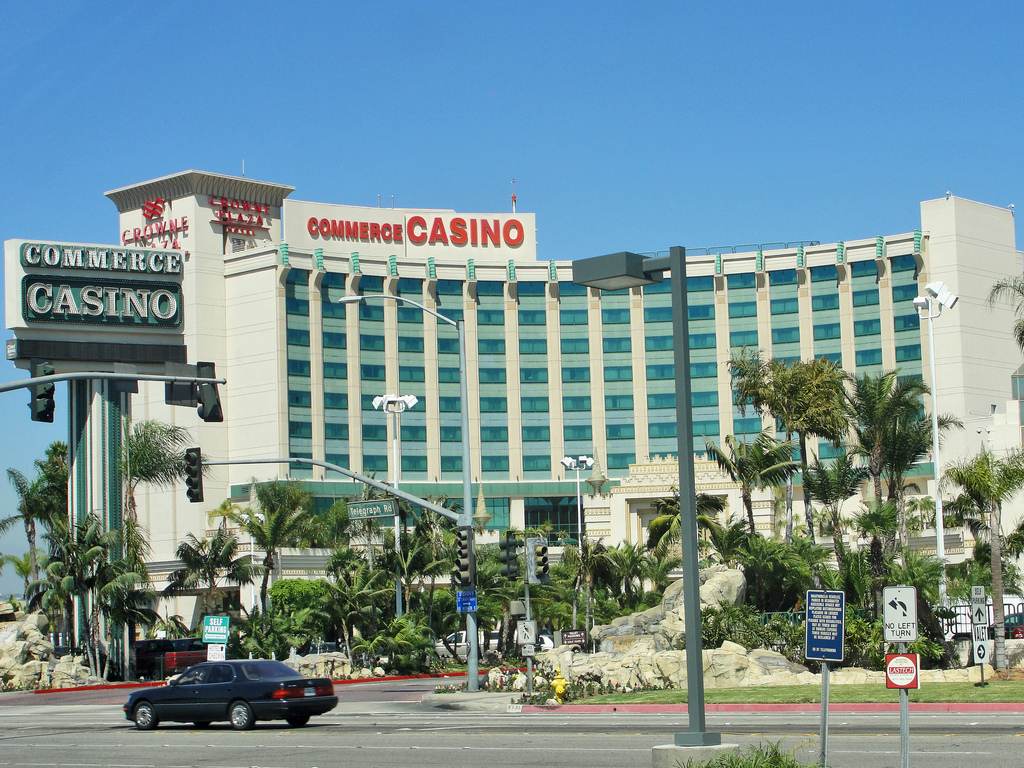
There’s a shadow hanging over the L.A. Poker Classic (LAPC), as locals say they’re worried about the future of poker in the city. The annual event is a highlight of the U.S. poker calendar and is now in full swing, having started in January and continuing until the beginning of March. Ordinarily, this would be a festive time for poker in one of the biggest cities in the world and its massive base of players.
The reasons for the decline may be complicated, but the departure of a beloved tournament director from the city’s most prominent cardroom was, if not the cause, then at least a critical inflection point. A difference of opinion between Cavin Quintanilla and his bosses at Commerce Casino led to him vacating his position just before an important World Series of Poker Circuit event. Nothing has been the same since.
The L.A. area, once considered one of the world’s great poker hotspots, has experienced a precipitous decline in recent years that has accelerated in 2026. Speaking to PokerScout, local players painted a picture of formerly-bustling cash rooms reduced to a trickle. Tournament schedules once chock-full of marquee events have become sporadic and poorly marketed.
PokerScout spoke to several sources for this story, many of whom say they now feel there’s little to look forward to. All painted a fairly grim picture of the current landscape and near future of poker in the L.A. area. Words like “bleak” and “disaster” came up repeatedly, and one player said he didn’t “see any hope for the future” in the city.
Such assessments are taking place both privately and in public. Local tournament regular Jeremy Hamey was one of the first to sound the alarm on social media, where he continues to call the tournament scene a “graveyard.” Hamey said he plays close to 300 tournaments a year, the majority of which are in his home market.
“I’m incredibly familiar with the landscape of L.A. poker and the four or five casinos that are in the area,” he told PokerScout. “What we’ve seen here in L.A. is a continual, gradual downswing from the casinos, where their priority set clearly is going away from tournament poker.”
Derek Kwan, a local poker player and content creator, echoed many of Hamey’s concerns.
“Current landscape of tournament poker in L.A. is not great, and could be so much better,” he said. “Tournaments really do feel like they are fighting for their lives right now in L.A.”
L.A. Tournament Prize Pools Trending Downward
The yearly poker tournament calendar in L.A. tends to revolve around a few marquee events such as the LAPC. Some of these have already disappeared, while others remain.
The World Series of Poker Circuit, for instance, selected L.A. to host its season-ending bracelet championship in each of the last two seasons. That will no longer be the case going forward, thanks to the announcement of a new calendar-year circuit schedule that ends at WSOP Paradise. Poor attendance may have contributed to the decision, as fewer than half of the qualifiers even bothered to show up last year.
The quality of major L.A. events has waned along with attendance.
“Ten years ago, we had World Poker Tour and WSOP stops, like L.A. Poker Open,” Hamey said. “People around the world would come. It was a destination.”
In the not-too-distant past, the LAPC was able to promise more than $1 million for first place. The last time that occurred was in 2020, however. That was also the final year it was affiliated with the World Poker Tour. In its current form, Hamey noted, the entire prize pool isn’t much bigger than $1 million:
| Year | Entries | Prize Pool | WPT? |
|---|---|---|---|
| 2019 | 546 | $5,169,270 | Yes |
| 2020 | 490 | $4,727,550 | Yes |
| 2021 | 69 | $655,500 | No |
| 2022 | 119 | $1,118,600 | No |
| 2023 | 181 | $1,683,300 | No |
| 2024 | 139 | $1,292,700 | No |
| 2025 | 145 | $1,348,500 | No |
| 2026 | 50 | $465,000 | No |
The LAPC even skipped a couple of recent years, replaced by a WSOP Circuit stop. When it last ran in 2023, it offered a mere $250,000 guarantee for its $1,200 main event. That’s a number that other events in the same price range can easily clear, even in comparatively sparser regions like Iowa.
It’s Not Only Commerce That’s Struggling
Commerce Casino has been the host for all of the aforementioned events. That makes it the most visible example of the city’s decline, but the problem is not exclusive to the Commerce.
Bicycle Casino hosts an annual Mega Millions event each fall that, during the period from 2022-2024, generated prize pools north of $2 million. That series features low buy-ins and a large number of starting flights, usually accompanied buy a more expensive option to buy directly into Day 2 for deeper-pocketed players.
This past fall, Mega Millions XXX overlaid. Even scaling back its guarantee to $1.5 million, it was only able to muster $1.3 million worth of entries, having to pay the remainder of the guarantee out of pocket.
Hamey described the desperation of tournament staff toward the end of the starting flights, when it became apparent that the guarantee wouldn’t be met.
“They were literally telling people from out of town, ‘If you come buy in to Day 2, we’ll give you a free hotel room,'” Hamey said. “And they still didn’t make $1.5 million. They actually canceled a few tournaments due to not enough people showing up.
“Non-Southern California poker players no longer care about coming here.”
Key Tournament Director Leaves Void, Quickens Collapse
Several of the players PokerScout interviewed pointed to one man as having been critical to keeping the L.A. tournament scene going. Long-time tournament director Cavin Quintanilla had spent years bailing aboard the sinking ship. Now he’s swimming to shore, having parted ways with his most recent employer — the Commerce — in November.
Before the Commerce, Quintanilla had spent 18 years at The Gardens, another L.A. area institution. He took on a managerial role overseeing the entire poker operation at Commerce in March 2025. Hamey called him “without question the best TD” in the area.
“Could not be a better guy, could not be a better TD for growing the game,” Hamey said. “He listens to the players and tries to give the players the best experience possible.”
Quintanilla told PokerScout that the executives at Commerce had given him a clear mandate: rebuild the venue into the force it once was and should still have been. He said that L.A. had been the “poker capital of the world,” with more players and more games dealt there every single day than even Las Vegas.
His plan was to focus on the Commerce’s daily poker tournaments, reckoning that building them up would support everything else. Quintanilla said he loves tournaments because they align the interests of players, staff, and the house. Everyone wants more players.
More players is exactly what Quintanilla delivered. He said that by summer, he had turned the Commerce dailies, which had been losing money, into a profitable venture. He said the events began producing record turnouts with guarantees as high as $30,000, even with the World Series of Poker was in full swing in Las Vegas, just a few hours away.
Quintanilla’s plan was working.
Calls From on High Halt Commerce’s Poker Momentum
And then, a call came from casino brass that Hamey called “inexplicable.” The venue’s leadership had decided to cancel all daily tournaments.
Cash games, it seemed, had been suffering. Commerce had long been known as the home of high-stakes cash games in L.A. Some of those games had moved to the private sector. Others were now taking place in rival rooms. The brass blamed Quintanilla’s tournaments.
“It was unbelievable,” Hamey said. “They thought if they didn’t run tournaments, cash games would go up. You’re not getting new cash game players to come if you cancel a tournament.”
Quintanilla leans on three pillars for growing the game: caring about the events, running poker games with integrity, and delivering legendary customer service.
A November WSOP Circuit stop was on the horizon. Quintanilla could see his three pillars eroding. He knew that if the venue would not support daily tournaments, there would be no way to deliver a Circuit stop that met his standards.
“I can’t sacrifice those things,” he said.
With just days to go until the Circuit event, Quintanilla pulled the plug on his relationship with the Commerce.
“I feel like there was a lot of squandering here,” Kwan said on L.A. Poker Round-Up after news of Quintanilla’s exit. “At this point, you’re running out of tournament directors, good ones, that are gonna be willing to get in there and do something.”
Amateurish Handling of WSOP Circuit
Without Quintanilla to organize it, sources said the Circuit stop was a massive dud.
Kwan described an event with “very little promotion” and “waning investment” compared to past stops in L.A.
Hamey agreed, saying there was “literally zero marketing.” Last year, he said, prominent poker player Jamie Gold, an L.A. native, helped promote the series. Popular poker media members Jeff Platt and Brent Hanks provided streaming coverage of several events.
This time, Hamey described it as “a complete graveyard.”
“It was the most pathetic WSOP Circuit event, I venture to say, in WSOP’s history,” he said. “You wouldn’t have even known it was a World Series circuit event if there weren’t a couple of signs and the table felt saying it was a circuit event. There was literally nothing different from a dusty daily.”
With Quintanilla having exited, Hamey said a “skeleton crew” ran the stop. That only made matters worse, as the $1,700 main event devolved into chaos at the most critical junction. Overwhelmed staff reportedly started issuing penalties to players for standing up during the bubble.
“Someone blinded off on penalty,” Hamey said. “It didn’t need to happen. You don’t affect a player’s tournament that much. That’s the definition of amateur.”
Now, it seems the WSOPC has dropped L.A. from its list of destinations, at least for the time being. A May event appeared on the first draft of the 2026 WSOPC schedule, but it appears to have been dropped at some point and no longer appears on the current, official version.
“Generally, I don’t see a lot of encouraging signals from our biggest cardroom,” Kwan said. “I hope I’m just wrong about my observations.”
COVID Reverberations Remain
It’s been almost six years since the COVID-19 pandemic. For many poker players, that time is becoming a distant memory, a bizarre fever dream during which they played in between plastic partitions and dabbled in the wild west of app games.
However, sources said the L.A. poker scene continues to feel ripples from the pandemic.
“Pre-COVID, things were booming like they were in a lot of places,” Kwan said. “But post-COVID, many places recovered much quicker than L.A. did. It took years for the Commerce and the Bike to get close to pre-COVID levels, and Commerce isn’t remotely close to what their flagship LAPC main was back in 2019.”
Gardens, Quintanilla said, never reopened its VIP room, and “basically still haven’t opened up fully.”
“People realized what they can get away with for minimal cost,” he said.
And cutting those costs became important as running the cardrooms continued to get more expensive after COVID.
“California minimum wage keeps going up,” Quintanilla said. “If you do the math, if you’ve got 2,000 employees, that’s an extra $80,000 a week. Multiply that, it’s an extra $4 million in wages when you haven’t changed anything in your business.”
The result? Staff cuts, a shift in focus to more profitable table games, and a worse experience for the players in the games that remained. For example, sources said Gardens went from “an outstanding menu to cheeseburgers and hot dogs.”
“Ultimately, who is gonna suffer in all this?” Quintanilla said. “Obviously, the players and the staff.”
L.A. Cardrooms Continue to Marginalize Poker
From a pure dollars perspective, it’s easy to understand why cardroom managers deprioritize poker. It’s one of the lowest-yielding games for most casinos and takes up a lot of room. It may even be a loss leader.
That has always been a reality of the industry. Yet casinos have held on to their poker rooms with the idea that if they don’t host poker games, players will go seek out a rival that does. Keeping as many gamblers in-house as possible justified poker’s existence, with the understanding that at least some of those players would give the house action in higher-value games.
That dynamic appears to be changing in L.A. Sources say local cardrooms are increasingly pushing poker to the margins to make more room for other verticals.
“You can see more floor space being given to more lucrative table games, while poker cash games are no longer given the ‘premium’ floor space they used to have,” Kwan said.
It’s simple mathematics, Quintanilla outlined. He said if a poker tournament table makes $1, a cash game taking up that same space might expect to net $30. Even more lucrative house games, like baccarat, might net $60.
Notably, a wrench has been thrown into these cardroom prioritizations with the news that California has banned blackjack and will enforce mandates on player-dealt games.
Even given the reality that poker is the lowest-margin offering in the casino, Kwan believes cardroom management isn’t giving poker players their proper due as a revenue source.
“I still believe tournament players spend more in cardrooms than people think, which is perhaps the highest point of friction with the financial decision makers,” he said. “I don’t think players gamble in the pits as much as these cardrooms want, but a significant percentage do, and this is action you would not get otherwise. If you just replaced poker tables with more baccarat tables, will 200 more baccarat players appear out of nowhere, who weren’t coming to play because poker tables were there?”
Hope Is Running Out for Los Angeles Poker
Given the bleak picture painted by poker stakeholders in the L.A. area, the question becomes: What can be done to get things back on track?
Kwan suggested there are some easy buttons the venues can press to immediately make the tournament scene more engaging and player-friendly. For one thing, venues have become slack about posting results to social media and reporting them to tournament result aggregators. Commerce appears to have cut tournament reporting entirely, with its most recent post dated May 2025.
“And my advice is to just look at very successful tournament operators and series and just copy them,” he said. “Stop trying to reinvent the wheel when stuff is working. And schedule your tournaments to end on Sunday to cater to your biggest player segment: working regulars, people who play often but have jobs.”
Multiple sources pointed to the Bicycle as now the best-run venue in the area, thanks to TD Jeff Thompson. All eyes will be on Mega Millions XXXI in April. It sports the same guarantee as Mega Millions XXX, the one that led to the scramble to fill seats and ultimately a shortfall.
(Editor’s note: A source informed PokerScout that DJ Villegas has taken over as Commerce TD, and he expects “exciting things” in 2026.)
Quintanilla noted that while there will still be tournaments held in the L.A. area, until the cardrooms begin caring about them again, “they’re just not gonna be at the level they used to be.”
“The future that I see, I couldn’t talk about right now,” he said. “The biggest issue is that California has a moratorium on new cardrooms. The three biggest rooms not caring makes it really tough.”
Hamey looks around and sees little reason for optimism.
“Local players are frustrated, out-of-town players aren’t coming, and the casino gets frustrated,” he said. “It only gets worse. Us tournament players are completely left without a place to play and without any hope for the future.”
Image credit: Justefrain/Wikimedia Commons (license)