Managing Editor


California is the latest state to propose a legislative ban on sweepstakes poker and casino sites, and that bill has begun the long process of working its way through the legislature. It emerged with a “Do Pass” recommendation from the Senate Governmental Organizational Committee on Tuesday but hasn’t yet made it to the floor. First, it will need to pass through a second committee.
Although the document in question is technically an Assembly bill—AB 831—the effort to ban sweeps has originated in the Senate. In its original form, AB 831 only made two one-word tweaks to the existing law governing tribal gaming compacts in the state.
To those two words, the Senate has added 487 words outlawing “gambling-themed games” in conjunction with a sweepstakes.
That approach is one of two ways state lawmakers have sought to ban sweepstakes operators. The other, as seen recently in the New York sweeps ban, is to target the “dual currency” model the sites use to meet the requirement that their promotional tokens have “no cash value.”
Montana was the first state to pass a formal ban, followed by Connecticut, New York, and New Jersey. Louisiana lawmakers also passed a ban, although it was vetoed by the Governor as being superfluous. Even absent that bill, the state is taking legal action against sweepstakes operators.
Some other states have skipped the legislative step and issued cease-and-desist notices to sweepstakes operators through their regulators. That has the advantage of speed, but requires each operator to be served a notice individually. In some cases, that means large operators like VGW and High 5 have left, while lesser-known brands may be slipping under the radar for now.
The Player Pool for Sweepstakes Poker is Shrinking
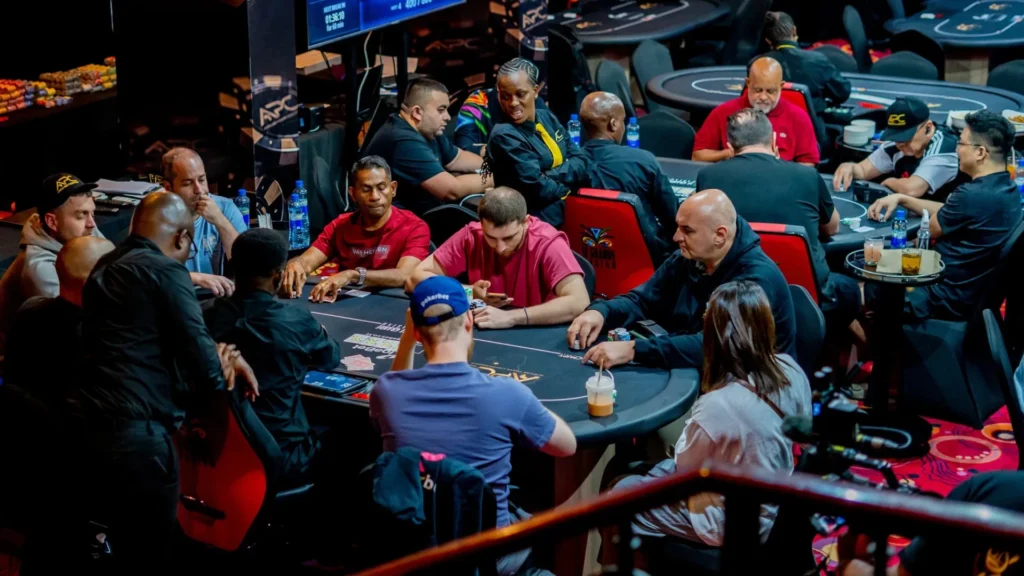
Concerns about sweepstakes sites have primarily centered on sweeps casinos. However, the crackdown impacts sweepstakes poker to perhaps an even greater degree.
The primary advantage of sweepstakes poker over regulated sites is that it’s currently available in all but a few states. Conversely, the regulated networks are legal in just eight, and no single network currently serves more than four of those.
A broader addressable market means more tables and bigger prize pools for tournaments. Lack of access to global player pools is holding back regulated real-money poker in the US, and sweepstakes sites may be the best option available for players who don’t want to take their money offshore.
That’s for now, anyway. The more states that exile sweepstakes poker sites, the less appealing they’ll be in the remaining states as the player pool shrinks.
That may be why the World Poker Tour recently waded into the fray for the first time. CEO Adam Pliska implored New Jersey lawmakers to reconsider their ban. That didn’t work, but he is again attempting to intervene to prevent this new ban in California.
New York and California: a Devastating One-Two Punch
The sweepstakes model emerged because efforts to expand regulated iGaming across the US have largely petered out. Maine passed a bill this year, but will have to wait until 2026 to see if Gov. Janet Mills vetoes it or not. Aside from that and a tiny Bally’s monopoly in Rhode Island, there have been no new real-money online casino state launches since Connecticut in 2021.
The regulated industry has access to just 13% of the total US market by population: eight states and 43.7 million people. That includes Nevada, where only online poker is legal and online casinos aren’t.
Until this year, sweepstakes operators had access to almost the entire country. Most importantly to that industry, the four largest states by population—California, Texas, Florida, and New York—all allowed sweeps but not real-money iGaming. Two of those (CA and TX) don’t have legal sports betting, either.
That created a more or less captive market for sweeps operators. Between them, those four states are home to 114 million people, more than a third of the country’s population, and nearly three times the size of the regulated iGaming market.
Losing New York was bad for the sweepstakes industry, but California would be twice as bad. Florida tried and failed to pass a ban this year as well, while Texas has been distracted by its beef with lottery couriers, another “gambling-adjacent” online business model.
The battle that’s shaping up will be a crucial one. Unfortunately for the sweeps operators, their enemies include the state’s gaming tribes. They carry a lot of political clout and can make formidable opponents, as DraftKings and FanDuel found out the hard way in their ill-fated 2022 attempt to legalize sports betting.